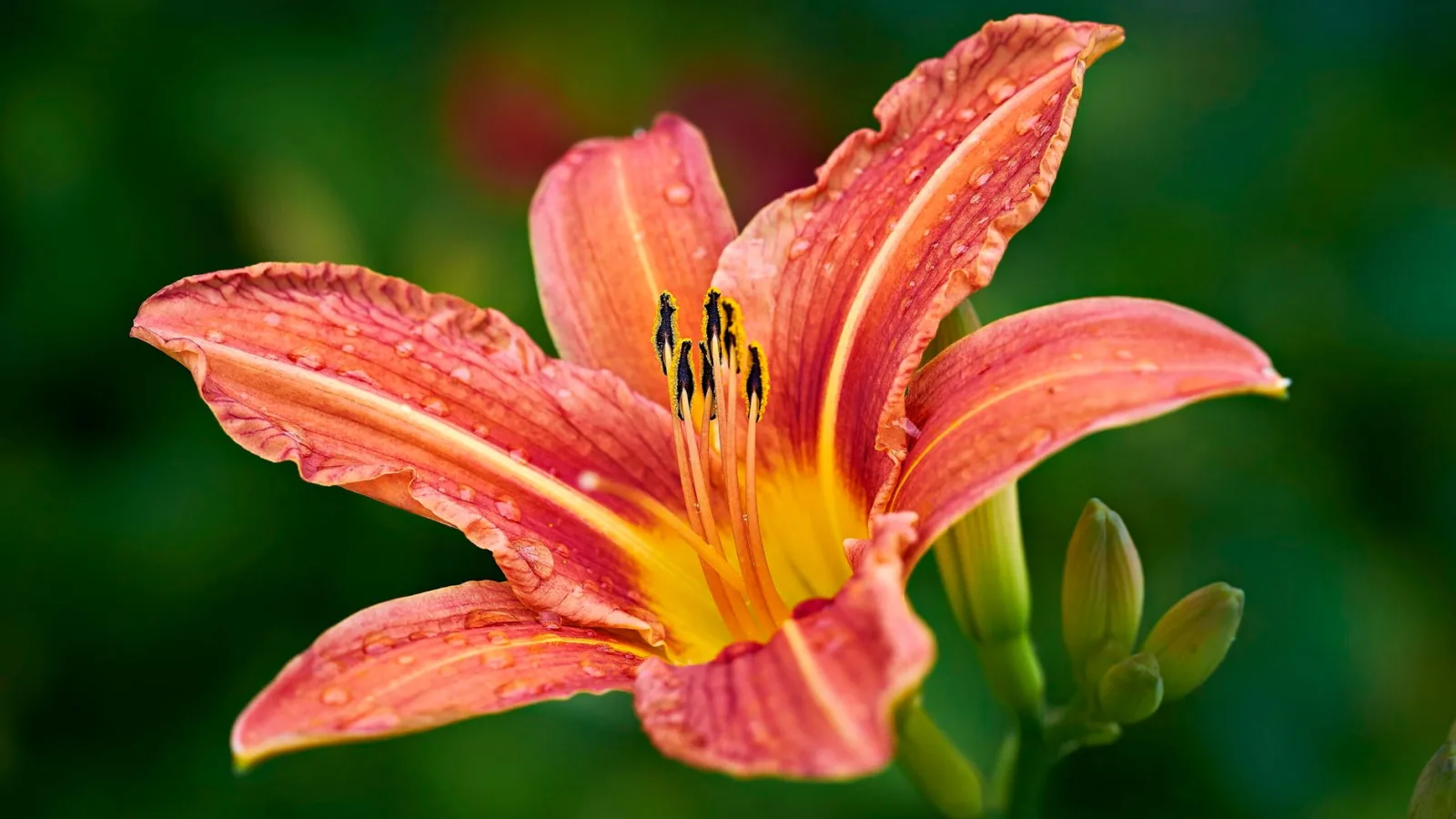
By late September, the tiger lilies in the garden have dropped every last flower. In midsummer they bloomed with orange petals curled back. The black bulbils (small bud-like bulbs that form on the stem) that sat in each leaf axil now fall to the soil one by one and grow into new plants. All this time the bulb underground has been getting bigger, and the bulb is the part of the tiger lily you eat.
Most tiger lilies are grown in China, and Japan grows plenty too. In Korea and Russia they grow wild on hillsides and in open fields. Below, we look at the foods that go well with the bulb, one at a time.
The Bulb and What the Old Texts Say
A lily bulb is made of thin scales layered one over another. The Dongui Bogam, Korea's classic 17th-century medical encyclopedia, describes the root as growing like garlic, with dozens of cloves clustered together and a hundred pieces stacked on one another. For cooking, you peel off the scales one at a time and use them separately. The bulb stores starch, so it turns tender when cooked and picks up a faint sweetness. Its steroidal saponins, however, are thought to be linked to its bitterness. How you deal with that bitterness decides what you cook it with.
The herb section (草部) of the same book describes baekhap (百合, lily bulb) as neutral in nature, sweet in taste, and nontoxic. Right beside that, it notes that some say it is slightly toxic. The book also singles out one lily as unfit for medicine: the one with yellow flowers spotted in black, narrow leaves, and black "seeds" between the leaves. Those "seeds" in the leaf axils are bulbils, which point to the tiger lily. In other words, healers preferred white-flowered lilies for medicine. These are the records of an old medical text, not the judgment of modern medicine. Whether they go into rice, a braise, or a glaze, the scales are always eaten cooked.
Rice and Porridge: Add Them Once the Pot Boils
The easiest way is to cook the scales with rice. Put them in the pot with the rice and they turn tender, adding a gentle sweetness to the cooking water. If they boil too long, though, they fall apart. So try laying the scales on top once the water has come to a boil. For rice porridge (juk), add them at the very end, after the grains have fully swelled and softened, and they'll keep their shape. Lily bulbs are known to contain mucilaginous polysaccharides, so they may make the porridge a little silkier.
Braised Chicken or Abalone: One Pot with Jujubes and Chestnuts
In a brothy braise (jjim), the scales soak up the cooking liquid. Adding them to braised chicken or abalone along with jujubes and chestnuts is a long-standing practice. Here, too, wait until late in the cooking to add the scales.
- Braise the chicken or abalone with the jujubes and chestnuts first.
- When everything is nearly done, about 10 minutes before you turn off the heat, add the scales.
- Once the scales are tender, turn off the heat.
Honey-Glazed Scales: Less Bitter and Longer-Keeping
If the bitterness bothers you, try cooking the scales in honey. Blanch them in boiling water first, then add honey and simmer over low heat until the liquid cooks off. On high heat the honey can scorch before the scales are done, so keep the flame low. Honey-glazed scales taste less bitter and keep longer. When they're done, let them cool, then store them in an airtight container in the refrigerator.
Before You Plant
To make these dishes with tiger lilies from your own garden, start preparing next month. Plant the bulbs in October or November and you'll have flowers the following summer. They grow best at 15–25℃ (59–77℉) and do well where summers are cool and the soil drains well. The bulbs handle dryness far better than wet soil. If water pools around them for days during the summer rainy season, they'll rot that same year. Winter cold is not a problem, because the bulbs wait it out safely underground. Leave them in the ground the year you plant them. Let them grow for two or three years until the bulbs are plump, then dig them up around November, when the leaves wither.
If you have cats, don't plant tiger lilies. Every part of a plant in the genus Lilium can cause acute kidney failure in cats: the flowers, the leaves, the pollen, even the water in a vase. When you clean and trim the bulbs you've dug up, do it somewhere your cat can't reach.
Today, choose one spot in your garden where water doesn't pool even after rain. Bury a bulb there next month, and in November two or three years from now you'll be digging up scales for your rice pot and your braising pot.
Sources: Dongui Bogam, herb section (草部), "Baekhap" (百合) · Nongsaro (Korea's Rural Development Administration farming portal) · National Species List of Korea