- Type
- Alliums
- Difficulty
- Moderate
- Season
- Spring·Summer·Fall
- Sowing
- From bulb
Tiger Lily
Lilium lancifolium
Starch, mucilage · the lily that spreads by bulbils
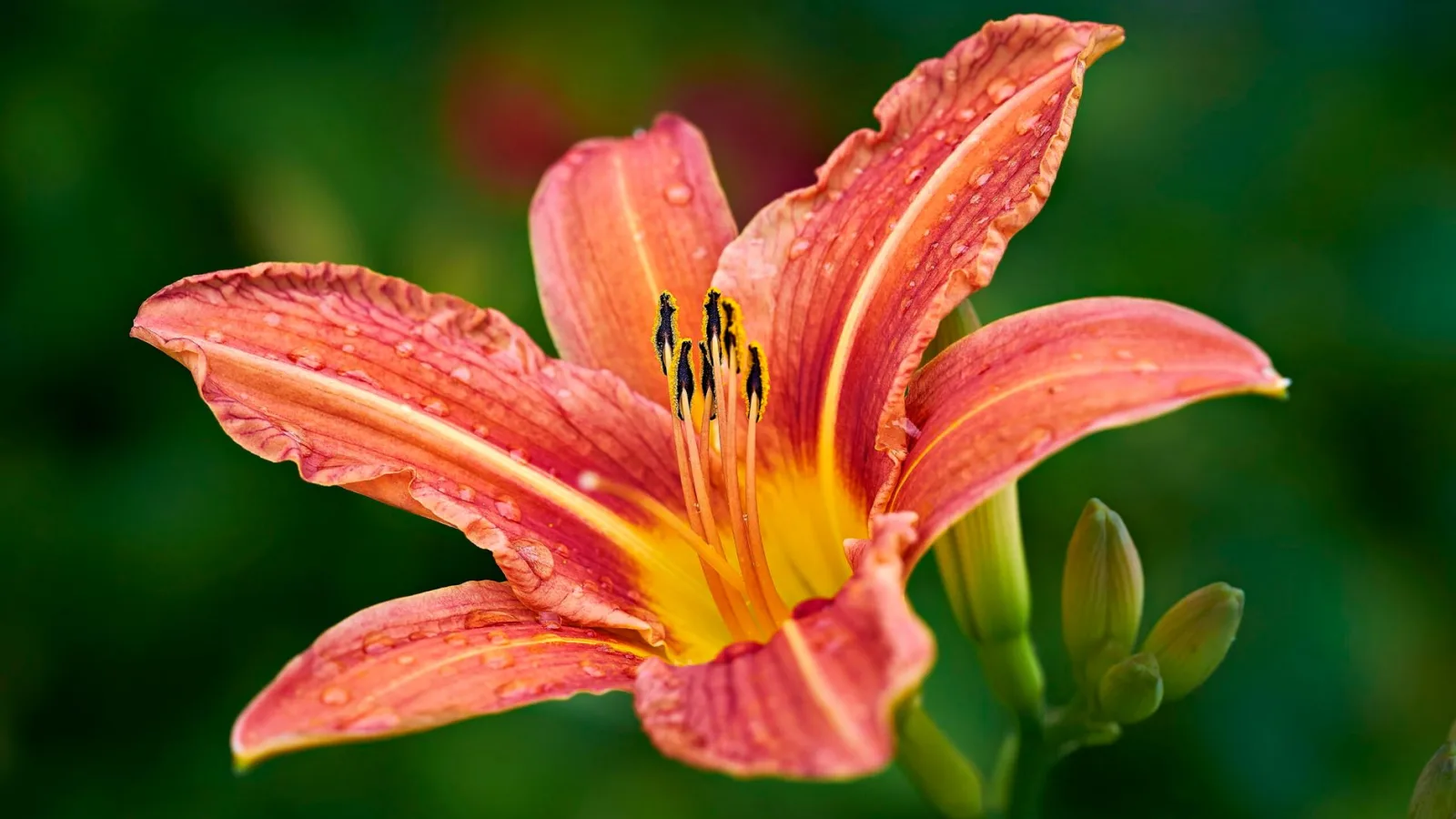
The tiger lily is a common lily across Korean hills and field edges, flowering in high summer - the sixth and seventh lunar months - with orange petals curled back over black spots. Small black bulbils sit in every leaf axil, and that is the feature separating it from other Korean lilies; the bulbils drop and become new plants. In a city plot the bulbs go in during October or November and flower the following summer. In a household with a cat, though, it is not planted at all: the veterinary literature has established that Lilium species cause acute kidney failure in cats, with the flowers, leaves, pollen and even the water in a vase all acting as routes of exposure. Nothing is lifted in the planting year: the plant is grown on for two or three seasons until the scales thicken, and the bulb is dug around November once the foliage has died back. The Donguibogam lists it in the Herb section as 百合, giving it a neutral nature, a sweet taste and no toxicity, while adding that some call it slightly toxic. The same entry describes the root as dozens of overlapping scales like garlic, a hundred pieces packed together, and gives the second and eighth lunar months as the time to dig it and dry it in the sun.
Year-Round Calendar
- 1
- 2
- 3
- 4
- 5
- 6
- 7
- 8
- 9
- 10
- 11
- 12
- 10
- 11
- 11
Where It Grows
- Main producer Grows more edible lily bulbs than anywhere else. The main cultivated type in places such as Lanzhou, Gansu, however, is a different lily species rather than the tiger lily.
-
Wild population
The tiger lily (Lilium lancifolium) grows wild commonly in the hills and fields, and is also cultivated on a small scale. Harvest October, November
- 10
- 11
- Major producer Edible lilies are grown in Hokkaido. The type mainly used is a separate species closely related to the tiger lily.
- Wild population Native to the southern part of the Far East, including Primorye.
Its native range is East Asia, spanning Korea, China and Japan along with the Russian Far East. The bulbs grown for food differ by country: the cultivated types in Lanzhou, China, and Hokkaido, Japan, are distinct from the tiger lily. The tiger lily itself has been planted as an ornamental and has spread to many parts of the world, but those places are not counted here as growing regions.
- Optimum
- 15~25℃
- Range
- 5~30℃
- Hardiness
- Hardy
It likes a spot with cool summers and free drainage. The bulb is far more vulnerable to sitting wet than to going dry, so if water pools for days on end during the monsoon rains, it rots that year. Winter cold it rides out comfortably as a bulb underground.
Harvested 2–3 years after planting. Bulbs are planted in autumn (October–November) and flower the following summer; they thicken enough to lift only two or three years later, in October–November, once the leaves have died back. The month of planting and the month of lifting do not fall in the same year.
In Korea Nationwide
Common in the hills and fields, it grows throughout the country. Free-draining slopes where water does not pool, and soil with some sand in it, suit it well.
How to grow
- Light
- Five to six hours of sun. The classic position is roots in shade with the flower stem in light
- Soil and depth
- Drainage decides everything. Sandy loam worked with leaf mould to 30cm or more; avoid any spot where water stands
- Spacing
- 20 to 25cm between bulbs, planted at three times the bulb's height, so 10 to 15cm deep. Deep planting lets stem roots form and keeps the plant upright
- Watering
- Keep the soil from drying after planting and while the flower stem rises. Through the rainy season do the opposite — stop watering and check that the ground drains
- Feeding
- Well-rotted compost with phosphorus and potassium as a base. Feed lightly just twice, after shoots emerge and after flowering; fresh manure rots the bulb
- Harvest
- Lift bulbs after two or three years, in October or November once leaves and stem have fully died back. Shake off the soil, strip damaged outer skin and dry them in shade. Bulbils can be stripped from the stems as they loosen at the end of summer and buried straight away for shoots the following year
What makes the difference. Cut the seed pod off as soon as flowering ends. The tiger lily sets almost no seed and spreads by bulbils, so sparing it that effort puts real size into the bulb
Why this one is harder. The usual failure is standing water. Bulbs tolerate drought far better than wet, and a spot that holds water for days after the rains will rot them within the season. In a pot, lay a drainage layer and always empty the saucer
Common problems
- Aphids You will see Colonies on new shoots and buds, leaves curling What to do Wash off with a jet of water and use an approved organic product if it recurs. They carry viruses that mottle the leaves, so deal with them early
- Lily leaf beetle You will see Red beetles and grubs chewing the leaves, the grubs covered in their own black excrement What to do Pick them off by hand on sight. Rub out the orange egg clusters on leaf undersides at the same time
- Bulb mites and bulb flies You will see Leaves yellow for no clear reason and the lifted bulb is soft inside What to do Discard damaged bulbs and do not replant the same spot. Sort out injured bulbs before planting and let any cut surface dry first
This page describes how a crop is grown and used. It does not claim health effects for any food, nor is it intended to prevent or treat disease. Component and study notes are references only and do not mean the same result occurs in people. Consult a medical professional about health concerns.
Health Benefits
What the Donguibogam records — nature, taste, the root and its gathering. The Donguibogam lists the plant in the Herb section as 百合. It gives a neutral nature, a sweet taste and no toxicity, and sets alongside that the remark that some call it slightly toxic. It describes the root as dozens of scales overlapping like garlic, a hundred pieces packed together. Roots are dug in the second and eighth lunar months and dried in the sun. This is a historical medical record and differs from modern medical judgment.
Where the old record places the tiger lily. The same entry divides the lilies of hill and field into three. The one with large leaves, a long stem, a thick root and white flowers it calls best for medicine; the red-flowered one it names 山丹 and rates as not very good. The third — yellow flowers with black spots, narrow leaves, and black seeds between the leaves — it sets aside as unfit for medicine, and the bulbils in the leaf axils identify that one as today's tiger lily. This is the old text's own classification and differs from modern medical judgment.
Nutrition
- Starch (most of the bulb's dry weight) — the carbohydrate stored in the bulb
- Mucilaginous polysaccharides (the slippery fraction released on cooking) — polysaccharides reported in lily bulbs
- Steroidal saponins (detected in small amounts in some reports) — compounds reported in connection with the bitterness
Starch in the bulb Most of a lily bulb's dry weight is starch. The bulb exists to store enough energy to overwinter and push up a flower stem the following year. Starch content shifts with lifting date, and bulbs lifted after the foliage has fully died back are the firmest. Bulbs pulled while the plant is still in flower come up thin and soft.
Mucilaginous polysaccharides Simmering lily bulb releases a slippery liquid. Several analyses report polysaccharide fractions, with content varying widely by cultivar and growing conditions. Long soaking leaches the fraction out and leaves the texture dry. Keep the preparation short and cook the scales soon after cleaning.
Bitterness and preparation Lily bulbs keep a bitter edge, reported in connection with steroidal saponin compounds. Separating the scales one by one, rinsing under running water and trimming away dried skin and browned patches reduces it. Blanching in lightly salted water is a long-established step. A bulb that is still strongly bitter after all that is not eaten.
Pairings
○ Porridge and rice — Separated scales cooked with rice soften nicely. Long boiling breaks them apart, so add them once the pot has come to the boil. A faint sweetness leaches into the cooking liquid.
○ Braised chicken or abalone — In a wet braise the scales take up the stock. Pairing them with jujube and chestnut is the long-standing combination. Add them in the last ten minutes if you want them to hold their shape.
○ Candied in honey — Blanched scales simmered in honey lose their bitter edge and keep well. The trick is driving off the moisture over low heat. Cool, seal and refrigerate.
△ Not in a house with a cat — Plants in the genus Lilium and in Hemerocallis are widely reported to cause acute kidney injury in cats. Petals, leaves, pollen and even the vase water are all dangerous, and pollen picked up on the coat and swallowed during grooming is a documented route. In a household with a cat, keep them out as pot plants and as cut flowers alike. If contact has already happened, go to a vet without delay.
△ Bulbs sold for ornament — Lily bulbs sold for their flowers are frequently treated with fungicides and growth regulators for storage and shipping. If you intend to eat them, buy bulbs sold as food. Even home-grown bulbs are off the menu if the bed has been sprayed.
△ Do not confuse the bulb with other bulbs — Ornamental beds often hold poisonous bulbs that look much alike underground. Red spider lily (Lycoris radiata), resurrection lily (Lycoris squamigera) and daffodils (Narcissus) all carry alkaloids such as lycorine and must not be eaten. A lily bulb is built of overlapping scales like garlic while these are layered like an onion, but freshly dug and caked in soil the distinction is hard to make. Label bulbs when you plant them, and never eat a bulb you cannot name.
Varieties
- Tiger lily (Lilium lancifolium) (bulb) — Orange flowers with black spots. The black bulbils in the leaf axils are the decisive tell
- Jung-nari (Lilium leichtlinii var. maximowiczii) (bulb) — Close to the tiger lily but carries no bulbils. Narrower leaves
- Teol-jung-nari (Lilium amabile) (bulb) — Fine hairs on stem and leaves. Takes well to sunny slopes
- Haneul-nari (Lilium concolor) (bulb) — Flowers face straight up. Short enough for a pot
Source: Donguibogam, Herb Section 百合 · Rural Development Administration (Nongsaro) · National List of Species of Korea