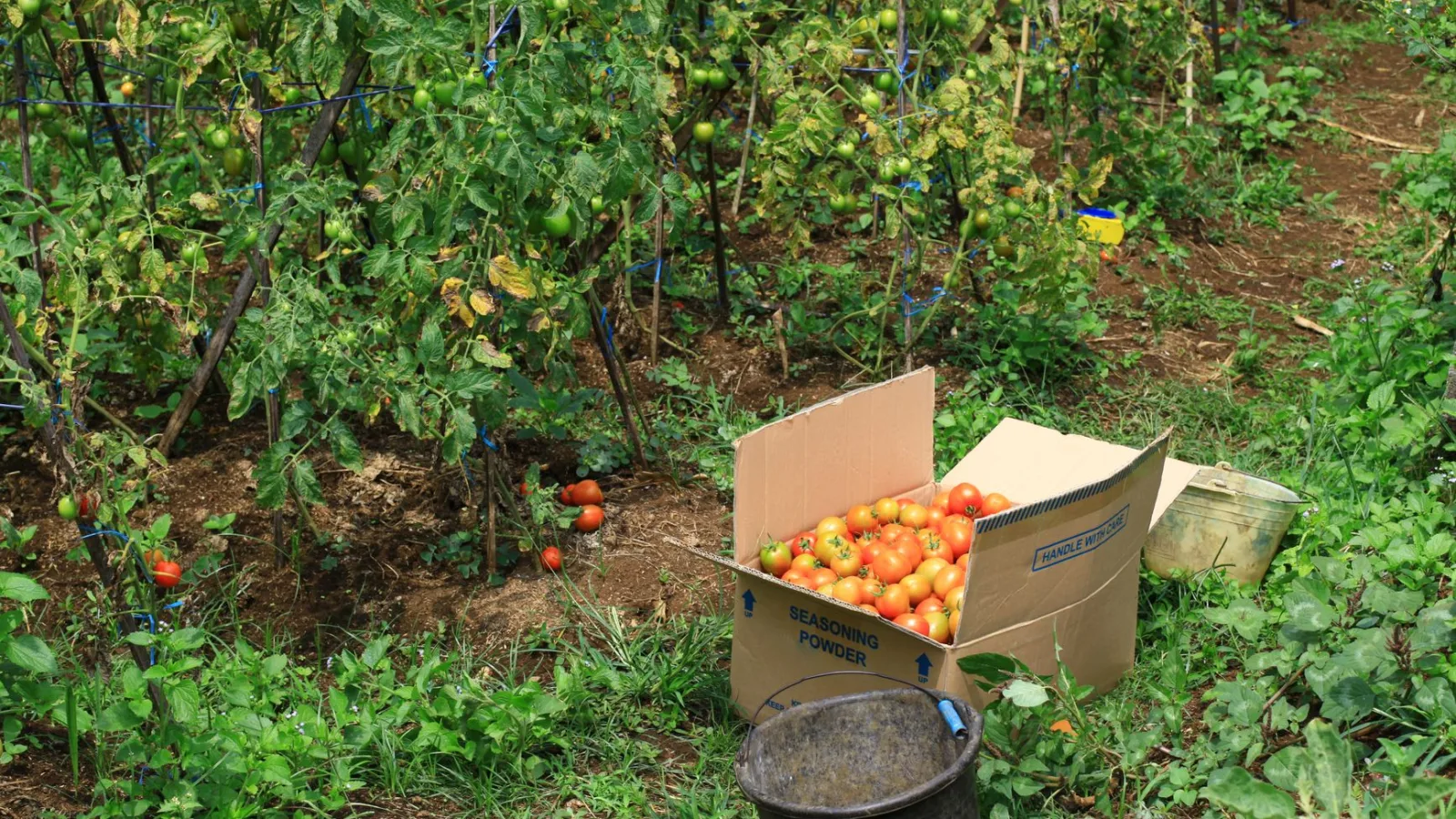
After you pull the tomato plants that kept you in fruit all summer, you may notice a thin white crust along the rim of the pot and across the soil surface. That's salt from tap water and fertilizer, carried upward and left behind as the water evaporated. If the leaves in that same pot browned at the edges and the fruit ran small, salt may have been one of the reasons.
A team led by a researcher at The University of Texas at El Paso reports that a simple spray, applied to the leaves in small amounts, may help keep tomatoes growing on land where salt has cut into yields. Because it doesn't cost much to use, it could give growers one more practical option.
What Happens to Tomatoes When Salt Builds Up in the Soil?
As salt concentrates in the soil, roots have a harder time drawing up water. Even when the soil is wet, the plant is effectively short of water, and the sodium and chloride that enter through the roots and accumulate in the leaves cause them to brown and dry from the tips inward. Tomatoes are classified as moderately sensitive to salt. Even a small rise in salinity leaves plants shorter, with fewer and smaller fruit. Blossom-end rot, in which the bottom of the fruit turns black and soft because the plant can't take up enough calcium, also becomes more common.
Where rainfall is scarce and evaporation is high, years of irrigation leave salt behind in the ground. But salt isn't only a problem for big fields in dry regions. In city gardens, the same thing happens in beds that catch runoff from winter road salt, in pots that are fertilized often, and in containers watered for years with mineral-rich hard water.
A Low-Cost Spray for the Leaves, Not the Soil
Reclaiming salt-affected land usually means flushing the salt out with large volumes of water, replacing the soil, or installing new drainage. Any of those takes a lot of water or a lot of money. The spray the researchers propose leaves the soil as it is and calls for only a small amount on the leaves. It is likely to take less money and labor than treating the soil across a large field.
That said, these results come from a single research team working with tomatoes, and it remains to be seen whether the effect holds in other climates and with other varieties. If you want to try it yourself, check the original paper first for the spray's exact ingredients and concentration. Mixing up a similar solution by guesswork can damage the leaves, so for now, the first priority is reducing salt through good soil care.
What You Can Do in the Garden Right Now
If you see signs of salt in your pots or garden beds, start with these steps today.
- About once a month, water your pots generously so the built-up salt washes out with the water draining through the holes in the bottom.
- Don't apply more fertilizer than the package directs. Whatever the roots don't use also builds up as salt.
- Cover the soil surface with straw or dry leaves. Less evaporation means less salt drawn up to the surface.
- Mix in well-aged compost to improve drainage.
- If you garden in a roadside bed that catches road-salt runoff, try moving your plants into pots or raised beds filled with fresh potting mix.
Tomatoes at the Table
Tomatoes are grown in large quantities in China, India, Türkiye, and the United States, and they turn up on tables all over the world. Lycopene, the pigment that makes them red, is an antioxidant, and eating it regularly may help reduce oxidative stress in the body. Because lycopene dissolves readily in fat, your body absorbs it better when tomatoes are lightly sautéed in olive oil or otherwise cooked.
Several studies have observed that tomatoes grown in mildly salty soil bear smaller fruit but often have higher sugar and lycopene levels. Once the salt gets heavy, though, yields drop sharply. If tools like a leaf spray come into wide use in the field, tomatoes could be harvested even from land that has been left fallow because of salt.
Today, start by checking the soil surface and leaf edges of your tomato pots. If you see white powder, water generously to flush out the salt first.
Source: Research on foliar spraying of tomatoes in saline soil by a team at The University of Texas at El Paso