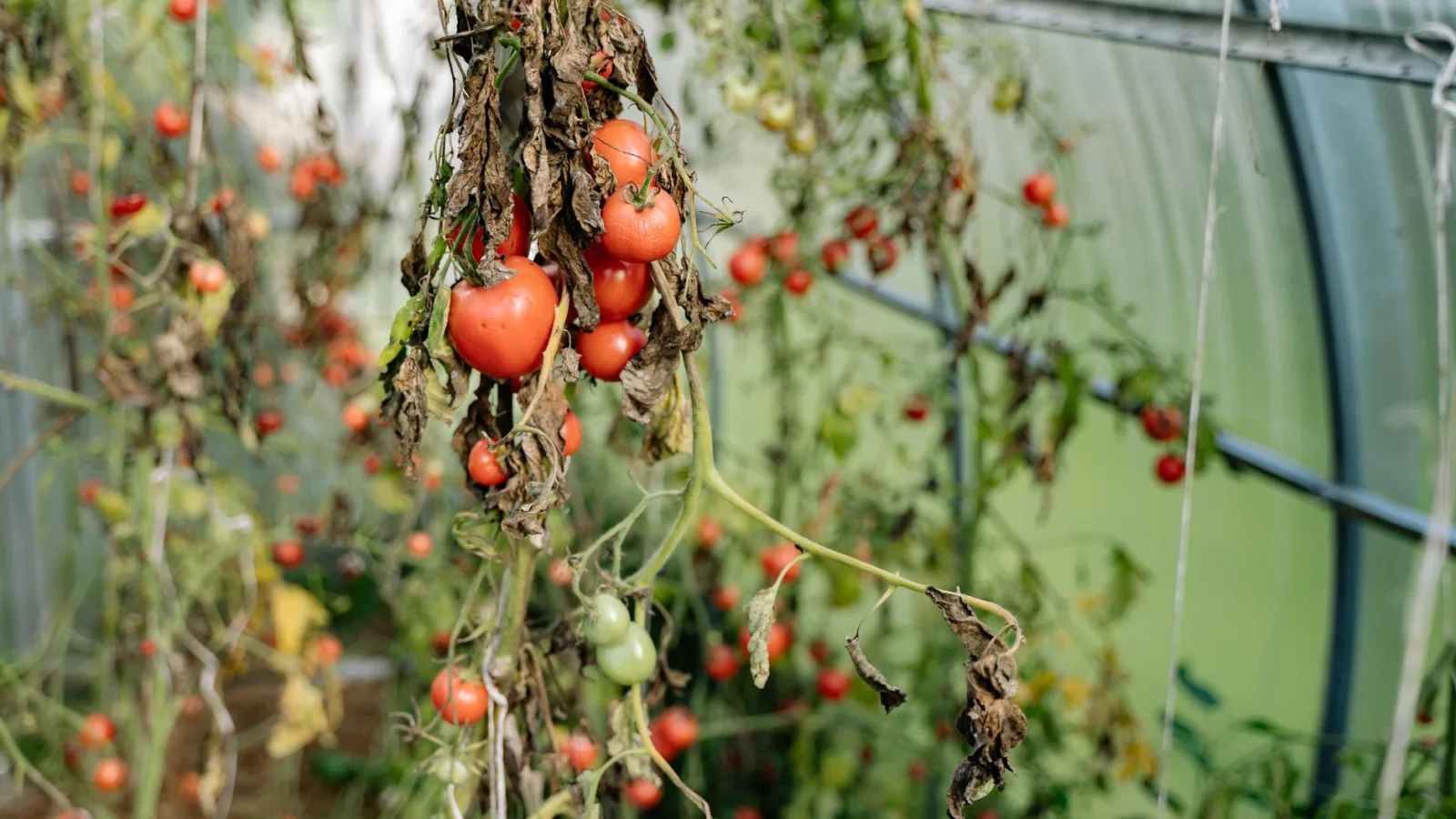
Once the monsoon rains clear, the lower leaves on your tomato plants start turning yellow. You haven't cut back on water or fertilizer, yet the fruit swells and then stalls. In a balcony pot, you might also notice a whitish crust on the surface of the soil. These are the signs of iron that isn't reaching the roots, or of salt building up in the soil.
Neither problem is confined to backyard plots. With farmland shrinking and salt-damaged acreage growing, researchers keep searching for microbial fertilizers that could stand in for synthetic ones. One recent study tried a single species of water-dwelling bacterium on tomatoes and rice.
A Bacterium That Swims Along Magnetic Field Lines
The bacterium is Magnetospirillum gryphiswaldense, which the study refers to as MSR-1. It lives in oxygen-poor layers such as pond bottoms and tidal mudflats. Inside its body it builds a neat row of magnetite grains, and those grains let it orient itself along Earth's magnetic field. The trait helps it quickly find the depth with just the right amount of oxygen.
The researchers grew the bacterium in a low-oxygen culture medium and then introduced it to tomato and rice plants. Under an electron microscope, the cells had settled on the surfaces of roots and leaves without penetrating or damaging the tissue.
What Roots Release Draws the Bacteria In
Roots send a share of the compounds made through photosynthesis out into the soil. When the team analyzed the root exudates of tomato and rice, they found quinic acid, tryptophan, quercetin, glucosinolates, and strigolactones. Strigolactones are already known for summoning symbiotic fungi to roots from the surrounding soil. The bacteria swam toward where these compounds were most concentrated and attached to the roots.
So whether a microbe takes hold on a root isn't decided only by what you add to the soil. The roots have to be functioning well enough to send out the signals in the first place.
A Weak Dose and a Strong Dose Did Different Things
The culture was turned into a liquid fertilizer and applied at 25 milliliters per plant, in concentrations ranging from 20 percent to 100 percent.
- In healthy soil, 20 percent worked best. Tomato stems grew to 73.5 centimeters, leaf chlorophyll increased, and each plant yielded about 1 kilogram of fruit. Rice, too, produced its longest stems and roots at 20 percent.
- In iron-deficient or salty soil, 60 percent did better. Stressed tomato plants set 760 to 800 grams of fruit each, and levels of superoxide dismutase (SOD) and catalase, enzymes that mop up reactive oxygen species, rose together. In rice, sugars, proteins, amino acids, and phenolic compounds all increased.
Stronger was not better. The full-strength 100 percent dose was never the top performer under any condition. Microbes take up space and nutrients around the roots too, so it seems a light dose suited plants that were comfortable, and a somewhat heavier one suited plants under strain. Still, this comes from a single pot experiment, and it's too early to say whether the pattern holds at field scale.
What to Try in Your Garden Today
This liquid fertilizer is still at the lab-culture stage, so you won't find it at the garden center. But the two conditions the experiment tackled turn up in home gardens all the time.
- A white crust on the soil surface means salt has built up. Flush it out by watering generously until water runs freely from the bottom of the pot. Empty the saucer right away.
- If only the new leaves are yellowing between the veins while the older leaves below stay green, iron is the likely culprit. When soil tips toward alkaline, roots can't use the iron even when it's there. Rather than dumping on coffee grounds, top-dress with a thin layer of well-finished compost.
- When using a store-bought microbial product, start weaker than the label suggests. In this study as well, the lighter dose won out in healthy soil.
Today, pick just one tomato pot and compare the color of its lower leaves with its newest ones side by side. Which leaves yellowed first tells you whether you're dealing with iron or with salt.