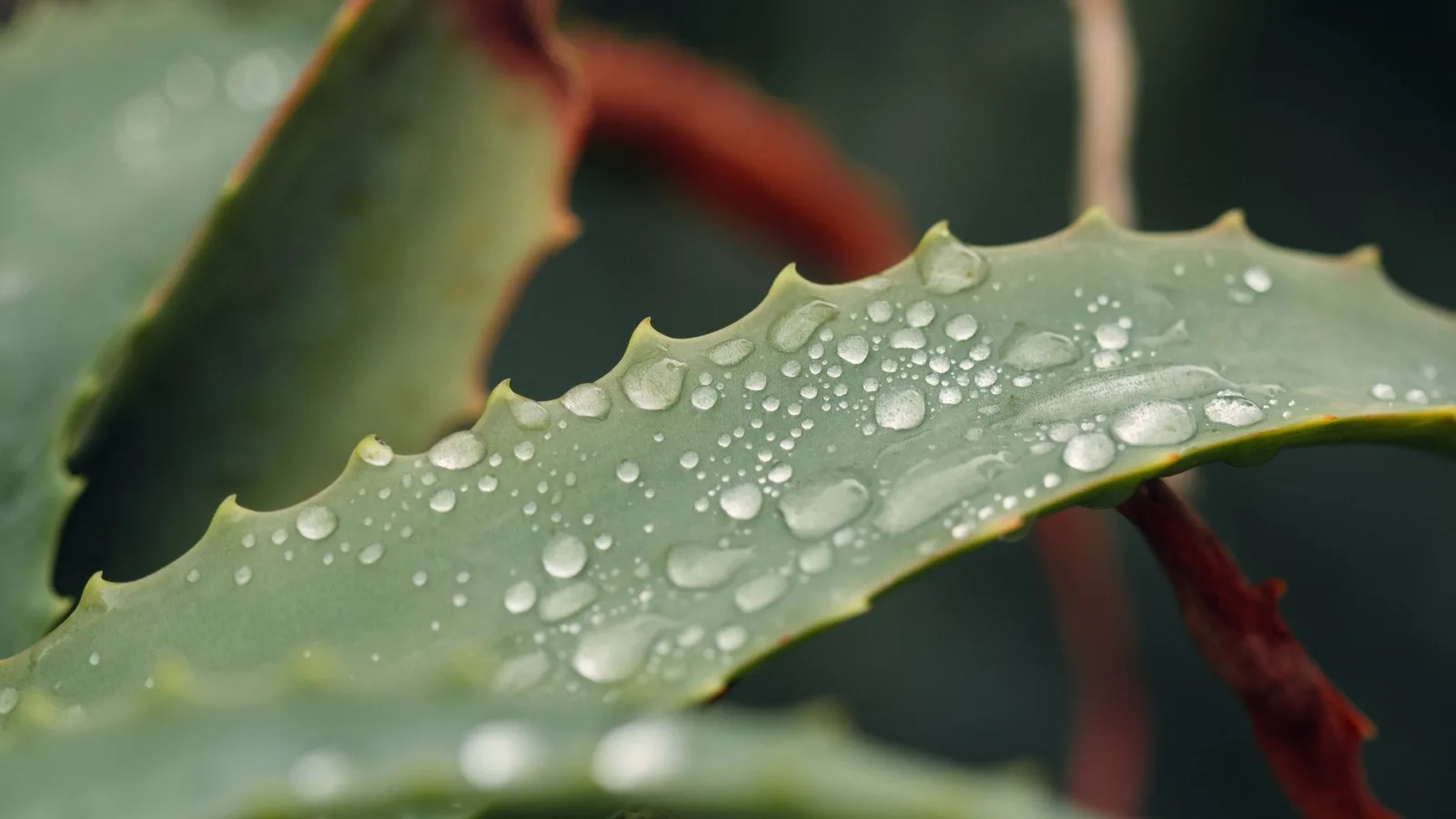
By August, the aloe on the balcony has plumped up. In the Northern Hemisphere, May through October is the stretch when you can cut leaves and use them, and August sits right in the middle of it. Slice a leaf off at the base, lay it on the cutting board, and a yellow sap begins to seep from the cut. How you handle that sap determines everything that follows.
One leaf, two different substances
An aloe leaf is a thick rind wrapped around clear inner flesh. The flesh holds polysaccharides such as acemannan; the yellow sap just inside the rind holds anthraquinone glycosides such as aloin. Same leaf, different compounds depending on where you cut. This is a look at what's in the plant, not a claim about preventing or treating any illness.
Aloin is what tastes bitter. So prep begins with filleting out the clear flesh and rinsing it under running water until the yellow is gone. Once the rind is off, the flesh is translucent and full of water — cube it and eat it as a gel or stir it into a drink. It's mostly water, and that's where its particular springy texture comes from.
Hot, dry conditions make thicker leaves
Aloe is a succulent from frost-free arid and semi-arid subtropics. It grows best between 22 and 30°C and tolerates a range of 10 to 40°C. Hot days, cool nights, and little rain are what fill the leaves out. Below 5°C, they go soft and mushy. It's a cold-sensitive plant, so if you get frost where you live, bring the pot indoors for the winter.
Frequent rain or standing water will rot it from the base up. Water only after the soil has dried all the way through, and dump the saucer whenever water collects in it. Rather than starting from seed, propagate by division: in the Northern Hemisphere, around April or May, separate the offsets growing beside the mother plant and repot them. Aloe asks very little, and one pot will keep you going for years. Mexico and the Dominican Republic are the main producing regions, with large plantings in India, China, and the United States as well.
In the old medical texts, "noheo" wasn't the leaf at all
The Donguibogam, the classic Korean medical compendium, lists aloe in its herbs section as 蘆薈 (noheo). It's described as cold in nature, bitter in taste, and non-toxic, and said to come from Persia. But what the text is describing isn't the leaf — it's the sap, boiled down and hardened into a solid lump. It's characterized as tree resin that has congealed, black in color and much like hardened taffy. The genuine article was judged by dropping several lumps into water: the real thing would dissolve and then set again on its own. A preparation note also survives, saying it was ground separately from other ingredients.
The old writers, in other words, took aloe for the resin of a tree. Today aloe is classified not as a tree but as a succulent in the family Asphodelaceae. This is what the historical texts recorded, and it differs from what we understand now.
Take the bitterness out first, then add the sweetness
Properly prepped, aloe flesh tastes like almost nothing. Whatever you pair it with is what it will taste like. But before you add anything sweet, get the bitterness out.
- Soak the cubed flesh briefly in cold water and the slick surface film goes with the last of the bitterness. Change the water once for good measure.
- Try it with honey or lemon. Cubed and stirred into yogurt is good too.
- Blending it won't cost you the texture — that stays. Blending it with a fruit that's assertively sweet and tart, like apple or pineapple, makes it easier to drink.
If you're cutting a leaf from your pot today, start by peeling off the rind and rinsing the flesh under running water for a good long while. To know whether all the yellow is out, put a piece in your mouth. If there's no bitterness left, then it's time for the honey.
Sources: Donguibogam, Herbs section, 蘆薈 · Korean National List of Species