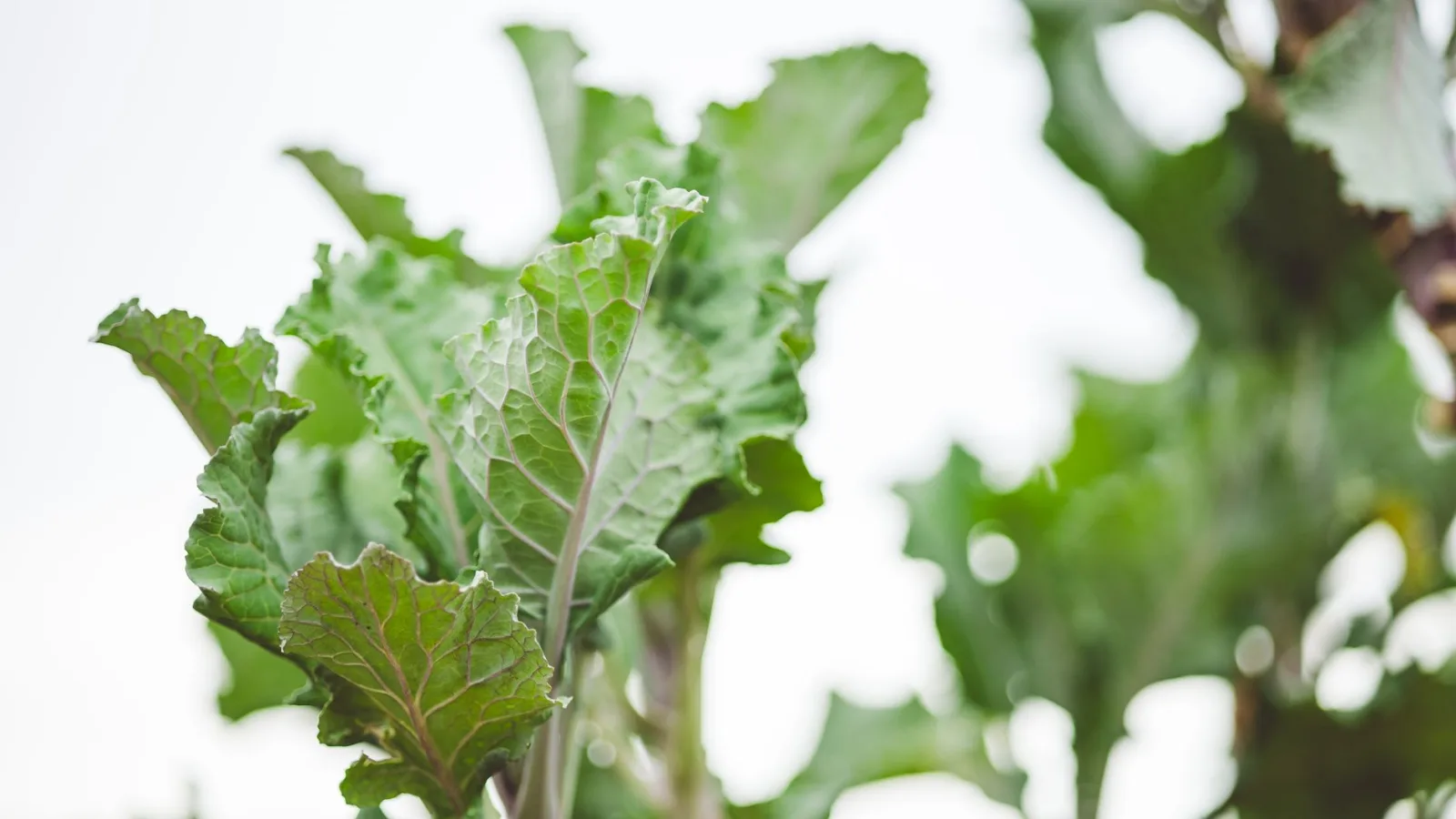
Walk along a riverbank in late fall and you'll spot a plant hugging the ground in a round, spreading clump. Its long leaves are finely crinkled along the edges, and from the center rises a brown flower stalk still hung with seeds. This is curly dock (Rumex crispus). The species name, crispus, is Latin for "curled." A perennial in the buckwheat family, it's common across Korea, Japan, and China, and it turns up along roadsides and rice-paddy dikes just about everywhere. People who recognize it often start wondering whether to come back to the same spot in spring and pick the young leaves. Our advice: take only the seeds from plants on the bank, and grow the leaves you'll actually eat in your own garden.
What Else Comes Home on Roadside Leaves
Roadsides, paddy dikes, and riverbanks are where herbicides get sprayed to keep weeds in check, and where dust from passing traffic settles. Curly dock grows as a rosette (a circle of leaves spreading from near the root, with no stem), lying flat against the ground, so soil splashed up by rain and dust from the road land right on top of it. A passerby has no way of knowing what was sprayed there, or when.
Won't blanching take care of it? The usual prep for curly dock, blanching it and then soaking it in cold water, is meant to reduce the leaves' oxalic acid (the organic acid behind their sour taste). There's little evidence that this also removes herbicide residue or dust. If you want to be careful about what goes into your body, knowing the soil the leaves grew in matters more than any blanching technique.
A Lookalike the Old Medical Texts Noted Too: Sorrel
When you forage in the wild, there's one more thing to watch for: lookalikes. Heo Jun's Dongui Bogam (Treasured Mirror of Eastern Medicine) lists curly dock in its Herbs section (草部, chobu) as 羊蹄根 (yangjegeun, literally "sheep's-hoof root"). At the end of the same entry, it adds 酸摸 (sanmo), along with its Korean name, seunga. The text describes this plant as resembling curly dock but slenderer and sour, and says its young stalks were snapped off and eaten raw or pressed for juice. It's the close relative we now call sorrel (Rumex acetosa).
The easiest place to tell the two apart is the base of the leaf. In sorrel, the leaf base splits into two pointed lobes that angle backward on either side of where the stalk attaches. In curly dock, the base is rounded or tapered, and the edges are wavy. Confuse the plants and you'll confuse how to eat them, too. The old text may say sorrel is eaten raw, but curly dock should never be eaten raw. Its oxalic acid and tannins (polyphenols that create an astringent, puckery taste) remain fully intact, leaving your mouth stinging and your stomach upset.
Of curly dock root, the Dongui Bogam records that it is cold in nature, bitter and pungent in taste, and nontoxic. It also includes the view that the root is mildly toxic, and notes separately that the leaves can be prepared as namul (seasoned greens). Everything said here about both plants comes from a historical medical text and is separate from the judgment of modern medicine.
From Brown Seed Stalk to a Corner of Your Garden
What about digging up the whole plant? Curly dock has a thick taproot that runs deep, so it's hard to dig out intact, and you'd be bringing the embankment soil home with it. Collecting seed is far easier. Strip the ripe brown seeds from the stalk into a paper bag and store them somewhere cool and dry. In the Northern Hemisphere, sow in September–October so the plants overwinter, and pick your first greens the following March–April. If you've missed this fall's sowing window, simply hold on to the seeds until next autumn. You can also check sowing and harvest months in the curly dock entry in Homiclub's Crop Guide.
- Choose your spot: Set aside one corner of the garden. Once the roots take hold, the plant is hard to pull out.
- Sowing: The seeds are tiny, so cover them with only about 5mm of soil, and as the seedlings grow, thin them to roughly 30cm apart.
- Cutting the flower stalks: After the spring harvest, when the flower stalks shoot up, cut them off at the base before the seeds ripen to brown. If the seeds drop and spread into your neighbors' plots, you'll be digging out deep roots here, there, and everywhere.
Your First Taste of Garden-Grown Leaves
In early spring, harvest only the young leaves from the rosette. As the leaves toughen, they turn more sour and astringent and are no longer used for namul. Blanch them in boiling water for 1–2 minutes, rinse in cold water, then soak for about half a day, changing the water two or three times, before using. Discard the blanching water. Tossing the greens with doenjang (Korean fermented soybean paste) or simmering them into a soup with ground perilla seeds softens any lingering astringency. Because oxalic acid readily binds with calcium, they also pair nicely with tofu or dried anchovies.
Although the roots and seeds appear in the Dongui Bogam, we don't eat them. These parts contain anthraquinone glycosides such as emodin and chrysophanol, which sets them apart chemically from the leaves. The same compounds are found in rhubarb root, another member of the buckwheat family. Depending on the amount, they can cause stomach pain and diarrhea, so children and pregnant people in particular should avoid them. If you have a history of kidney stones, or have been advised to cut back on oxalic acid, eat the leaves only in small amounts or skip them altogether.
The brown stalks on the bank often stand well into midwinter, so even if you walked past them this time, you still have a few weeks left to gather seed.
Source: Heo Jun, Dongui Bogam, Tangaek-pyeon (Materia Medica), 草部 (Herbs), "羊蹄根 (Yangjegeun)," 1613.