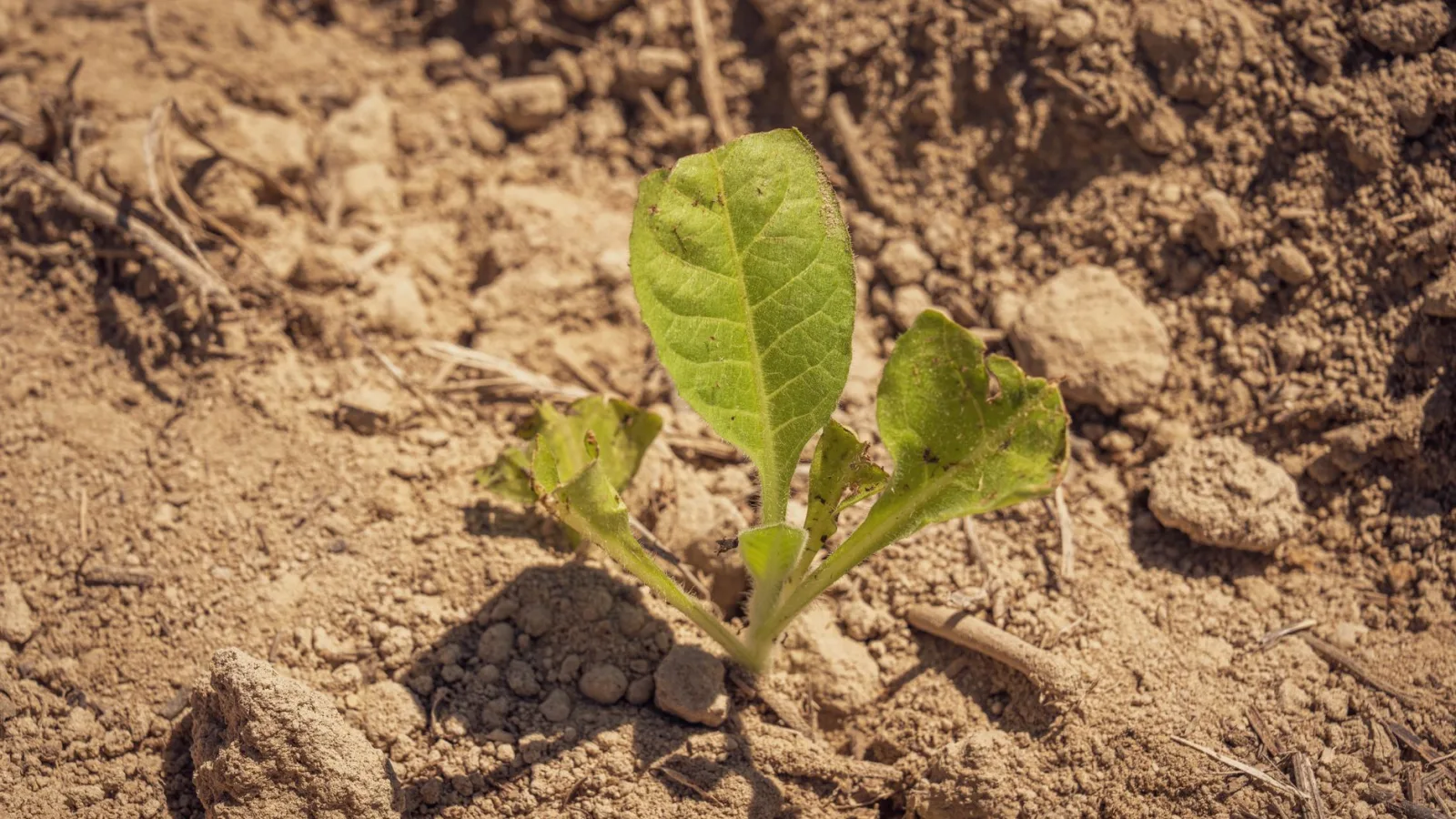
- Type
- Leafy Greens
- Difficulty
- Easy
- Season
- Spring·Fall
- Sowing
- From seed
Curly Dock
Rumex crispus
Oxalic acid · spring rosette green
Curly dock is a perennial in the knotweed family, common along paddy banks and roadsides. In early spring the young leaves of the flat rosette are blanched and eaten as a namul green; once the leaves toughen, sourness and astringency take over and they are left alone. Grown from seed, it is sown in autumn (September to October) so the rosette can overwinter, and the first picking comes not in the sowing year but in the early spring that follows (March to April). The taproot is thick and deep, so once the plant settles it is hard to remove - in a city plot, give it one fixed corner. The Donguibogam lists it in the herb section as 羊蹄根, describing the root as cold in nature, bitter and pungent in taste, free of toxicity, though one account calls it slightly toxic. The same entry says the leaves can be prepared as a vegetable, and appends 酸摸 - a slender, sour relative recorded under the Korean name seung-a - as a separate plant.
Year-Round Calendar
- 1
- 2
- 3
- 4
- 5
- 6
- 7
- 8
- 9
- 10
- 11
- 12
- 9
- 10
- 3
- 4
Where It Grows
-
Wild population
Naturalized throughout the country, it is common along paddy banks, roadsides, and streamsides, and the young leaves are picked in early spring. Harvest March, April
- 3
- 4
- Wild population Known there as nagaba-gishigishi, it has spread widely along paddy banks and riverside flats.
- Wild population It grows in the damp fields of northern and central China, and the roots are harvested as a medicinal herb known as yangtigen.
It is native to Europe and Western Asia, and because its origin cannot be pinned to any single country, no origin row was included. It traveled the world with grain and shipping, has now naturalized as far as the Americas and Oceania, and since it is not a crop planted and sold, no production statistics exist. The three countries above are listed because wild plants have actually been gathered there as wild greens or medicinal herbs.
- Optimum
- 15~22℃
- Range
- 0~30℃
- Hardiness
- Hardy
Extremely cold-hardy, it overwinters as a rosette and is the first to put out leaves in early spring. It favors well-watered paddy banks and streamsides, and when the heat arrives the flower stalks bolt and the leaves turn tough.
Harvested 1–2 years after planting. Seed sown in autumn overwinters as a rosette that same year and puts out its first leaves in March–April of the following year. The sowing month and the harvest month do not fall in the same year, and as a perennial its roots persist, sending up new growth every year from the following year onward.
In Korea Nationwide
It grows on paddy banks, roadsides, and streamsides across the country. Favoring moist ground, it is especially abundant around the edges of rice paddies.
How to grow
- Light
- At least 4 hours a day. It grows in part shade, but better sun gives thicker leaves
- Soil and depth
- Prefers moist, rich ground. Dig at least 30cm deep so the taproot can run straight
- Spacing
- 30cm between plants, 40cm between rows. The rosette spreads wide, so leave room
- Watering
- Keep it from drying out while you are picking young leaves in spring. Drought toughens the leaves fast
- Feeding
- Compost worked in at planting is enough. Heavy nitrogen gives big, coarse leaves and little else
- Harvest
- From March to May, cut only the young rosette leaves at the base. Once the flower stalk starts to rise the leaves toughen, and the season is over
What makes the difference. Leave one plant to set seed and cut the flower stalks off the rest. It sets an enormous quantity of seed and will take over the whole plot if left alone
Why this one is harder. The taproot drives more than 30cm down and severed pieces resprout. To move the plant you must lift it whole with a deep spade cut, and any root fragment left buried will come up in the same spot the following year
Common problems
- Dock leaf beetle You will see Leaves shot through like netting, with glossy blue-green adults and black larvae on them What to do In spring, scrape the yellow egg clusters off the leaf undersides by hand. Net the plants you intend to eat
- Aphids You will see Dense clusters on flower stalks and new leaves, leaving them sticky What to do Wash them off with a jet of water and cut away the flower stalk
- Rust You will see Spots on leaf undersides that shed a brown powder What to do Pick off and bin affected leaves, and widen the spacing so air moves through
This page describes how a crop is grown and used. It does not claim health effects for any food, nor is it intended to prevent or treat disease. Component and study notes are references only and do not mean the same result occurs in people. Consult a medical professional about health concerns.
Health Benefits
The Donguibogam record — nature, taste, and parts. The Donguibogam lists it in the herb section as 羊蹄根. The root is described as cold in nature, bitter and pungent in taste and free of toxicity, though one account calls it slightly toxic. The seed is described as neutral in nature, bitter and astringent, free of toxicity, and given the alias 金蕎麥; the leaves are noted as usable as a vegetable, so the parts are kept distinct. The text also records that the plant grows everywhere. This is an old medical record and differs from modern medical judgement.
酸摸 (seung-a), set apart in the same entry. At the end of the same entry the text appends 酸摸 under the Korean name seung-a. It is described as cool in nature, sour in taste and free of toxicity, resembling curly dock but slenderer, with a sourness such that the young stalk can be snapped off and eaten fresh or pressed for juice. Today this relative is known as sorrel. This is an old medical record and differs from modern medical judgement.
Compositional analysis by plant part. Analyses have reported anthraquinone glycosides such as emodin and chrysophanol in the root and seed, with a composition distinct from the leaves. In the young leaves used as a green, oxalic acid and tannins are reported as the main organic compounds. This concerns compositional analysis and has no bearing on preventing or treating any illness.
Nutrition
- Oxalic acid (concentrated in leaves and leaf stalks) — the organic acid behind the sour taste; reduced by blanching and soaking
- Tannins (increase as leaves toughen) — polyphenols responsible for astringency
- Anthraquinone glycosides (emodin, chrysophanol) (mainly in root and seed) — pigment compounds reported in the root; not the part used as a green
- Vitamin C (young leaves) — a water-soluble vitamin commonly measured in spring greens
Oxalic acid and blanching The sourness of curly dock comes from oxalic acid. It is a common organic acid in knotweed-family greens, and a good share of it leaves the tissue if you blanch the leaves in boiling water, rinse them in cold water, then soak them once more. Throw the blanching water away. Anyone with a history of kidney stones, or advised to limit oxalate intake, is better off eating less of it.
Tannins and astringency The tougher the leaf, the stronger the astringency. Tannin content rises as the season goes on, so April leaves and late-May leaves from the same plant are not the same thing. That is why the window for using it as a spring green is short. Once the flower stalk rises, leave that plant and look for a later rosette.
Compounds concentrated in root and seed Anthraquinone glycosides such as emodin and chrysophanol have been reported in the root and seed. Their composition is clearly different from that of the leaves. It is safer to use only the young leaves and leave the root alone. Depending on the amount, these compounds can bring on stomach pain and diarrhoea.
Pairings
○ Doenjang and perilla — Blanched curly dock is usually dressed with soybean paste, or simmered into a soup with ground perilla seed. The salt of the paste and the fat of the perilla settle whatever astringency remains. Squeeze the leaves dry before dressing them or the dish turns watery. Perilla (Deulkkae)
○ Batter and pan-frying — Blanch, chop, and fold the leaves into a flour batter to pan-fry. Because the blanching has already drawn out much of the oxalic acid, the sourness is muted by the time it hits the pan. Use plenty of oil and spread the batter thin.
○ Tofu and dried anchovy — Oxalic acid binds readily with calcium. Serving blanched, soaked dock alongside tofu or anchovy also balances the plate. This concerns how the compounds behave and has nothing to do with illness.
△ Eating it raw — Curly dock is not eaten raw. Oxalic acid and tannins remain intact, leaving the mouth rasping and the stomach uneasy. Blanch it in boiling water, rinse in cold water, soak for a while, then use it. Always discard the blanching water.
△ Root and seed — Anthraquinone glycosides are concentrated in the root and seed, so neither is used as a green. Depending on the amount they can cause abdominal pain and diarrhoea, and children and pregnant people should avoid them entirely. That the old text records the root is not a reason to brew it at home.
△ Oxalate limits and roadside foraging — If you have had kidney stones, or have been advised to limit oxalate, cut back or skip it. Curly dock is abundant on roadsides, paddy banks and stream edges — exactly where herbicide and road dust land. Grow what you intend to eat in your own plot.
Varieties
- Rumex japonicus (seed) — Broad-leaved relative common near water. Young leaves used the same way
- Rumex obtusifolius (seed) — Naturalised. Coarser leaf-margin waves and a taller flowering stem
- Sorrel (seung-a) (seed) — The relative the Donguibogam sets apart as 酸摸. Narrower leaves, sharper sourness
Source: Donguibogam, Herb Section, 羊蹄根 · Rural Development Administration (Nongsaro)