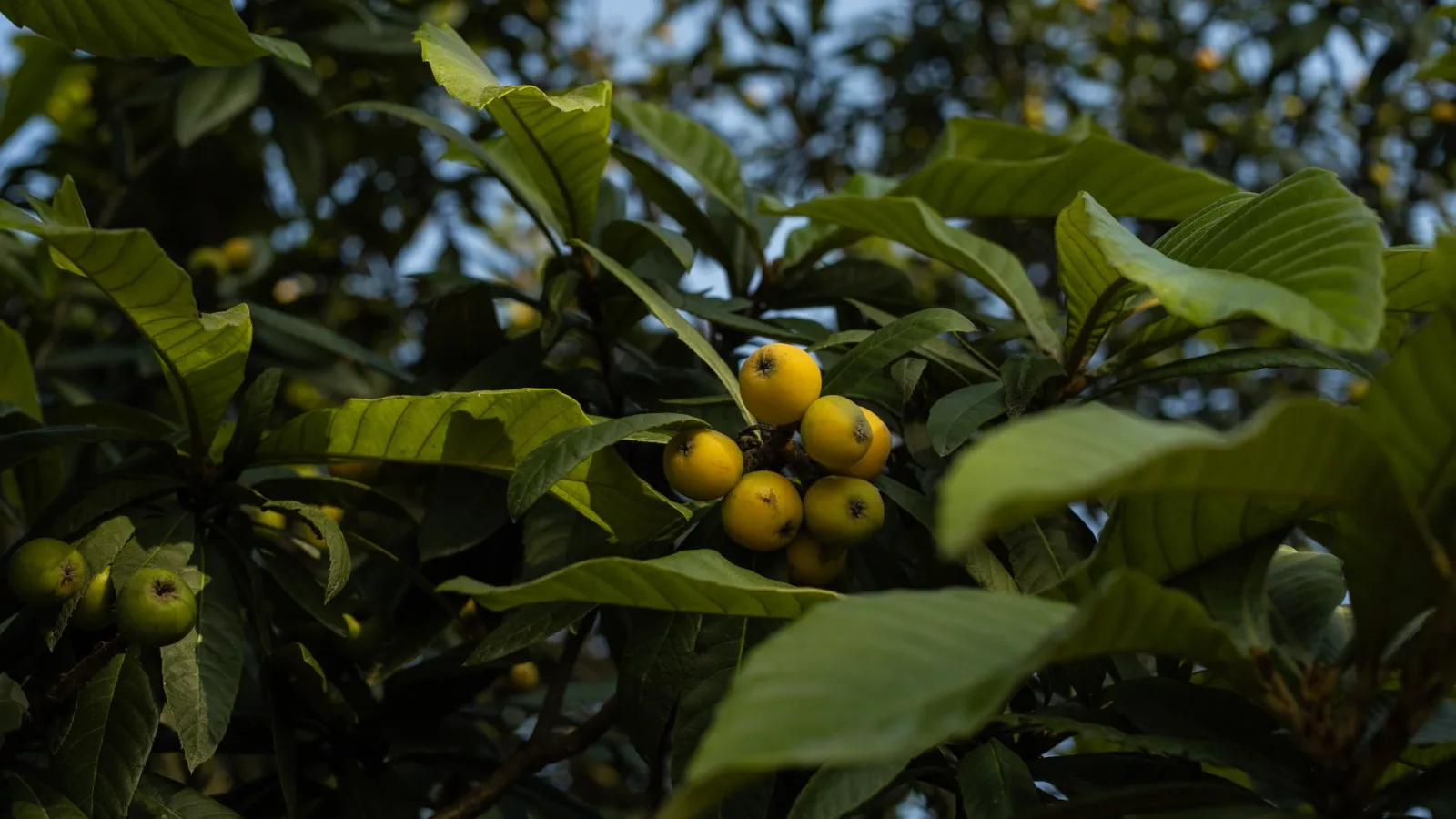
In a corner of the balcony where cold drafts have just begun to creep in, the loquat tree sends up its flower stalks. It blooms alone, at the very time when persimmons and apples have dropped their leaves and gone to rest, so in homes that grow one in a pot, these flowers are how you know winter has come. From the blossoms weathering the winter to the fruit ripening in early summer of the following year takes half a year. In that span, the parts of this tree that reach your body are the fruit and the leaves. The seeds sit inside the same fruit, but you do not eat them. Why things from the same tree get such different treatment starts to show once you look at the color of the fruit.
The Fruit: The Pigments Behind the Orange
The orange of loquat flesh comes from carotenoids such as beta-cryptoxanthin and beta-carotene. In an analysis published in the Journal of Agricultural and Food Chemistry in 2007, Zhou and colleagues named these two as the main pigments in red-fleshed varieties and noted that total pigment content varied widely by cultivar and ripeness. White-fleshed varieties had far less. Carotenoids are fat-soluble pigments, so the flesh is said to be absorbed better when eaten over yogurt or cream. With its low acidity and mild aroma, the loquat pairs well with dairy.
Part of the sweetness comes from sorbitol. According to the U.S. Department of Agriculture's food composition data, 100 g of raw fruit has 47 kcal and 266 mg of potassium. The Donguibogam, the 17th-century Korean medical compendium, separately recorded the fruit as cold in nature, sweet in taste, and nontoxic. The skin peels off by hand, and the flesh browns quickly once peeled, so if you are not eating it right away, drop it into water with a squeeze of lemon juice.
The Leaves: Why You Wipe the Fuzz Off the Back First
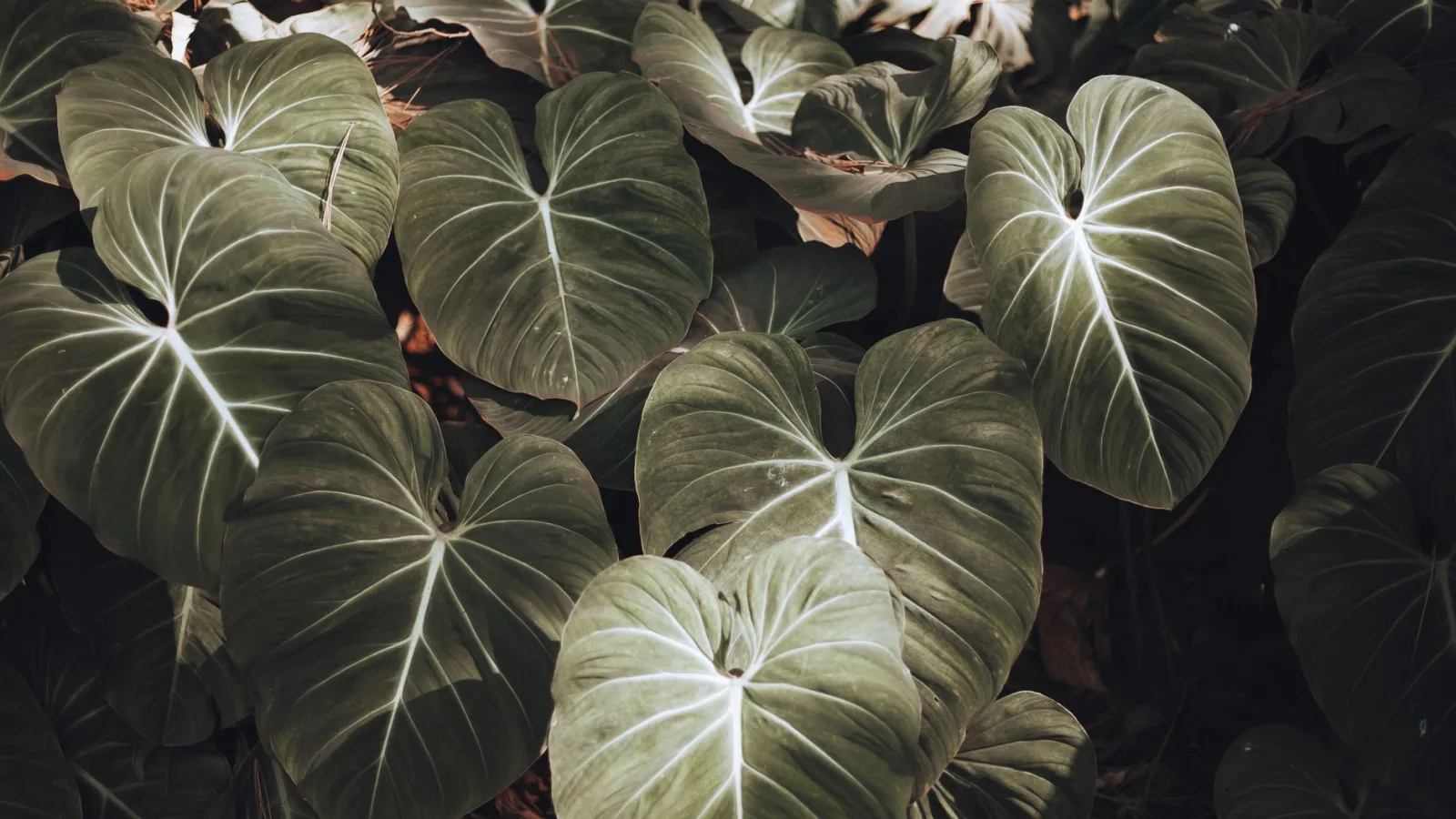
In its section on fruits, the Donguibogam lists the loquat as bipayeop, meaning loquat leaf, so it is the leaf, not the fruit, that gets the entry. It describes the leaf as neutral in nature, bitter in taste, and nontoxic, adding that some call the taste sweet. It says the tree grows in the south, stands about a person's height, a little over 2 m, has fuzz on the underside of its leaves, and that the leaves are picked in the fourth lunar month and dried in the sun. Before use, it instructs you to warm the leaf over a fire and wipe every last bit of the yellowish fuzz off with a cloth, on the reasoning that any fuzz left behind irritates the throat. That same preparation comes first when you make leaf tea. Modern compositional analyses report that the leaves contain triterpenes such as ursolic acid and oleanolic acid.
Neither the old medical text's notes on the leaf's nature nor the pigment analysis that explains the orange flesh amounts to a claim that loquat prevents or cures any disease. The first is the judgment of an old medical text, and the second is data about color.
Here is how to brew the leaf tea. Dry the leaves in the shade, wipe the undersides with a dry cloth, and chop them finely, then steep 3 g of dried leaf in 300 ml of hot water for about 3 minutes. Rather than one strong infusion, the same leaves make a more pleasant drink when steeped lightly two or three times.
The Seeds: The Part You Do Not Eat
Loquat seeds contain a cyanogenic glycoside called amygdalin, the same compound found in apricot kernels. In 2017, Japan's Ministry of Agriculture, Forestry and Fisheries detected cyanide compounds in a powdered food product made from ground loquat seeds and announced a recall. Do not grind or crush the seeds and eat them. When making a compote, remove every seed before the fruit goes on the heat, and if you simmer flesh that has been soaking in lemon water together with sugar, the color fades less. In a household with children, it is reassuring to halve the fruit and take out the seeds before serving.
A Tree Decided by the Winter Low
Before a loquat can reach your body, it has to get through one winter. The tree itself tolerates down to around -10°C, but the flowers freeze at about -3°C and the young fruit at around -2°C. That is why warm coastal areas with an annual mean temperature of 15°C or higher suit it best. Its ideal growing temperature is 15 to 25°C, and it will grow anywhere between 5 and 30°C. Flowering has nothing to do with day length; the tree blooms when temperatures drop in autumn. In the Northern Hemisphere it flowers from October to December and ripens the following May to June, and in the Southern Hemisphere you shift that by half a year. It is widely grown in its native China as well as in Spain, Turkey, Japan, and Pakistan, and in Korea it is grown outdoors along the southern coast. In the central region and farther north, plant a sapling in a large pot in March or April, and since it has to overwinter with its flowers on, bring it indoors or onto a glassed-in balcony before the first frost.
For the same tree, the old medical text told you to wipe the fuzz from the leaves, and today's food authorities tell you not to grind the seeds. Follow both pieces of advice, and what is left is a single peeled fruit and a lightly brewed cup of leaf tea. That is where the loquat meets the body, and no further.
Sources: Donguibogam, Fruits section, entry on loquat leaf · Zhou et al., Journal of Agricultural and Food Chemistry (2007) · Japan Ministry of Agriculture, Forestry and Fisheries announcement (2017) · USDA FoodData Central, Loquats, raw