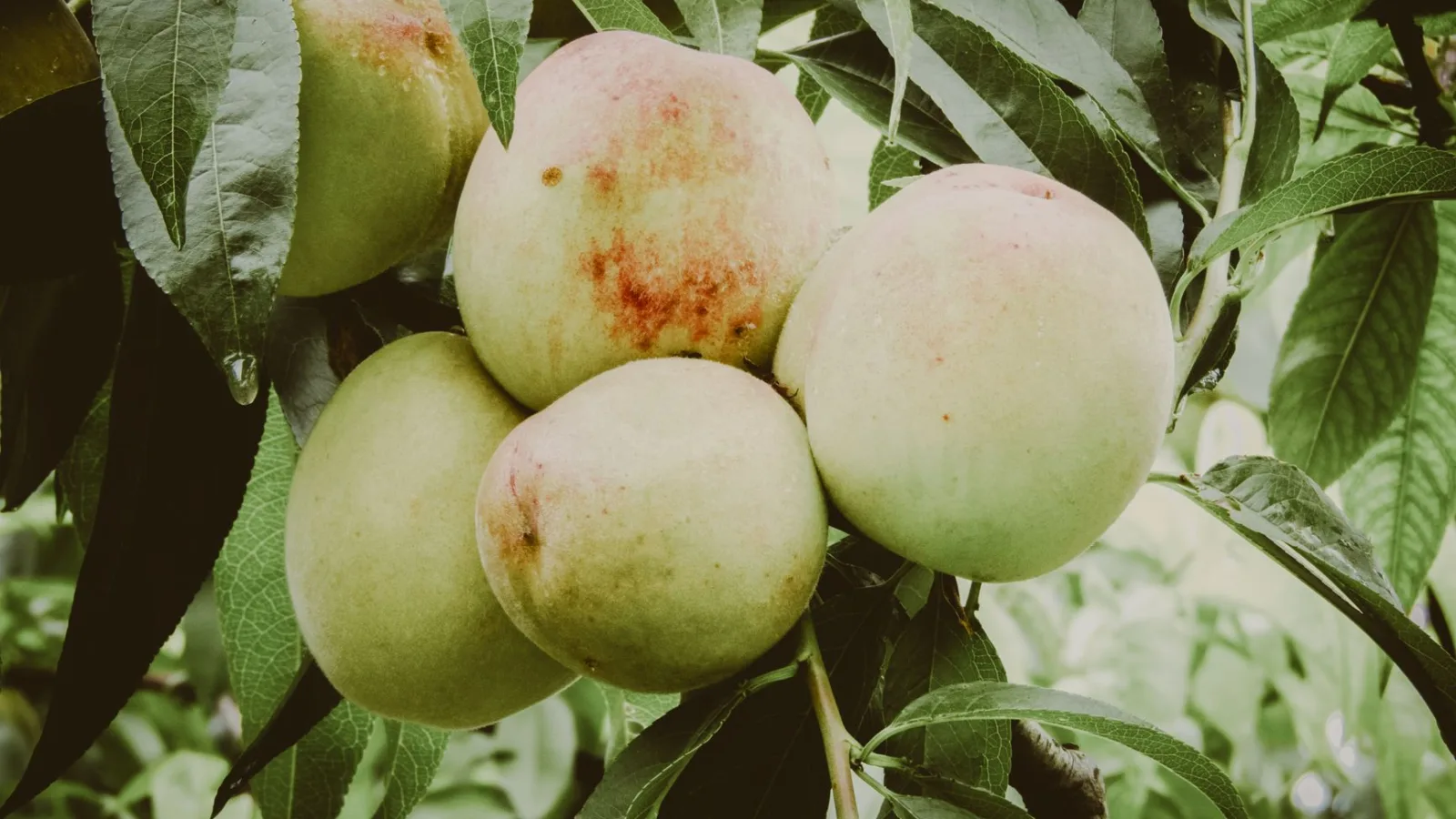
After you finish a peach, what's left in your hand is a single brown pit, deeply grooved, 2 to 3 cm long, and so hard that no amount of squeezing will open it. In the Northern Hemisphere, ripe peaches reach the table from July through September, and that is also when more people arrive at Homiclub after searching for "peach pit." A child swallowed one whole. Someone bit into one out of curiosity. Someone scraped every last shred of flesh off the pit. Someone received a gift of powder made from ground pits. The situations differ, but the question is the same: how far is fine, and where does the danger begin?
The answer starts with pulling apart the two things that the single phrase "peach pit" points to: the hard stone, and the kernel inside it.
The Stone and the Kernel Are Different Things
Few people who toss a peach pit ever look inside it. What we casually call the pit is actually two layers. The outside is the stone, hardened into something like wood. Crack it with a hammer and a single flat kernel, much like an apricot kernel, comes out. The Donguibogam, the 17th-century Korean medical compendium, kept the two apart in its chapter on fruits. It called the outer part dohaek (桃核, the peach stone) and the inner part doin (桃仁, the peach kernel), and it instructed that pits be gathered in the seventh lunar month, cracked open, and the kernels alone taken out and dried in the shade. The part used as medicine was the kernel.
The compound at issue today sits in the same place: a cyanogenic glycoside called amygdalin, found in the kernel. The flesh is the part you eat. The amygdalin is in the kernel, inside the stone. Even if you scraped off the very last bit clinging to the pit, what you ate was flesh. The worry begins the moment the stone cracks and the kernel comes out.
Why It Takes Biting to Become Dangerous
Alongside amygdalin, the kernel contains an enzyme called emulsin (a β-glucosidase). In intact cells, the two are kept apart. Chew or grind the kernel and the cells rupture, the two meet, and the enzyme breaks amygdalin down into hydrogen cyanide. That is why a kernel swallowed whole and a kernel chewed and swallowed are treated differently. The preparation the Donguibogam prescribes for doin, soaking the kernels in boiling water, removing the skins and tips, setting aside any twin kernels, and grinding the rest to a paste, is also a process that sets this breakdown in motion. The old text recorded kernels prepared this way as nontoxic (無毒). That is what an old medical text says. Modern food safety agencies tell us not to eat the same kernels at all.
How Much Is Too Much?
Published intake limits measured specifically for peach kernels are hard to find. For apricot kernels, which carry the same compound, they exist. In a 2016 opinion, the European Food Safety Authority's panel on contaminants in the food chain set an acute reference dose for cyanide of 20 μg per kilogram of body weight. Converted to raw apricot kernels, the panel found that an adult reaches this threshold with three small kernels, and a toddler with half of one. The same opinion noted that if the kernels are already ground, gut bacteria break down amygdalin even without the plant enzyme, so exposure still occurs. By calculation, 1 g of amygdalin fully broken down yields about 59 mg of hydrogen cyanide. Peach kernels belong to the same family as apricot kernels and are similar in size. The figures can't simply be carried over, but one thing holds: the risk is counted in single kernels.
After a Swallow, First Ask Whether It Was Whole or Bitten
If it was swallowed whole, what went down was the stone. The stone doesn't break in the digestive tract, so the kernel never comes out and amygdalin is not an issue. What matters here is size. In adults it usually passes on its own, but see a doctor if abdominal pain or vomiting persists. If a small child or a dog has swallowed one, the throat or intestine can become blocked, so don't wait: contact a doctor or a veterinarian.
- If someone bit into it, or cracked the stone and ate the kernel: don't wait for symptoms. In Korea, call 119. Elsewhere, call your country's poison control line or go straight to the emergency room, and report how many kernels were eaten and when.
- If someone ate the flesh clinging to the pit, down to the last bit: that's flesh. Nothing needs to be done.
- If you were given powder, oil, or tea made from ground pits: that is the same as a kernel that has already been bitten. Don't use it as food at home.
The Flesh Is for Eating. The Pit Is for Planting.
A finished pit is better left uncracked. Bury the whole stone in soil and let it pass through the winter cold, and it will often sprout in spring. In the Northern Hemisphere, bury it in November or plant it in March. Growing peach trees, their season, and what to pair them with are gathered on the peach page of the Homiclub crop guide. The countries that grow the most peaches are China, Spain, Italy, Türkiye, and Greece. The flesh is the part you can enjoy freely. Slice a ripe peach over plain yogurt and the tartness and sweetness play off each other. Add salty cured ham or an aged cheese, and the fat and salt bring the sweetness of the fruit into sharp focus.
Between the kernel the apothecary once ground and the flesh that lands on the table lies a single shell that no hand can open. As long as that shell stays unbroken, the place a peach pit belongs is in the ground.