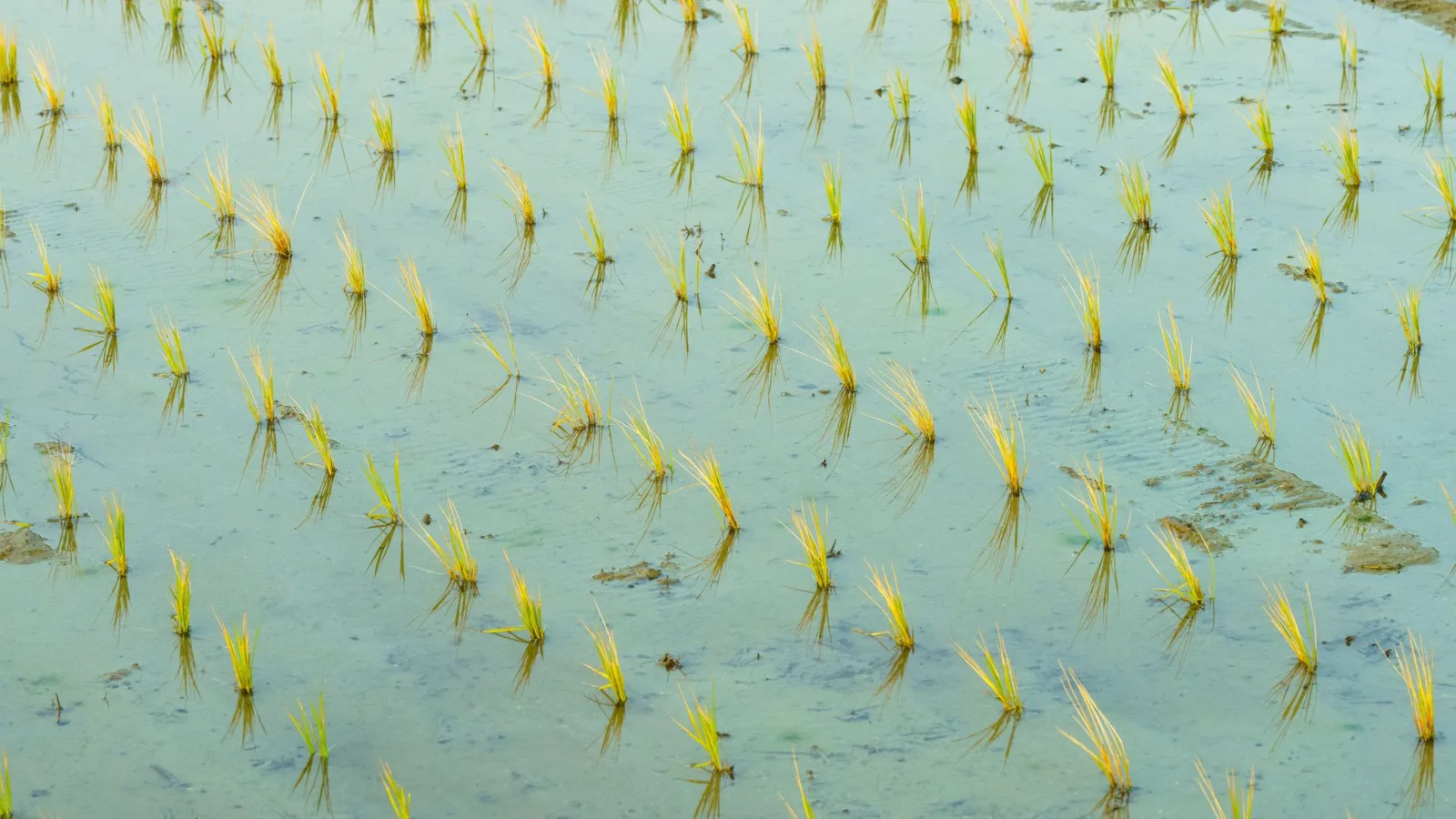
By late September, the least demanding corner of the garden is the stone water basin beside the yard. Three rice seedlings went in back in spring, and while we did nothing but keep the water topped up, the heads emerged and the grains ripened to gold. Rice rarely makes anyone's list of kitchen-garden crops. Peppers and eggplants are winding down now and need clearing out, but rice is better left standing until frost. Read what the Donguibogam says about this grain, and the reason starts to make sense.
The Donguibogam Called It "Good Non-Glutinous Rice"
In the grain section (穀部) of the Donguibogam, the rice harvested from the paddy plant is listed as gaengmi (粳米). Its nature is described as neutral, its taste sweet and slightly bitter, and it is said to carry no toxicity. The character gaeng (粳) means firm, and the text explains the name that way: rice harder than the glutinous kind. The Korean name recorded alongside it is dyohan nissal — good non-glutinous rice.
The text also covers how to eat it. White rice from a late harvest taken after the first frost was ranked highest, and the instruction was to cook it thoroughly rather than leave it underdone, eating it as rice and porridge. Rice long stored in a granary was given its own separate entry, jinneummi (陳廩米), with a warning that its nature is cold and that eating it often brings on diarrhea. "Long stored," the text clarifies, means rice three to five years old. This is a record from a historical medical text, and it differs from what medicine concludes today. The original entry can be read as written at Homiclub's Donguibogam commentary on gaengmi.
What We Measure in Rice Now
What determines a cooked grain's stickiness and texture is its starch — specifically, how much amylose it contains. Where the old record divided non-glutinous from glutinous rice by firmness, today we describe the same difference through that ratio.
Milling strips away the outer bran and the germ. Gamma-oryzanol stays in brown rice and is nearly absent from white rice. Several analyses have found that sprouting brown rice raises its GABA (gamma-aminobutyric acid) content above that of white rice or plain brown rice — with the caveat that the numbers vary widely depending on the temperature and duration of sprouting.
There are also reports that meals made with less-milled rice produced a gentler post-meal rise in blood sugar than white rice did. Results shift with the variety, the cooking method, and how much the rice is cooled, so it's best not to read this as a dietary substitute for managing blood sugar.
Where the Two Agree, and Where They Part
The instruction to cook rice thoroughly lines up with what we say about cooking today. Fully gelatinized starch is easier to digest — that much hasn't changed.
Where they part is white rice. The old record prized well-polished white rice above all, while today we also consider what's left in the bran that polishing removes. The warning against old stored rice reads differently now, too. The oils in bran turn rancid with time, so in an era when storage was difficult, there was likely good reason to favor rice with the bran removed. That explanation is an inference; the original text doesn't say so.
A Rice Crop in a Single Water Basin
Rice thrives in warm climates with plenty of water, and it's grown as a staple grain across Asia and many other regions. In the Northern Hemisphere, seedlings go out in April or May and the harvest comes in September or October; in the Southern Hemisphere, shift that by six months. You don't need a field. Take a watertight stone basin or a rubber tub, fill it halfway with soil, and add water until the soil sits under 3–5 cm of it.
- All you have to watch is that the water never dries out. Rice tolerates standing water.
- Once the heads emerge, birds will find them before you do. Cover the basin with netting.
- Cut the plants when the grains harden and the leaves yellow. Dry them for a few days, then strip the grains and hull them.
When you cook your harvest, think about what goes alongside it. Rice is low in lysine and beans are high in it, so cooking them together lets the amino acid profiles fill each other's gaps. Soak beans in advance; with adzuki beans, discard the first boiling water before adding them to the pot. Gim (dried seaweed sheets) or miyeok-guk (seaweed soup) supply the iodine and minerals that grains lack — though when you add salty seaweed, dial back the seasoning in the soup. Kimchi and doenjang (fermented soybean paste) bring sourness and umami to round out the plainness of white rice. Keep in mind, though, that sodium comes along with the lactic acid bacteria, so there's no need to drain every last drop of broth. Varieties, planting months, and good pairings are all laid out in the rice entry in Homiclub's crop guide.
This fall, try stirring a handful of brown rice into your white rice before you cook it. In a single bowl, you can weigh an old record that prized late rice harvested after frost against a modern account that looks to what remains in the bran. As for the water basin — next spring is soon enough to set one up.