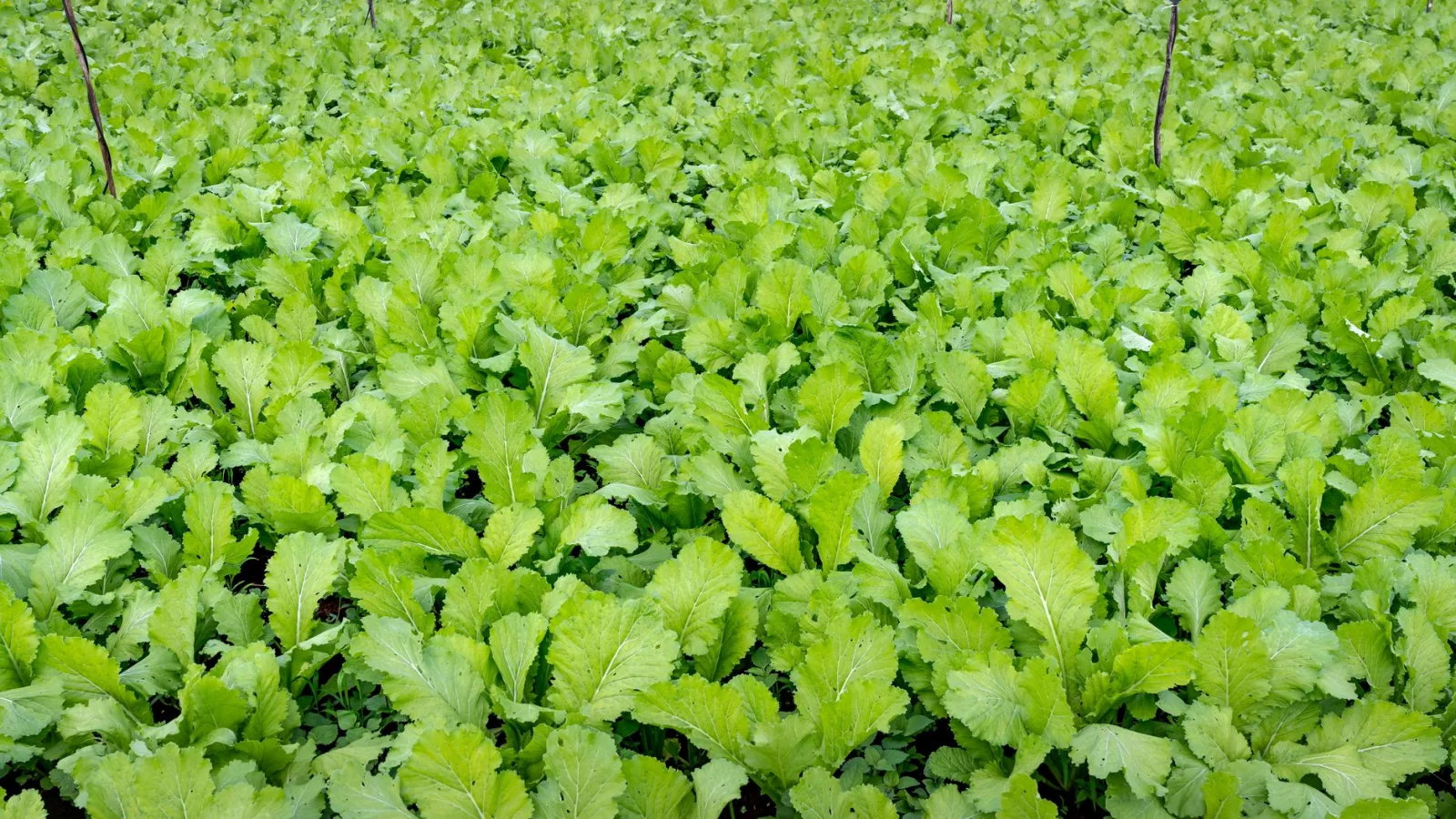
Meeting the Radish in the Garden
Homi, brush the soil aside in an autumn garden and a white, well-fed radish comes into view. The shoulder is tinged green where the sun reached it; the rest has hardened quietly underground. Pull it up and the smell of earth arrives first, followed by a sharp peppery note that catches at the back of your nose. And don't overlook the pleasure of thinning the seedlings — those young sprouts, musun, are worth eating on their own.
The radish may be the most familiar crop on the Korean table. It becomes kkakdugi (cubed radish kimchi), dongchimi (a clear water kimchi), a clean-tasting soup, and mumallaengi — strips dried for eating through the winter. Straight from the ground, its heat is still sharp; fermented in kimchi, it turns into something rounder and deeper. Few crops wear so many faces from a single root. So how did the old medical texts regard a vegetable this ordinary?
What the Donguibogam Says
Start with its nature. On the radish (萊菔, naebok), two views have come down side by side: that it is warming, and that it is cooling. The flavor holds both pungency and sweetness. The detail worth noting is this — cooking was said to soften the cooling quality, while the raw root runs slightly cooler. In other words, the same radish meets the body differently depending on how you prepare it.
The radish's medicinal action was understood to travel chiefly to the lungs (the respiratory system) and the stomach (digestion). That is why it was named a key remedy for phlegm and for sikjeok — food that has stalled and accumulated because digestion failed.
The first virtue the Donguibogam lists for radish is helping food go down (消食, sosik). It was said to ease the digestion of rich, heavy fare, and of rice cakes and wheat-flour dishes in particular. This view underlies a long Korean habit of serving radish alongside tteok (rice cakes) and dumplings. The text also credits it with sending qi downward (下氣, haqi), which put it to use for a bloated, gassy belly, for belching, and for hiccups. For thin phlegm and coughing, it was said to dissolve phlegm (化痰, hwadam), and radish seed in particular — naebokja (萊菔子) — became a mainstay of respiratory formulas in Korean medicine.
Uses as an antidote are recorded as well. Radish juice was reportedly given as a kind of emergency remedy for the toxicity of tofu, of wheat noodles, of fish, and of alcohol. One more: the Donguibogam held that eating radish daily kept hair from graying early and did the skin some good.
Set Against Today's Nutrition
By modern nutritional thinking, too, the radish is a light but useful vegetable. It is high in water and low in calories, and carries vitamin C among other nutrients. Radish is known to contain enzymes that aid digestion — a fact that lines up curiously well with the old habit of eating it alongside rice cakes and fatty foods. The Donguibogam's view that radish helps food go down (消食) and the modern explanation take different roads to roughly the same place.
The same goes for the folk habit of reaching for radish when phlegm and coughing set in. The text's note that it dissolves phlegm (化痰), and the long practice of putting radish seed — naebokja (萊菔子) — into respiratory formulas, amount to a thread of accumulated experience. The old household method of steeping radish in honey and spooning it out sits on that same line.
That said, nothing here claims that radish treats anything. The Donguibogam's records are a traditional lens, an ordering of long experience; modern nutrition measures food by a different yardstick. Setting the two side by side and considering them is, I think, about the right distance for you, Homi.
From the Garden to the Table
The radish takes to a great many preparations. Slice it raw for crispness or press it for juice; ferment it into kimchi, dongchimi, and kkakdugi to eat for weeks on end. Simmer it into a clean, cooling soup, or dry it in the autumn sun as mumallaengi to see you through winter as a side dish. Radish seed, naebokja (萊菔子), was used in pills and powders, and the young sprouts you thin out make a sharp, appetite-waking garnish eaten raw.
Finally, a word of caution the Donguibogam took care to record. It advises against eating radish together with ginseng or jihwang (Rehmannia root), on the grounds that their effects cancel each other out. And anyone with a weak, cold stomach who tends toward loose stools was advised to go easy on raw radish and raw juice, and to eat it cooked instead — which follows from the earlier point that cooking softens the cooling quality.
Homi, hold a freshly pulled radish in your hand and you'll find a long story tucked inside a thoroughly common vegetable. Why not set a piece of radish beside a plate of rice cakes at dinner tonight?