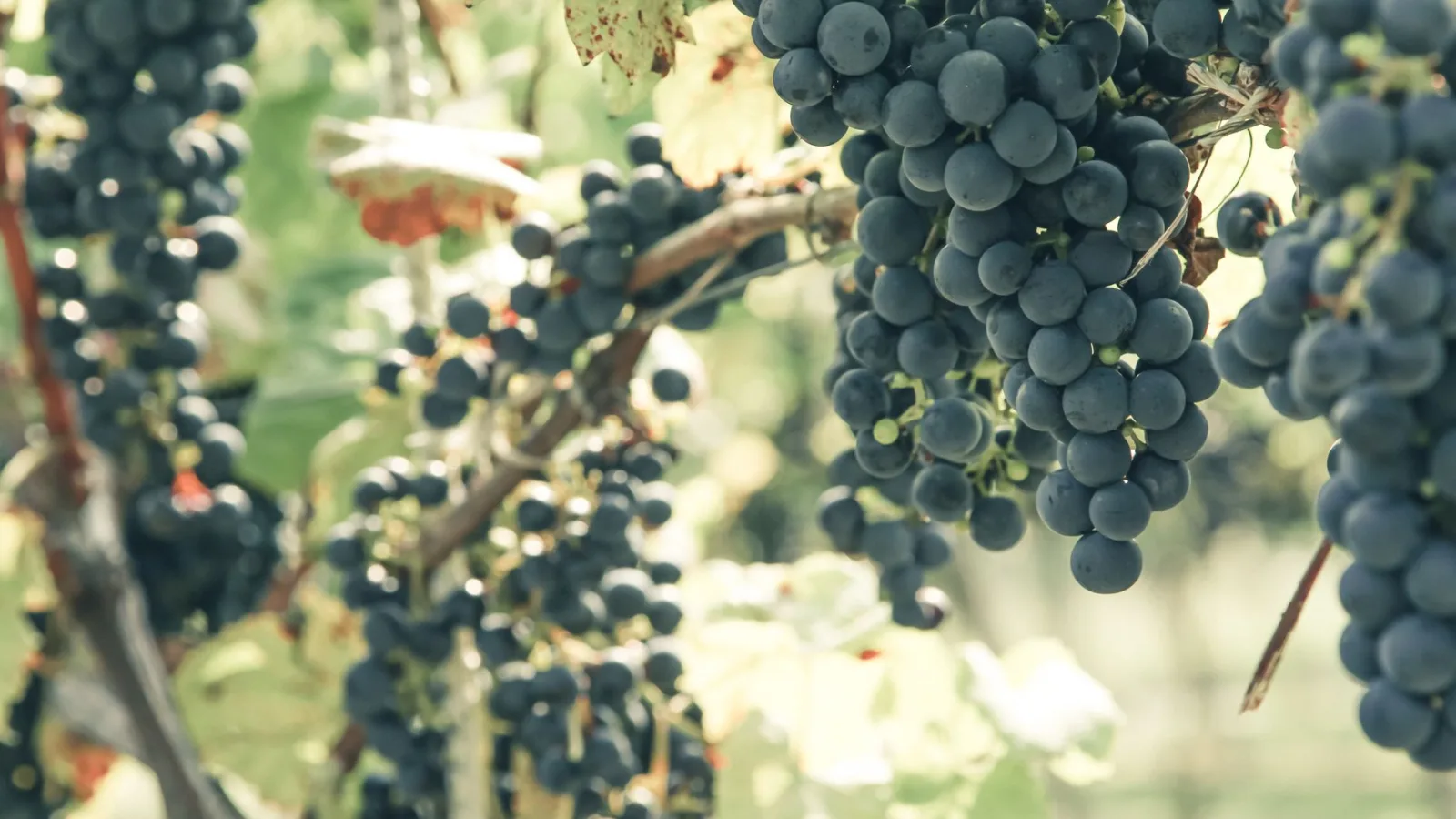
By late September, the meoru vines trained over the trellis hang heavy with clusters ripened almost to black. Meoru is Korea's wild mountain grape. Pop one in your mouth and you taste tartness and aroma before any sweetness, and you're left with a thick skin and a big seed. The berries are so small it hardly seems worth the effort. But the dark pigment is in the skin, and most of the fiber is in the skin and seeds.
Color in the Skin, Tartness in the Juice
Meoru grows on a climbing vine in the grape family, which spreads along forest edges at the foot of mountains. It belongs to the genus Vitis. Its deep purplish-black color comes from pigments in the anthocyanin family. Researchers have isolated these pigments from the skins of Vitis fruits many times. They have also measured that the smaller the berry, the larger the share of its weight that is skin. With a small-berried fruit like meoru, you eat more skin for the same weight.
Food analyses show that the tartness comes from organic acids such as tartaric acid and malic acid. Food scientists say wild meoru tastes more sour than cultivated grapes because it has a different balance of acid and sugar. The sugar is there, but with so much acid you notice the sweetness less. The fiber is concentrated in the skin and seeds rather than the flesh.
First the Tongue, Then the Gut
Your tongue is the first to meet these compounds. You taste the organic acids as tartness, and the aroma in the skin comes through at the same time. If you chew the skins too, the fiber passes undigested all the way to your gut. Fiber is well known for keeping you regular, so eating meoru with the skins may help a little with that too.
The claims about the pigment need a careful read. Anthocyanin analyses look at what the fruit is made of. They don't study disease. Nothing in them shows that eating meoru prevents or cures any illness. It's enough to think of the dark skin as the part that gives you both aroma and fiber.
The old medical texts don't say much either. Dongui Bogam, a 17th-century Korean medical classic from the Joseon era, lists meoru in its fruit section (果部) under the name 蘡薁 (yingyu). It gives the Korean name as 묀 멀위; meolwi is an older form of the word meoru. Citing an earlier text, the Danxin, it calls the fruit a "mountain grape" and says the berries are small, the taste is sour, and it can be made into wine. That's the whole entry. It doesn't even give the fruit's seongmi (性味), the nature and flavor used to classify medicinal ingredients. Old medical texts don't follow the standards of modern nutrition science, so they're best read as a record of how the fruit was used in the past.
Juice and Jam, Skins and All
The color and aroma are in the skin, so meoru is best used skins and all. If you picked a few clusters today, try one of these:
- Juice: Crush the washed clusters and let them sit for a while. Then press them and strain through a sieve to remove the seeds. The longer the skins steep in the juice, the deeper the color and aroma. Refrigerate the strained juice and drink it within two or three days.
- Jam: Take the skins and pulp left from making juice, remove the seeds, and simmer them with sugar over low heat. A little lemon juice helps the jam set. Meoru is tart, so it needs a bit more sugar than grape jam made with cultivated grapes. Enjoy it about a spoonful at a time.
- Yogurt and cheese: The fat in dairy softens meoru's sharp tartness. Top with a little jam, or serve whole berries on the side.
The seeds are large, so remove them before giving meoru to children.
Growing on a Trellis, Harvesting in Fall
Meoru is extremely cold-hardy and can survive winters as cold as about -30°C (-22°F). It grows best at 18–28°C (64–82°F) and grows anywhere from 5 to 32°C (41–90°F). The berries get deeper color and aroma in mountain areas where days and nights differ widely in temperature during summer and fall. The vine grows wild in the mountains of Korea, Japan, and Russia and is widely cultivated in China.
To grow it in your garden, choose a sunny spot where water doesn't pool. Put up a trellis or fence for the vines to climb before you plant. Standing water damages the roots. In the Northern Hemisphere, plant young vines in March or April. Expect almost no fruit the first year. After two or three years, once the vines have thickened, you'll get a proper crop of clusters. In the Northern Hemisphere, harvest in September or October. When picking wild meoru in the mountains, check the leaves and tendrils as well as the berry color, so you don't confuse it with other black berries that look similar.
Today, crush a handful of meoru, skins and all, to make juice. Don't throw out the leftover skins; simmer them into jam.
Sources: Dongui Bogam, fruit section (果部), entry on 蘡薁 · Food-analysis data on pigments and organic acids in Vitis fruits