- Type
- Trees & Vines
- Difficulty
- Moderate
- Season
- Fall
- Sowing
- Plant a sapling
Wild mountain grape
Vitis coignetiae
Anthocyanins and organic acids · a small grape from a hillside vine
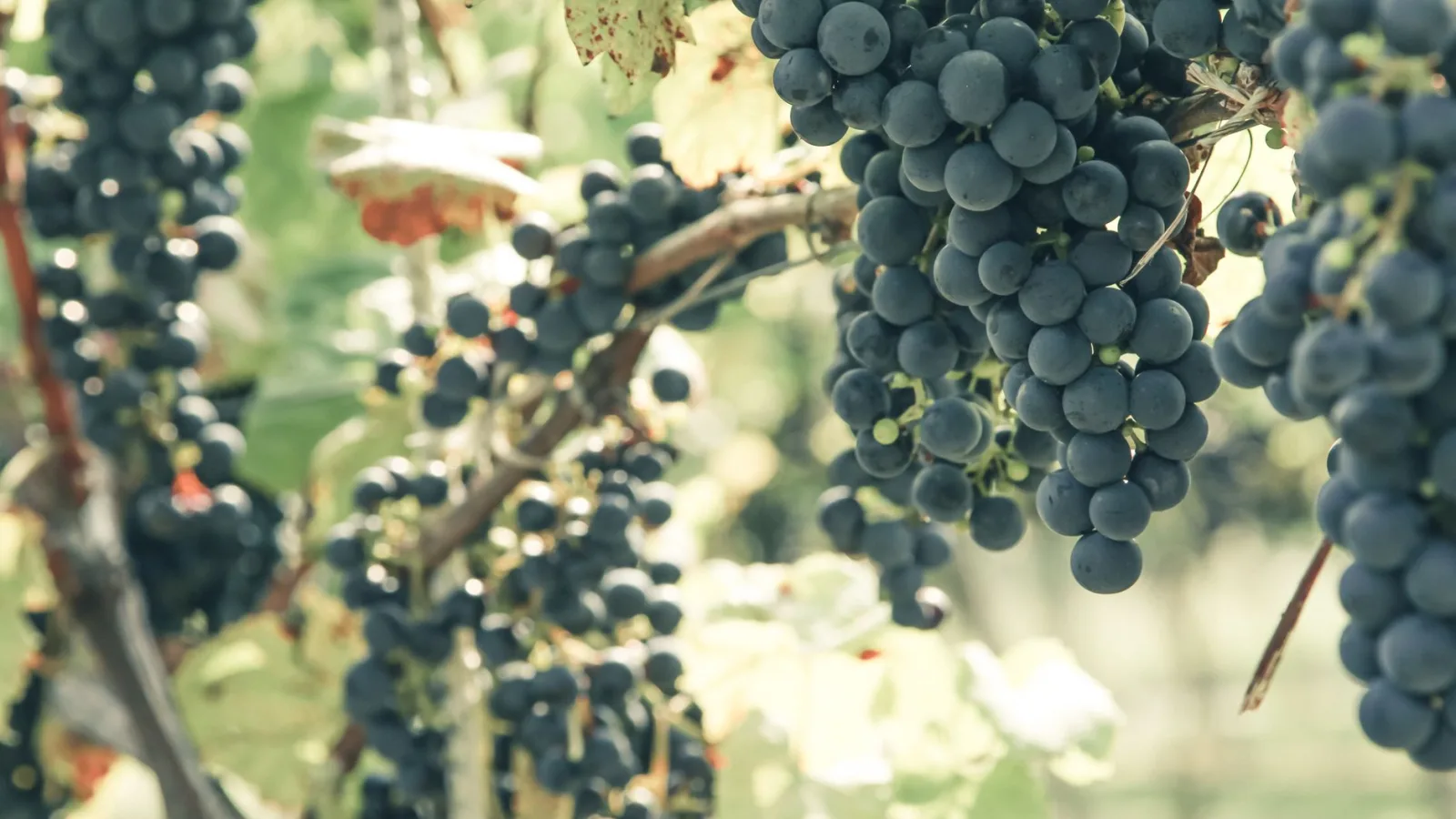
Meoru is the fruit of a vine of the grape family that runs along wooded hillsides. The bunches blacken in autumn, and the berries are small, thick-skinned and large-seeded, so the acidity and the aroma arrive before any flesh does. Some are eaten straight, but the long-standing uses are juice and steeped liquor, and farms now train the vines on trellises and sell the fruit. The Donguibogam lists it under the hanja name Yeonguk in its Fruit section and records the Korean name as moen meorwi. The whole entry is brief: it is the mountain grape, the berries are small and the taste sour, and it will serve for making liquor. Put up a trellis or a fence before planting, and choose a spot with sun and no standing water. Almost nothing sets in the first year; proper bunches come once the stems have thickened over two or three seasons. Picking in the hills, do not go by berry colour alone — check the leaf and the tendrils too.
Year-Round Calendar
- 1
- 2
- 3
- 4
- 5
- 6
- 7
- 8
- 9
- 10
- 11
- 12
- 3
- 4
- 9
- 10
Where It Grows
-
Wild population
It grows wild along woodland edges in the foothills throughout the country, and is raised on trellises in Muju in North Jeolla, in Yeongwol and Jeongseon in Gangwon, and in Mungyeong in North Gyeongsang. Harvest September, October
- 9
- 10
- Wild population Called yamabudo, it grows in the mountains of northern Honshu and Hokkaido. Iwate turns it into juice and wine.
- Major producer Called shanputao, it is grown on a large scale in Jilin and Heilongjiang for winemaking. That shanputao, however, is wang-meoru (Vitis amurensis), a different species from meoru (V. coignetiae).
- Wild population Wild populations survive in the forests of Primorye and Sakhalin.
Its native range is the temperate forest of East Asia, spanning Korea, Japan, northeastern China and the Russian Far East. What Koreans call meoru is not one species but a name covering both meoru (Vitis coignetiae) and wang-meoru, the larger-fruited relative (V. amurensis); the shanputao fermented into wine in Jilin, China, is wang-meoru. Take care not to read the map as the range of a single species.
- Optimum
- 18~28℃
- Range
- 5~32℃
- Hardiness
- Hardy
A deciduous climber that trails its vines along the woodland edges of mountain foothills. It is exceptionally cold-hardy, coming through winters of around -30℃, and in upland country where summer and autumn bring wide day-to-night temperature swings the berries take on deep colour and scent. The roots stay sound only on slopes where water does not pool.
Harvested 3–4 years after planting. Seedlings go in during March and April, and for the first two years only two or three canes are kept to build the framework. Bunches set properly from the third year, and picking comes in September and October.
In Korea Nationwide
It grows wild along woodland edges in the foothills throughout the country. Farms that raise it on trellises cluster in upland districts with wide day-to-night temperature swings, and Muju in North Jeolla, Yeongwol and Jeongseon in Gangwon, and Mungyeong in North Gyeongsang are the best known.
How to grow
- Light
- Five or six hours of sun. In shade the vine runs long and sets no bunches
- Soil and depth
- Free-draining soil at least 40cm deep. Roots suffer where water stands
- Spacing
- Two to three metres between plants. The vine travels, so put the trellis or fence up first
- Watering
- Keep it from drying out through the first year only. Once rooted it largely carries itself on rainfall
- Feeding
- Work compost around the base between December and February, after leaf fall. Heavy nitrogen gives vine growth and fewer bunches
- Harvest
- September and October. Cut the bunch with scissors when it has blackened evenly and the berries come away at a touch. Ripening runs unevenly even within one bunch, so pick over two or three passes
What makes the difference. Refrigerate bunches unwashed and rinse them only just before use. Left damp, they mould within a day
Why this one is harder. Almost nothing sets in the planting year. For the first two seasons keep only two or three stems and cut back in winter to build the framework; proper bunches come from the third year
Common problems
- Birds You will see Berries picked out of bunches just as they start to colour What to do Net the bunches as they ripen. Reflective tape loses its effect within days; netting is what holds
- Downy mildew You will see Oily-looking blotches on the upper leaf and white mould beneath What to do It spreads in the rainy season. Thin the lower leaves for airflow, remove affected leaves, and water at the base rather than wetting the foliage
- Aphids You will see Shoot tips curl and turn sticky What to do Wash off with a jet of water; if it recurs, use an egg-yolk oil spray. Once fruit has set, observe pre-harvest intervals
This page describes how a crop is grown and used. It does not claim health effects for any food, nor is it intended to prevent or treat disease. Component and study notes are references only and do not mean the same result occurs in people. Consult a medical professional about health concerns.
Health Benefits
The old record — yeong-uk (蘡薁). The Donguibogam lists it in the Fruit section under the hanja name Yeonguk and records the Korean name as moen meorwi. It states that this is the mountain grape, that the berries are small and the taste sour, and adds that it will serve for making liquor. It is a short entry credited to the Danshim, and it sets down no separate nature or flavour. What an old medical text recorded differs from how it is judged today.
Pigments of the grape genus. Anthocyanin pigments have been isolated from the skins of grape-genus fruit in repeated analyses, and the same work records that the smaller the berry, the greater the share of skin by weight. These are compositional analyses and have no bearing on disease.
Sourness and organic acids. Food analysis confirms that the sourness of grape-genus fruit comes from organic acids such as tartaric and malic acid. The sharper taste of wild meoru compared with table grapes is treated as a matter of the acid-to-sugar ratio. This is an analysis of flavour composition.
Nutrition
- Anthocyanins (in the black skins) — the pigments behind the dark red of grape-genus fruit
- Organic acids (tartaric, malic) (flesh and juice) — the acids behind the sourness of grape-genus fruit
- Sugars (rise as the fruit ripens) — the component behind the sweetness of grape-genus fruit
- Dietary fibre (thick skin and large seeds) — a consequence of how much of the berry is skin and seed
Pigment concentrated in the skin The dark red of meoru comes from anthocyanins in the skin. Because the berries are small, skin makes up more of a given weight than it does in table grapes. Crushing the fruit skins and all draws far deeper colour into the juice. This entry stays with the compositional record.
Where the sourness comes from Sourness in grape-genus fruit comes from organic acids such as tartaric and malic acid. Meoru tastes sharper than a table grape because it carries relatively more acid and less sugar. Picked after a first frost, the edge softens a little.
Mostly seed and skin With such small berries, seed and skin outweigh the flesh, and dietary fibre comes with them. Chewed whole the seeds add an astringent note, so strain them out when juicing. The strained skins are often cooked down into jam.
Steeped liquor and bottled juice Meoru liquor carries both the sugar added at steeping and the alcohol produced by fermentation, and much of the bottled juice on sale has added sugar as well. Check the sugar figure on the label before deciding how much to drink. Fresh fruit and steeped preparations are handled as different foods.
Pairings
○ Juice crushed with the skins — Crush washed bunches skins and all, then strain out the seeds. Colour and aroma sit in the skin, so leave the skins in contact and press them well. Refrigerate the juice and use it within two or three days.
○ Jam cooked down with sugar — Simmer the skins and pulp left after straining with sugar over low heat. Take the seeds out first; a little lemon juice helps it set. The fruit is sharp enough that it takes slightly more sugar than table grapes.
○ Yoghurt and cheese — The fat in dairy blunts the sharp acidity of meoru. Spoon on the cooked jam or serve the berries whole alongside. The seeds are large, so remove them for children.
△ Porcelain berry and Boston ivy — do not pick — The commonest mistake when gathering vine fruit is porcelain berry. Ampelopsis species ripen not to black but to a mottled mix of pale blue and purple, their leaves are deeply cut like a maple, and the fruit spreads in a flat umbel rather than hanging as a bunch. Boston ivy berries also blacken, but its leaves come in threes and its tendrils end in adhesive pads. Neither is eaten. Meoru hangs as a black bunch, and its tendrils sit opposite the leaves at the nodes. If you cannot say which of the three you are holding, do not pick it.
△ Meoru liquor is alcohol — Steeped meoru liquor is alcohol: it is not given to children, and it is not drunk during pregnancy or while taking medication. When steeping, leave headroom rather than filling the jar, and release the fermentation gas from time to time. Keep the fruit weighted under the liquid, or mould settles on what floats.
△ Picking on land that is not yours — Fruit on a hillside is a forest product belonging to a landowner or to the body managing state forest. Gathering it without permission causes trouble, so buy from a farm or a market instead. Pushing through vines in the hills, lacquer trees are often mixed in among them, so wear long sleeves and never part branches with bare skin.
Varieties
- Meoru (Vitis coignetiae) (sapling) — Large leaves backed with brown felt. The common one on Korean hillsides
- Wang-meoru (Vitis amurensis) (sapling) — Leaf undersides almost hairless. Lumped in with the above as sanmeoru
- Sae-meoru (Vitis flexuosa) (sapling) — Shallowly lobed leaves and still smaller berries
- Cultivated sanmeoru lines (sapling) — Selections grown on trellises. Even bunches and easier picking
Source: Donguibogam, Fruit Section 蘡薁 · Rural Development Administration (Nongsaro)