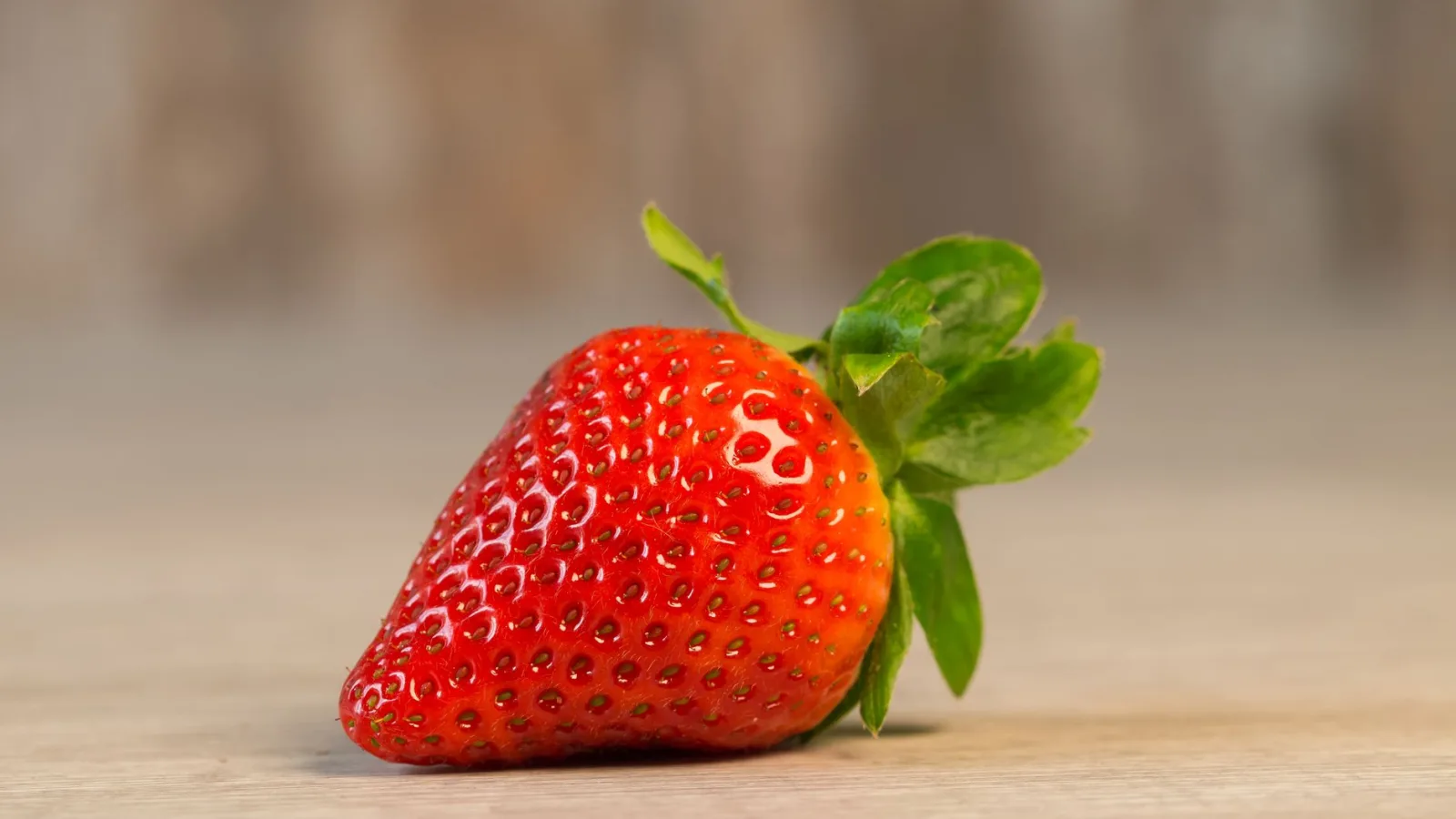
May is when strawberries start ripening in the garden. A single berry resting in your palm feels light and simple, but it holds the record of several wild species' genomes merging over tens of thousands of years. A research team recently analyzed the traces left behind by transposable elements — stretches of DNA that move around inside a genome — and used them to track, in a new way, the route by which today's strawberry arrived at its present form.
A Timeline Written into the Genome
Transposable elements are pieces of DNA that copy themselves and splice into new positions in the genome. Where and how they insert depends on which genomes merged and when, and every merger shifts how actively these elements move. By comparing the distribution of those insertion marks across several strawberry species, the team was able to work out the relative order in which each ancestral genome joined.
Straight sequence comparison has a hard time sorting out the order of mergers in polyploid plants — species carrying more than two sets of chromosomes. When several ancestral genomes are layered on top of one another, there simply aren't enough clues to tell which one arrived first. Insertion patterns of transposable elements offer a new way to read that order. The team believes the same approach could help untangle the evolutionary history of major crops like wheat and cotton.
A Berry with Four Ancestors
The strawberry you grow in the garden (Fragaria × ananassa, the garden strawberry) is an octoploid. Where human cells carry two sets of chromosomes, the garden strawberry carries eight — the result of genomes from at least four different wild strawberries merging into one over a very long stretch of time.
According to the team's analysis, that merging didn't happen all at once. Genomes were added in stages, across several separate events, with substantial gaps of time in between. Those gaps registered differently in the insertion patterns of transposable elements, which is exactly what let the researchers tell the sequence apart.
The two species known to be the direct ancestors of the garden strawberry are the Chilean strawberry (F. chiloensis) and the Virginia strawberry (F. virginiana) of North America. The two crossed in eighteenth-century Europe to produce the strawberry we know today, but the merger history each species already carried within it runs far deeper. That long genetic record is the foundation of everything that made strawberries as large and as sweet as they are now.
Growing Strawberries in Your Own Plot
Because strawberries carry genomes from several wild species, they hold up across a wide range of cold and disease pressure. Every cultivar has its own weak spot, though, so picking one suited to your garden's conditions is what decides your harvest.
- Seolhyang, the most widely grown cultivar in Korea, delivers high sugar content and heavy yields. It's on the vulnerable side for powdery mildew, so give it plenty of air circulation starting in late April.
- Geumsil is very sweet, and the berries ripen to an even shape. It doesn't tolerate soggy soil, so if you're growing in containers, choose a well-draining potting mix.
- Jukhyang has an intense aroma and firm skin that keeps well after picking. It colors up slowly, so wait until the berries have turned fully red before you harvest.
Strawberries go in the ground in late March to early April and are mostly picked in May and June. Once the harvest ends the plants gradually weaken, so this is the moment to manage the runners (the creeping stems) for next year. Choose the first daughter plant — the one closest to the mother — and pin it down into a small pot. Start next season with a rooted seedling of your own, and there's no need to buy new plants at all.
Source: research on the evolution of complex plant genomes, Nature Plants