That Scent at the Garden's Edge
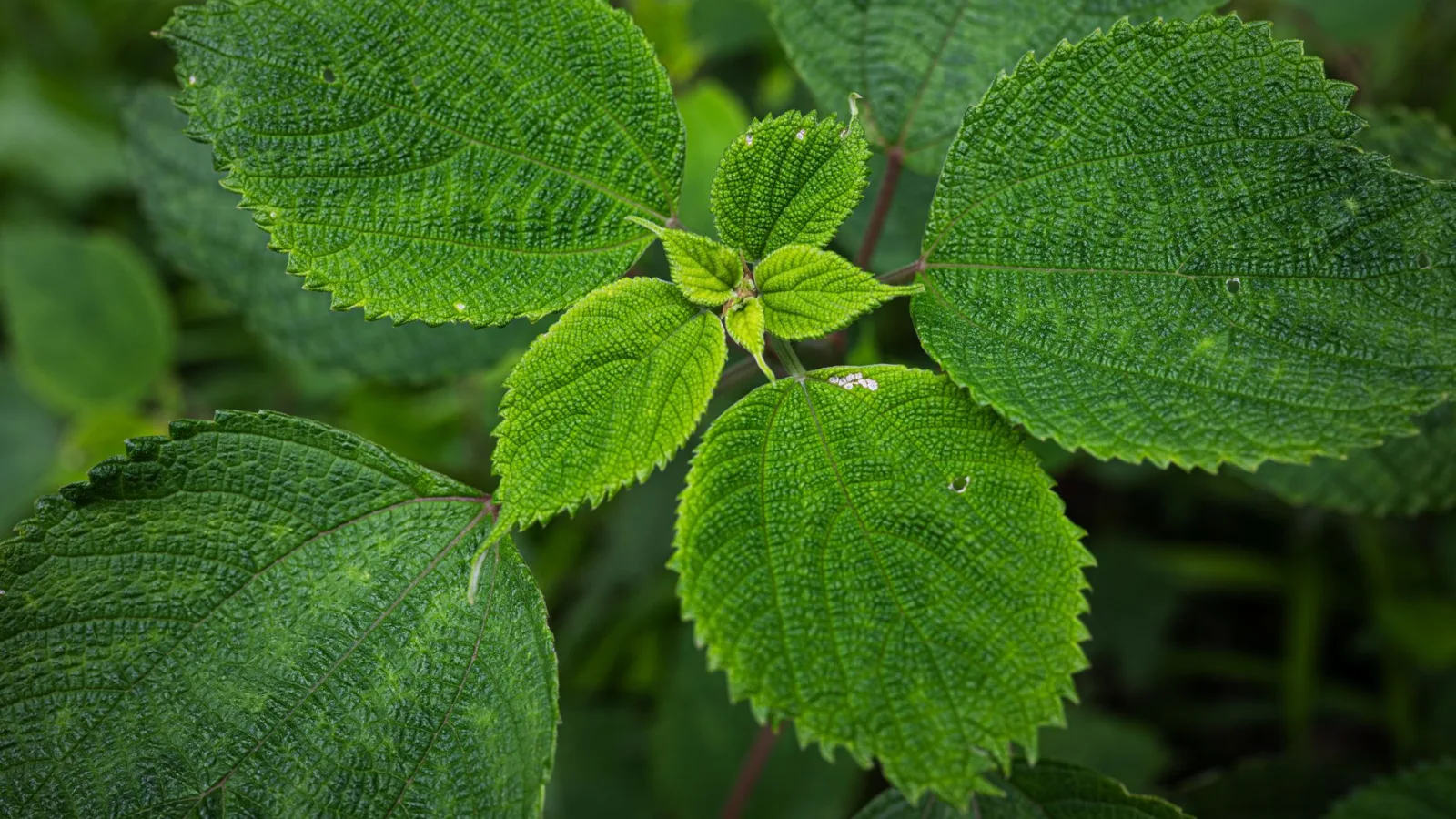
Homi, take a slow lap around the summer garden and sooner or later you'll run into the perilla that has quietly claimed the border of the bed. Brush a leaf with your hand and the scent stays on your fingertips. The leaves go on the table for ssam — the wraps you fill with rice and grilled meat. The seeds, once they've ripened in fall, get ground and stirred into soup. And the oil pressed from them can rescue a plate of seasoned greens in a single spoonful. Leaves, seeds, and oil from one plant, filling several seats at the table: a generous guest, this one.
So how did people long ago look at this familiar crop? Let's open the Donguibogam and see.
What the Donguibogam Says
The Donguibogam lists perilla under the medicinal name imja (荏子), recording it as warm in nature (性溫), pungent in flavor (味辛), and non-toxic (無毒). In other words, a warm grain with a pungent taste.
As for what it does, the text says it settles the breath (下氣), quiets a cough (止嗽), relieves thirst (止渴), moistens the lungs (潤肺), replenishes the middle burner (補中), and fills the essence and marrow (塡精髓). A grain that tends to the airways and the digestive center at once, as the old physicians read it. The commentary holds that its action travels to the lungs and the large intestine, working on respiratory and gut health together.
The text is specific about how to eat it, too. People planted it widely, and if you grind the seeds, mix them with rice, and cook the whole thing into a porridge, the result is rich and delicious — it settles the breath and nourishes the body (下氣, 補益人). There's also a passage on pressing the seeds for oil: that oil is perilla oil. And a note that picking the pods when they're nearly ripe and eating them gives a wonderful fragrance (甚香美).
The leaves — kkaennip, the perilla leaves we know from the table — get their own entry. They harmonize the middle (調中), clear away foul odors (去臭氣), and treat the cough that rises up from below (治上氣咳嗽). There's an external use as well: crush the leaves and apply them to insect bites (搗付諸蟲咬). Notable, the way the old text separates leaf from seed and gives each its own job.
Holding It Up Against Modern Nutrition
The Donguibogam's take on perilla — that it moistens the lungs and handles a dry cough — overlaps in a curious way with how we look at the plant today. Perilla seeds and perilla oil are known to be rich in unsaturated fats, alpha-linolenic acid chief among them. There's a certain resonance between that and the old text's word "moisten."
The view of perilla as something that tends the gut is worth comparing as well. The Donguibogam held that its action reaches the large intestine; the commentary presents perilla oil as a natural laxative and describes the plant as a good source of dietary fiber and alpha-linolenic acid. That's the background behind the habit of keeping perilla and perilla oil close at hand when you're feeling bloated or things are moving slowly.
One line I'd like to draw here, though, Homi. What the Donguibogam records is a traditional-medicine perspective, and eating perilla can't be said to cure any particular condition. This is how people saw it long ago, and here are a few points where modern nutrition happens to meet them — read it that lightly, and it sits about right.
From the Garden to the Table
With perilla, there's nothing to throw away — leaves, seeds, oil, all of it. The leaves go on as ssam wraps, or turn into jangajji (soy-brined pickles), kimchi, or savory pancakes. Grind the ripened seeds and stir them into a soup or porridge and you have the very perilla porridge the Donguibogam describes. Stirring perilla powder into warm water and drinking it is another method the old commentary passes along. Or just enjoy it in the familiar dishes — perilla seaweed soup, perilla noodles.
A word of caution to go with it. Perilla oil goes rancid fast. Once opened, it's best used within a month or two, and rancid perilla oil is understood to increase free radicals rather than help. Buy it in small bottles, keep it somewhere cool, and go through it steadily — that's my recommendation.
If you've tucked a few perilla plants into a corner of the garden again this year, why not let the scent call up what the old medical texts left behind? Two ways of looking at the same plant, meeting on the dinner table.