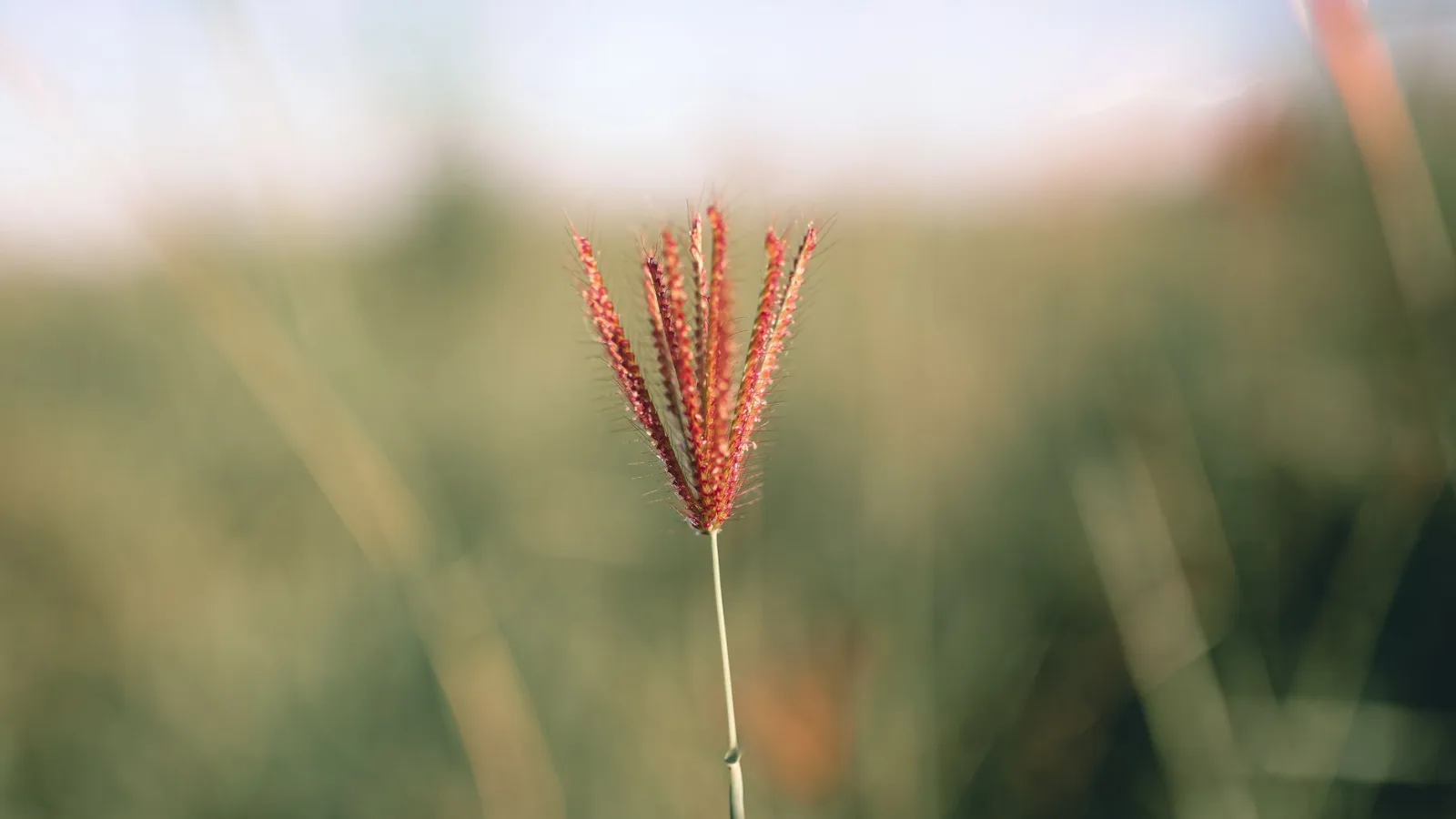
When you tidy the edges of the garden after the fall harvest, you'll often find a stubborn grass on a sunny bank that refuses to come out. Pull hard, and a long white rhizome trails out with it. This is cogon grass (Imperata cylindrica), known in Korea as tti, which sends up silky white plumes in spring. The Dongui Bogam (Treasured Mirror of Eastern Medicine), a medical compendium compiled in the early 17th century by Heo Jun, a physician to Korea's Joseon court, gave this root an entry of its own.
What the Dongui Bogam Says About the Root
The Dongui Bogam lists the root in its herbs section (草部, the "grass" category) as mogeun (茅根), alongside its native Korean name, ttippuri, or "tti root." It describes the root's nature as cold, noting that some also call it cool, and its taste as sweet and nontoxic. It identifies the root as baekmogeun (白茅根, "white cogon root") and notes that it grows just about everywhere.
The entry also explains how to prepare it: dig up the root in the sixth lunar month, which usually falls around July, and dry it in the sun. The same entry gives separate notes on the flower, mohwa (茅花), and on the sharp young shoots, mochim (茅針). You can read the original text and a commentary in Homiclub's Dongui Bogam guide to cogon grass root.
Keep in mind, though, that this is a record from more than 400 years ago. Words like "cold" and "cool" belong to the language the medicine of that era used to describe the body, and they don't line up with the standards of modern medicine. That's why this record can't serve as a basis for treatment.
Source: Heo Jun, Dongui Bogam, Tangaek (Materia Medica) volume, Herbs (草部), "Mogeun (茅根)."
Where Modern Analysis Agrees, and Where It Doesn't
The two agree on sweetness. Chew a piece of the root and the first thing you'll notice is a faint sweetness, which comes from sugars stored in the rhizome. That's most likely what the Dongui Bogam meant when it called the root sweet.
Studies have also reported isolating compounds from the triterpene family in the rhizomes of Imperata species. Beyond that, the root contains potassium, a mineral common in plants, and dietary fiber, which gives it its tough, stringy texture.
But there are places where they part ways. The triterpene studies tell us what's in the root, not how it acts in the human body. And the old verdict that the root is "cold" isn't something you can translate into a modern nutrition chart. So it's best to enjoy cogon root tea as a mild, faintly sweet drink, without expecting any medicinal effects.
Before You Bring It Into the Garden
Cogon grass thrives in sunny vacant lots and on slopes, and it spreads quickly underground through its rhizomes. That's why it's considered a hard-to-manage weed in many parts of the world. In the United States, it's on the federal noxious weed list, which means planting or moving it may be restricted.
Before you plant, check the rules where you live. If it's allowed, don't plant it straight into your garden bed; grow it in a deep container of its own instead. Check every so often that no rhizomes are sneaking out through the drainage holes, and when the flower spikes appear, cut them off before the seeds can blow away on the wind.
The Homiclub crop guide calendar, based on the Northern Hemisphere, lists March to April as the planting months and April to May and July as the harvest months. That lines up with the Dongui Bogam's sixth lunar month around July. You'll find its growing conditions on the cogon grass page in the Homiclub crop guide.
How to Brew Cogon Root Tea
If you're digging roots from a bank, first make sure you're allowed to dig there and that the area has never been sprayed with herbicide. Rinse the soil off the rhizomes, pull off the fine rootlets, and dry them thoroughly in the sun. This dried root is the same thing people brew today as baekmogeun-cha, or white cogon root tea. It has a slightly earthy smell, so it goes down more easily when brewed with other ingredients.
- With jujubes — Add a few dried jujubes (Korean red dates) to the dried rhizomes, and the earthiness mellows while the tea picks up extra sweetness. Use plenty of water and simmer it over low heat.
- With roasted barley or brown rice — The grains add a toasty, nutty flavor that makes for a pleasantly light drink. Grains make the tea spoil quickly, so drink it the same day you brew it.
- Chilled — This is the better choice for summer, and its gentle natural sweetness means it doesn't need anything added. Keep it in the refrigerator and drink it the day you make it.
The next time you find yourself pulling cogon grass at the edge of your garden, rinse off a piece of the white rhizome and chew it, and taste the sweetness the Dongui Bogam wrote about.