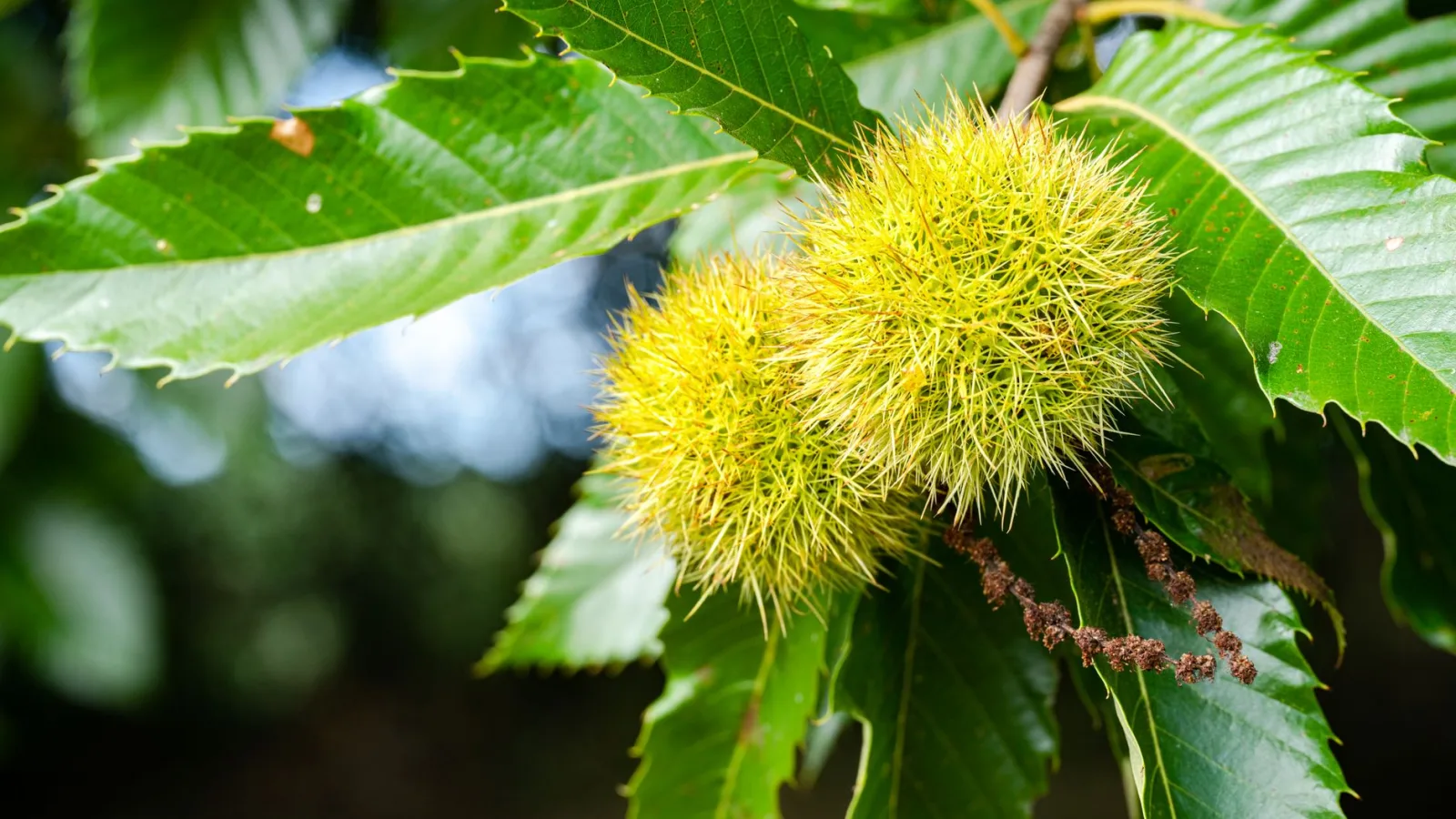
In the Northern Hemisphere, spiny chestnut burs start dropping onto the paths beside community gardens by mid-September. Nudge one open with the toe of your shoe and you'll find one to three glossy nuts inside. The chestnut tree (Castanea crenata) is a large tree that has been grown in East Asia for a very long time, so it won't grow in a pot. Still, when the harvest comes in September and October, chestnuts show up often on gardeners' tables.
Chestnuts in the Dongui Bogam
The Dongui Bogam, a classic Korean medical text from the 17th century, lists the chestnut in its 果部 (fruit section) under the name 栗子 (yulja). Yulja simply means the nut of the chestnut tree, the same chestnut we eat today. The entry is short: "性溫 味鹹 無毒." That means warm in nature, salty in taste, and nontoxic. Of all the fruits, the text ranks the chestnut first.
The entry also explains how to eat and store chestnuts. You can dry them in the sun, bury them in damp sand to keep until spring, or bury them in hot embers to roast. You can read more about the original text in Homiclub's Dongui Bogam entry on chestnuts (栗子). Keep in mind, though, that this comes from a historical medical text and does not reflect the views of modern medicine. When the old text calls chestnuts "warm," we don't read that as a health claim for today.
What the Nutrition Data Shows: A Nut That's Closer to a Grain
Modern nutritional analysis shows that chestnuts are made up differently from other nuts. Walnuts and almonds are fairly high in fat, but chestnuts are only about 2% fat, which is low for a nut. Instead, 100 g of raw chestnuts contains 30 g or more of starch. On paper, that puts them closer to grains, and you can think of them as a food that supplies energy, much like rice or bread.
Vitamin C stands out as well. Raw chestnuts contain around 25 mg per 100 g, which is unusual for a nut. But that number only tells us what's in them. It isn't enough to say that chestnuts do anything in particular for the body.
The Old Record and the Nutrition Data: Where They Agree and Where They Don't
Both treat chestnuts as something close to a meal. The Dongui Bogam's advice on drying chestnuts and burying them in sand until spring suggests people saw them as food to store and eat all winter. Today's nutrition data also describes chestnuts as a starchy nut. On this point, the old storage methods and the modern numbers line up.
There are differences too. Warm nature, salty taste, and nontoxicity were categories the old medical texts used to sort medicinal ingredients. Fat, starch, and vitamin C are values measured in a lab today. You can't put one set of terms into the language of the other. Taste is a good example. When you bite into a chestnut, the first thing you notice is sweetness, yet the old text calls it salty. Taste labels in traditional medical texts sometimes describe an ingredient's properties too, so they may not match what your tongue tells you. And no nutrient data has ever proven that chestnuts are the best of all fruits.
When to Plant and Harvest Chestnut Trees
Chestnut trees grow large, so they're not a good fit for balconies or container gardens. They're worth trying if you have room in the ground, such as a backyard or the edge of a community garden. In the Northern Hemisphere, plant in March or November. In November, you can put seed nuts gathered that fall straight into the ground. In March, you can plant seed nuts that spent the winter in damp sand, just like the old storage method. Harvest runs from September to October. Just gather the nuts that drop once the burs split open on their own. You'll find the planting calendar and nutrition figures in Homiclub's Crop Guide entry on chestnuts.
Ways to Bring Chestnuts to Your September Table
Whether you've harvested your own or picked up a bag of this season's chestnuts, try them a few different ways.
- Raw: Peel away the hard outer shell and the thin inner skin, then eat them as they are. The vitamin C figure in the Crop Guide is for raw chestnuts.
- Roasted: Score the shells before roasting to keep them from bursting. The Dongui Bogam roasted chestnuts in hot embers; today an oven or skillet does the job.
- Braised with chicken or beef: As chestnuts simmer in a braise, their starch soaks up the liquid and their sweetness seeps into the dish. They add carbohydrates to the meat, so one pot makes a full meal.
- Yakbap (sweet steamed sticky rice): Steam glutinous rice with jujubes and chestnuts. The chestnuts' soft, crumbly texture contrasts with the chewy rice.
- Bambap (chestnut rice): Lay peeled chestnuts on top of rice and cook them together.
Pick up a bag of fresh chestnuts this week. Peel a few and eat them raw, add a few to a chicken braise, and try burying the rest in damp sand until spring, the way the old text describes.