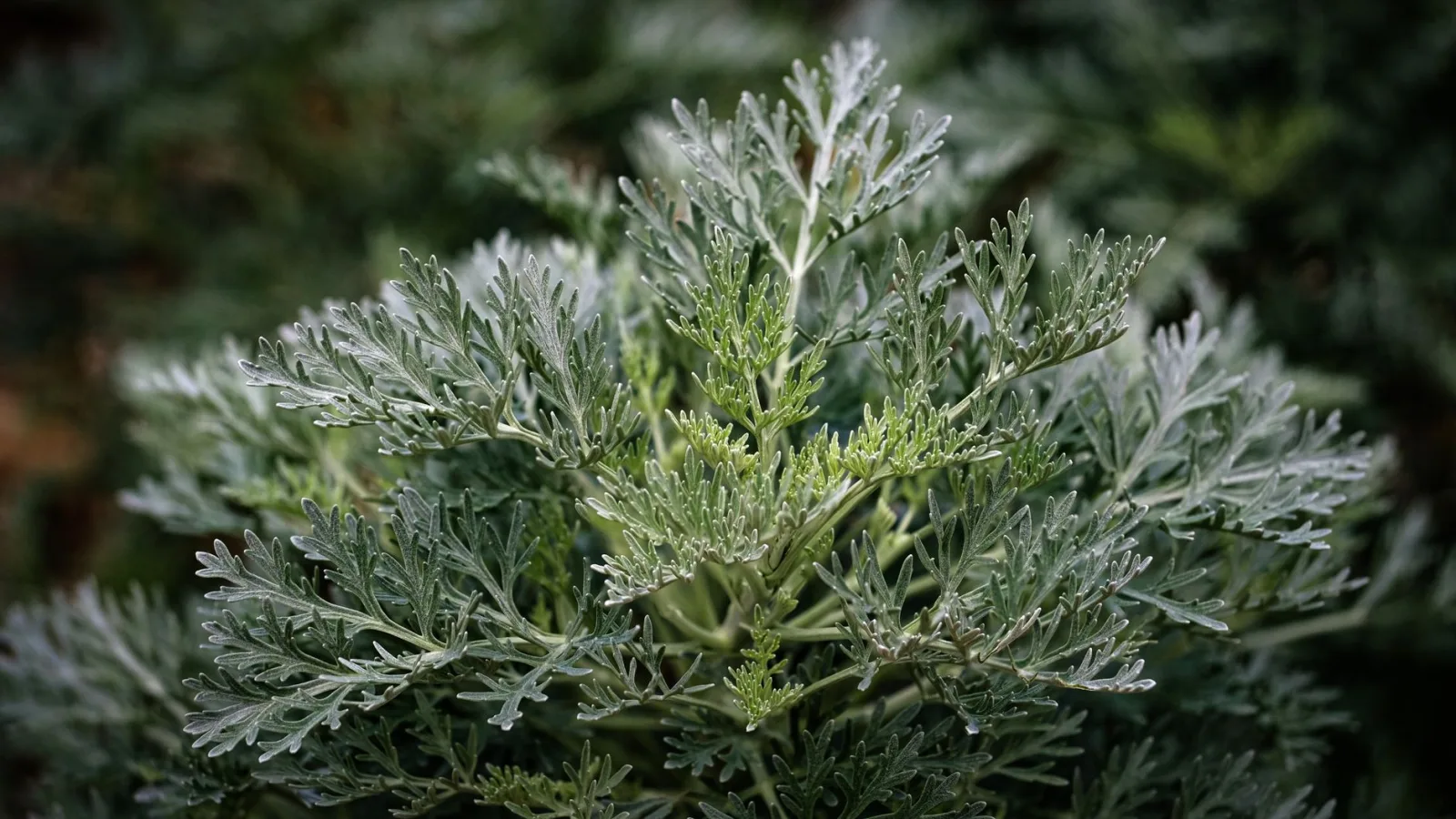
Once the first frost hits, sweet wormwood dries brown right down the stem, and when you run your hand along the branch tips, tiny seeds cling to your palm. If you cut leaves back in midsummer, this is the time of year when a bag of pan-roasted leaves is still sitting in the cupboard. Rub a few of its feathery leaves between your fingers and the scent is stronger than ordinary mugwort's. In Korea the plant comes up on its own along roadsides and in vacant lots. Its botanical name is Artemisia annua.
The Dongui Bogam Chose by Color and Scent
The Dongui Bogam, Korea's classic 17th-century medical text, lists choho (草蒿) in its section on herbs, and its vernacular Korean gloss names the plant "jyeobeui-ssuk," known today as jebi-ssuk. On where it grows, the book says only that it can be found everywhere, and it identifies the plant as what is now called cheongho (靑蒿, qinghao in Chinese). Rather than the herb's properties and taste, the passage it records describes the plant's appearance and how to pick a good one. It is the plant that takes in the energy of spring earliest of all, the text says, and while its stems and leaves look like ordinary mugwort's, the best are a deep blue-green with a strong fragrance. You can read the original passage with commentary in the jebi-ssuk entry of Homiclub's Dongui Bogam.
Jebi-ssuk and Sweet Wormwood Are Different Species
That makes it hard to map this record directly onto the sweet wormwood we know today. The plant the Chinese Pharmacopoeia now designates as qinghao is sweet wormwood (Artemisia annua), an annual, while the jebi-ssuk named in the Korean gloss (Artemisia japonica) is a perennial and a separate species. The original text calls choho qinghao, and the Korean gloss calls it jebi-ssuk, so there's no settling which plant Heo Jun, the book's author, actually had in front of him.
Artemisinin and Leaf Tea Differ in Dose
Artemisinin, a sesquiterpene lactone, was isolated from sweet wormwood leaves, and Tu Youyou (屠呦呦) of the China Academy of Chinese Medical Sciences, who discovered the compound, received the 2015 Nobel Prize in Physiology or Medicine. What's used as medicine is a purified single compound, and both the conditions and the amounts are a world away from tea steeped from leaves cut in a field. The leaves also contain a volatile essential oil that gives the plant its distinctive smell, along with flavonoids, phenolic compounds common throughout the Artemisia genus. Even within sweet wormwood, these levels vary widely depending on where the plant grew, when it was cut, and how it was dried. So the amount in leaves from your garden can't be pinned to a single number.
In a 2019 position statement, the World Health Organization (WHO) said it does not support using unprocessed sweet wormwood, such as dried leaves or tea, to prevent or treat malaria. The Dongui Bogam's account, likewise, is the observation of an old medical text, so below we treat the tea purely as a drink to enjoy for its bitterness and aroma. If you're allergic to pollen from plants in the daisy family (Asteraceae) or are pregnant, talk with your doctor before drinking it.
Shade-Dry, Pan-Roast, and Steep Briefly
Cut the leaves in high summer when the plant is at its lushest, June through August in the Northern Hemisphere. Rinse them, shake off the water, and let them dry in the shade. Then put them in a dry pan over low heat and stir for 3–5 minutes as they toast. Pan-roasting chases off the raw, grassy smell and softens the bitterness.
- Pour 500ml of water at about 90°C over 2g of roasted leaves.
- Lift out the leaves after 2–3 minutes. The longer they sit, the more bitter the tea gets.
- Add 2 jujubes (dried red dates), split open, or 5g of roasted brown rice to make it much easier to drink.
People have also tied a few stems into a bundle and hung it in a window. Even as the bundle dries, its scent lingers for a long time.
Its Tiny Seeds Spread Easily
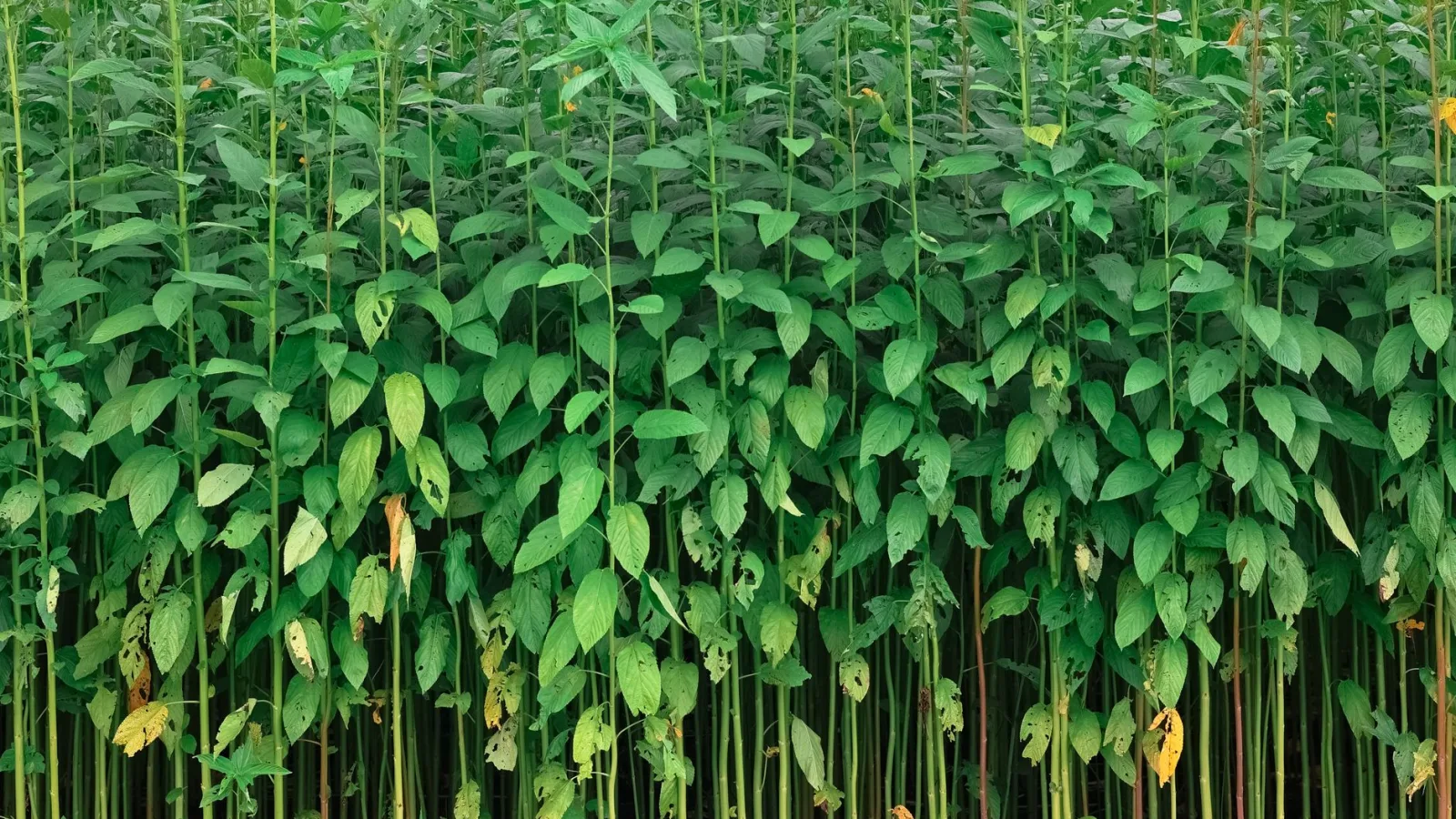
Sweet wormwood is an annual, so it comes back from seed every year. Sow in April or May, once the danger of frost has passed. The seeds are so tiny that you should not cover them with soil. Scatter them over the surface and press down gently with your palm. Full-grown plants reach 1–2m tall, so space them at least 50cm apart. We've put together a growing calendar in our sweet wormwood crop guide.
Even a single plant drops a lot of ripe seed in the fall, and the next year seedlings pop up all over the garden and in neighboring empty lots. Leave just one or two plants for seed and cut the rest for their leaves before they flower, and you'll have far less spreading the following year. For the seeds still clinging to the dry stem tips right now, slip a paper bag over the top and snap off the stem, bag and all. The seeds won't scatter in the wind, and you'll have your share for next spring's sowing, safe and sound.
Sources: Dongui Bogam, Tangaek-pyeon (Materia Medica), Herbs section, "Choho" · Official Nobel Prize announcement (2015 Physiology or Medicine) · WHO, "The use of non-pharmaceutical forms of Artemisia" (2019) · Homiclub Crop Guide, "Sweet Wormwood"