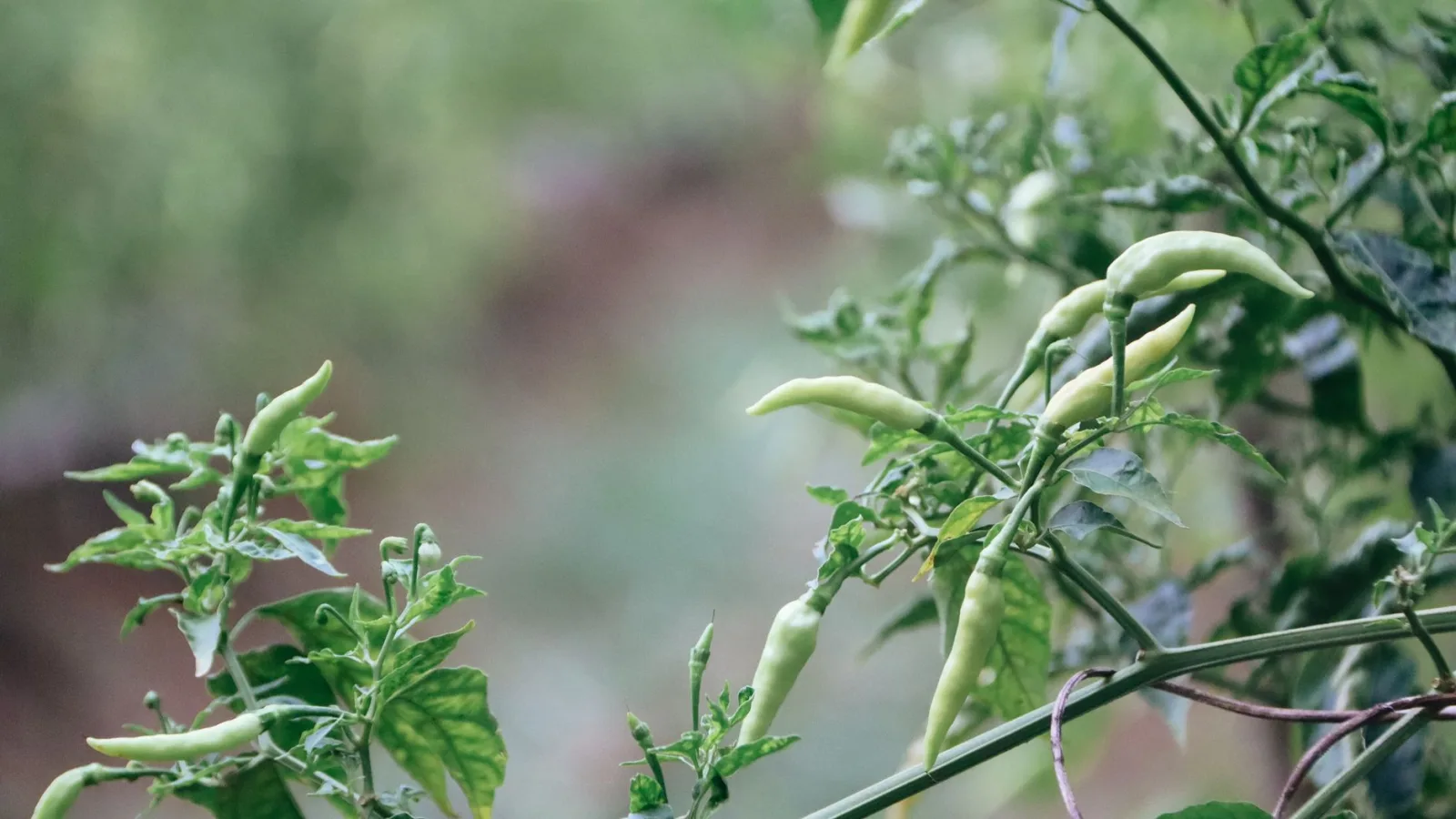
Once October nights dip below 50°F (10°C), the tips of the pepper leaves on your plants start yellowing. A few days later the fruit skin puckers, and when you squeeze one it collapses without any spring to it. Cold injury is the reason pepper growers can't relax until the very last harvest is in. A study published in 2026 now shows us, in detail, exactly how pepper cells respond to that chill.
What happens inside a pepper cell when the cold arrives
Peppers (Capsicum annuum) originated in the tropics, so their growth slows below 59°F (15°C), and at 39°F (4°C) or colder the cell tissue takes direct damage. When low temperatures persist, reactive oxygen species (ROS) accumulate inside the cell, damaging cell membranes and degrading the chloroplasts that handle photosynthesis. Once a membrane is compromised, the balance of ions inside and outside the cell breaks down — and as that damage accumulates, you get yellowing leaves and softening fruit.
In a study published in an international plant biology journal, researchers found that pepper cells hit with a cold signal start mass-producing a particular protein-degrading enzyme. The team named it CaCYP (a cysteine protease), and after 48 hours at 39°F (4°C), the plants were producing 11 times more of it than normal. Inside the cell nucleus, this enzyme binds to a protein called CabHLH-79 — and once they bind, a set of antioxidant-related genes switches on.
How antioxidant enzymes blunt the damage
When CaCYP goes to work, the pepper cell ramps up production of three antioxidant enzymes: catalase, peroxidase, and superoxide dismutase. In the study, expression of the genes for these enzymes jumped 22- to 28-fold, and actual enzyme activity rose right along with it. Their job is to break down the reactive oxygen species that have built up to toxic levels, protecting the cell membranes and chloroplasts.
The reverse experiment made the point just as clearly. In plants where CaCYP was suppressed using gene-silencing techniques, antioxidant enzyme activity fell by 70 to 80 percent and cold damage grew markedly worse. Peppers with the system running properly showed 2.4 times less electrolyte leakage — the standard marker of membrane damage — and retained 3.1 times more chlorophyll. Their MDA levels, which track lipid oxidation in the membrane, stayed 2.3 times lower, and their stomata held close to normal structure. One caveat: exactly how CaCYP works through CabHLH-79 to activate those antioxidant genes isn't fully mapped yet, so more research is needed.
What you can do in the garden
Pepper cells may come equipped with their own defense system, but that system alone won't fully hold off cold injury if temperatures suddenly drop below 39°F (4°C) and stay there. You'll need to manage conditions in the garden alongside it.
When the forecast calls for overnight lows at or below 50°F (10°C), go ahead and pick your peppers even if they're still green, and ripen them indoors. Two to three weeks in a cool, well-ventilated spot will turn them red — plenty good enough for gochujang (Korean fermented chili paste) or for pickling. Laying rice straw or landscape fabric around the base of the plant slows the drop in soil temperature, giving the roots more time to keep pulling up water and nutrients. If nighttime temperatures look like they'll fall below 45°F (7°C), try a simple row-cover tunnel — it can buy you 9 to 13°F (5 to 7°C) overnight.
This research confirms that pepper cells have a real capacity to defend themselves against cold. Whether the same mechanism holds in other crops, and how far down the thermometer it stays effective, are questions still to be answered. What you can do in your own garden right now is adjust your harvest timing and your insulation so the plants take less of a hit when the cold snaps arrive.