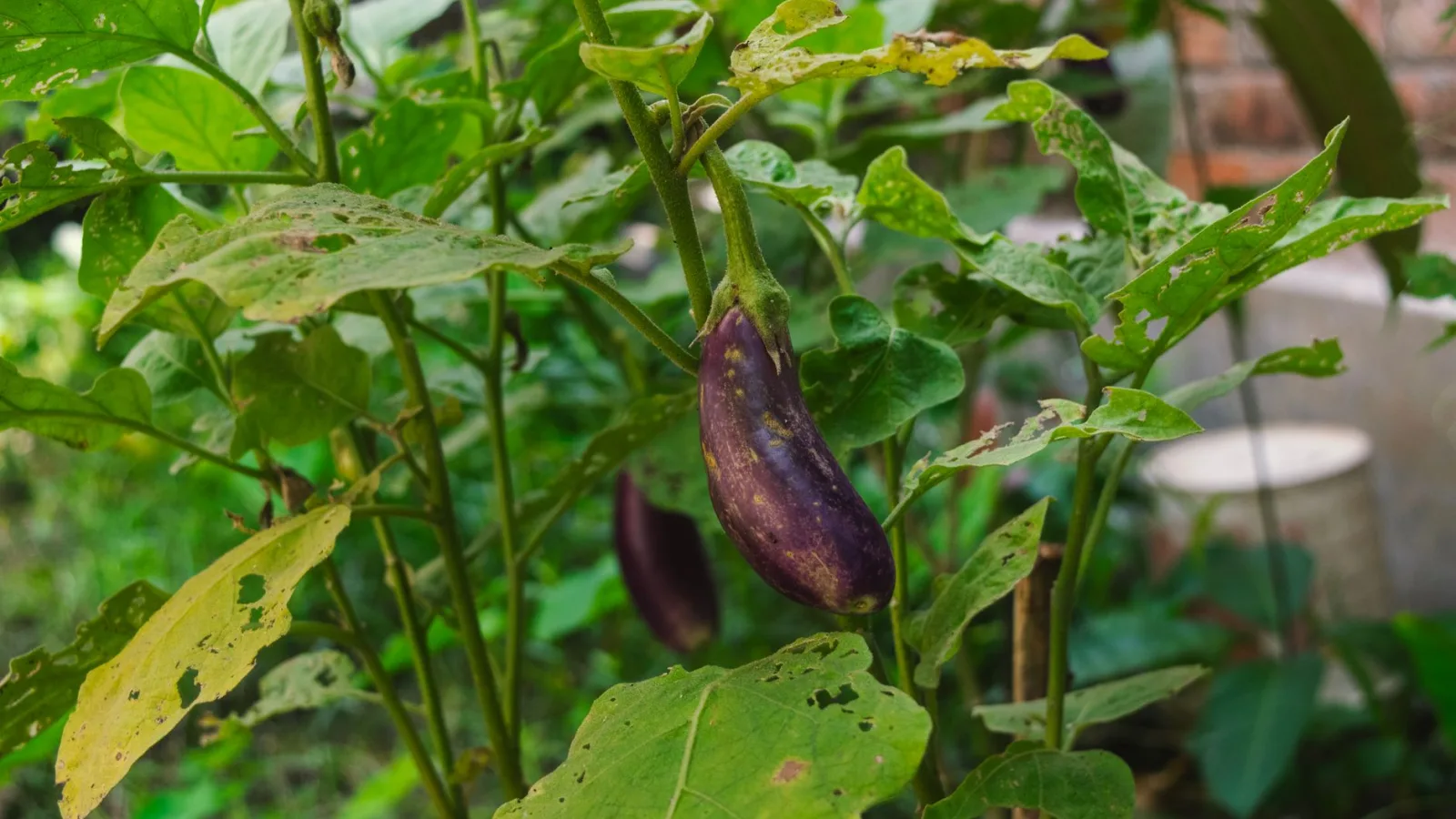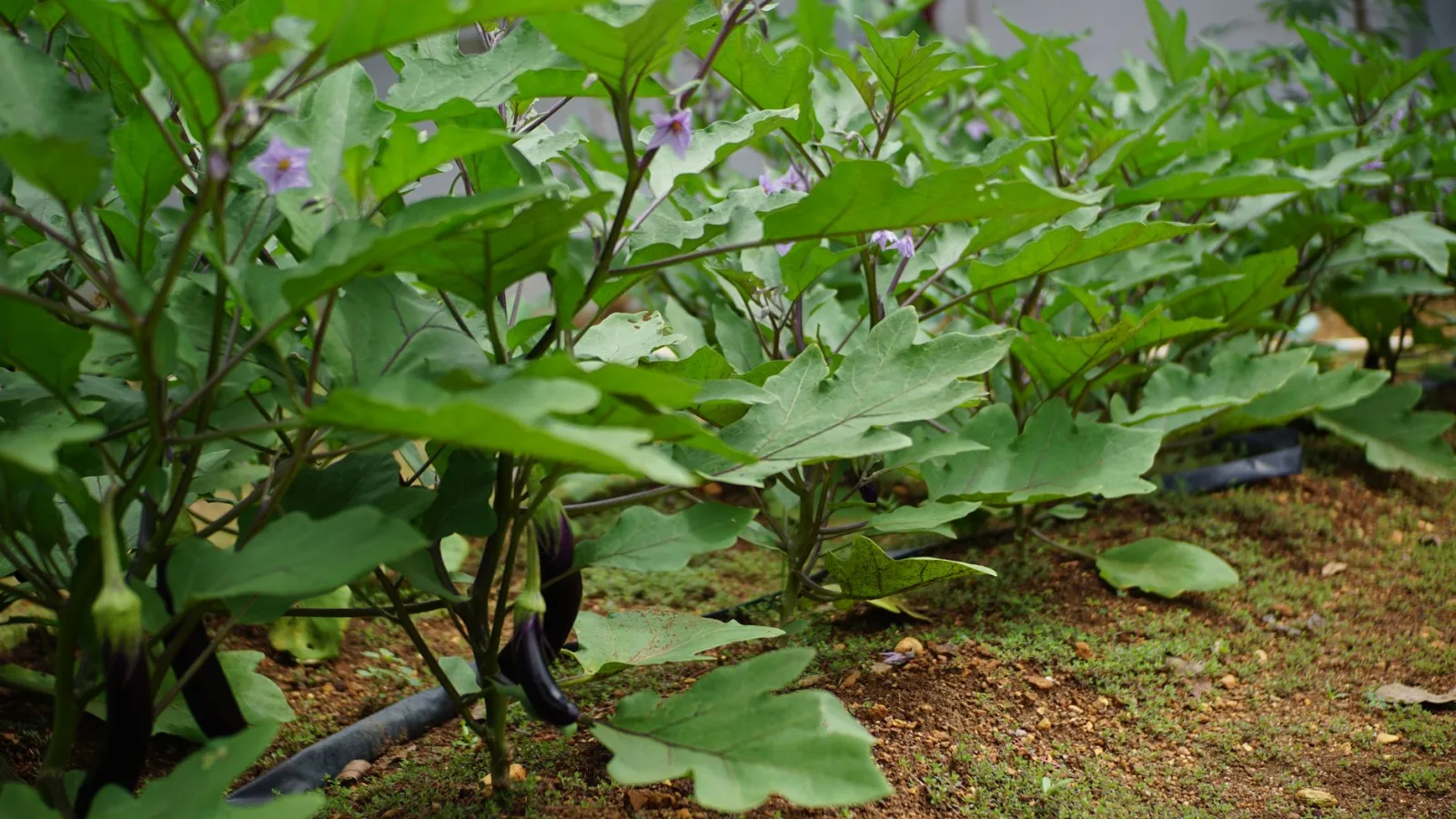
Pick an eggplant in an August garden and the first thing your hand touches is the skin. The longer a fruit has hung in the sun, the deeper and glossier its purple. In the Northern Hemisphere, seedlings set out in May start bearing in July, and the harvest keeps coming through October. Eggplant loves heat, so it keeps flowering even in midsummer. That's why it ends up on the summer table so often.
If you searched for eggplant and landed here, you probably have the same question most people do. What does all that purple actually do for your body?
The Compound Behind the Color
The purple in eggplant skin comes from nasunin, a pigment in the anthocyanin family. The flesh holds phenolic acids such as chlorogenic acid. Researchers have studied the antioxidant activity of both compounds for years. But a compound that shows activity in a lab is not the same as a change in the body of someone who eats eggplant. So far, there's no evidence that eating eggplant changes the course of any disease.
Eggplant is high in water and fiber and low in calories. Fiber is the part of a carbohydrate that passes through you undigested, so it fills you up without adding calories. If you're looking for a reason to serve eggplant often this summer, that one stands on firmer ground.
Supplement Studies vs. Your Dinner Plate
There are meta-analyses that pool clinical trials in which people were given purified anthocyanin supplements. Most of the health claims you see in search results trace back to studies like these. But those trials tested a fixed dose of a supplement. A single eggplant from your garden contains these compounds in a different form and a different amount. You can't take the results of a supplement trial and treat them as the benefits of eating eggplant.
Researchers are also working on ways to extract polyphenols from eggplant skins for use as food ingredients. That work is about turning skins that would otherwise be thrown away into a raw material. It's a separate question from cooking and eating eggplant, and it's best not to mix the two when talking about health benefits.
Skin On, With a Little Fat
Even with only what's been confirmed so far, you can still make some good choices. The pigment is concentrated in the skin, so try cooking eggplant without peeling it. The fat in olive oil or sesame oil increases how much anthocyanins and carotenoids your body absorbs. That helps explain why fried and grilled eggplant have lasted so long as favorite preparations, for flavor and nutrition alike.
A little prep before cooking is worth the effort, too.
- Lightly salting cut eggplant draws out bitterness and excess moisture and firms up the texture.
- Traditional East Asian food lore considers eggplant a somewhat "cooling" food, so it's often sautéed or braised with warming aromatics like garlic and ginger to balance it.
- Paired with doenjang (Korean fermented soybean paste) or soy sauce, its mild flavor picks up a savory depth. Korea's gaji-namul and gaji-muchim (seasoned eggplant side dishes) and Japan's miso-glazed eggplant are all built on this combination.
- Cook it down with tomatoes and basil and you're on your way to a Mediterranean ratatouille or eggplant pasta. That puts lycopene and rosmarinic acid on the same plate as nasunin.
You'll find the harvest calendar, good companion foods, and a list of key compounds in our Eggplant Crop Guide.
A Few Cautions
Plants in the nightshade family all contain glycoalkaloids. At the levels found in eggplant, normal cooking is considered to make them a non-issue. Eating large amounts of raw, underripe fruit, however, isn't recommended. Lots of raw eggplant on an empty stomach can also be hard on your digestion. That's part of why Korean, Japanese, and Chinese cooking doesn't use eggplant raw. If you have a sensitive stomach, go easy on steamed eggplant or eggplant mul-kimchi (a chilled, brothy water kimchi) made without warming seasonings.
If you get frequent migraines, keep one more thing in mind. Eggplant contains tyramine, which can be a migraine trigger. Avoid eating large amounts of it alongside other tyramine-rich foods such as aged cheeses and fermented foods.
The part you eat is the fruit. The vegetable chapter of the Dongui Bogam, a classic 17th-century Korean medical text, records the roots and dried stems and leaves of the eggplant plant being used as medicine. That is a historical record, not a guide to what belongs on your plate. Don't brew teas from parts of the plant other than the fruit on your own. Store-bought eggplant is among the produce monitored for pesticide residues. Choose a source you trust and rinse it well under running water, and you're fine.
Eggplant is grown in large quantities in China, India, Egypt, Turkey, and Indonesia. It has been a summer staple in places with very different climates. If you picked an eggplant today, leave the skin on, slice it in half lengthwise, and set it skin side down in a pan with a little olive oil. The purple stays put. It makes a dinner side dish that doesn't need any big health claims to earn its place.