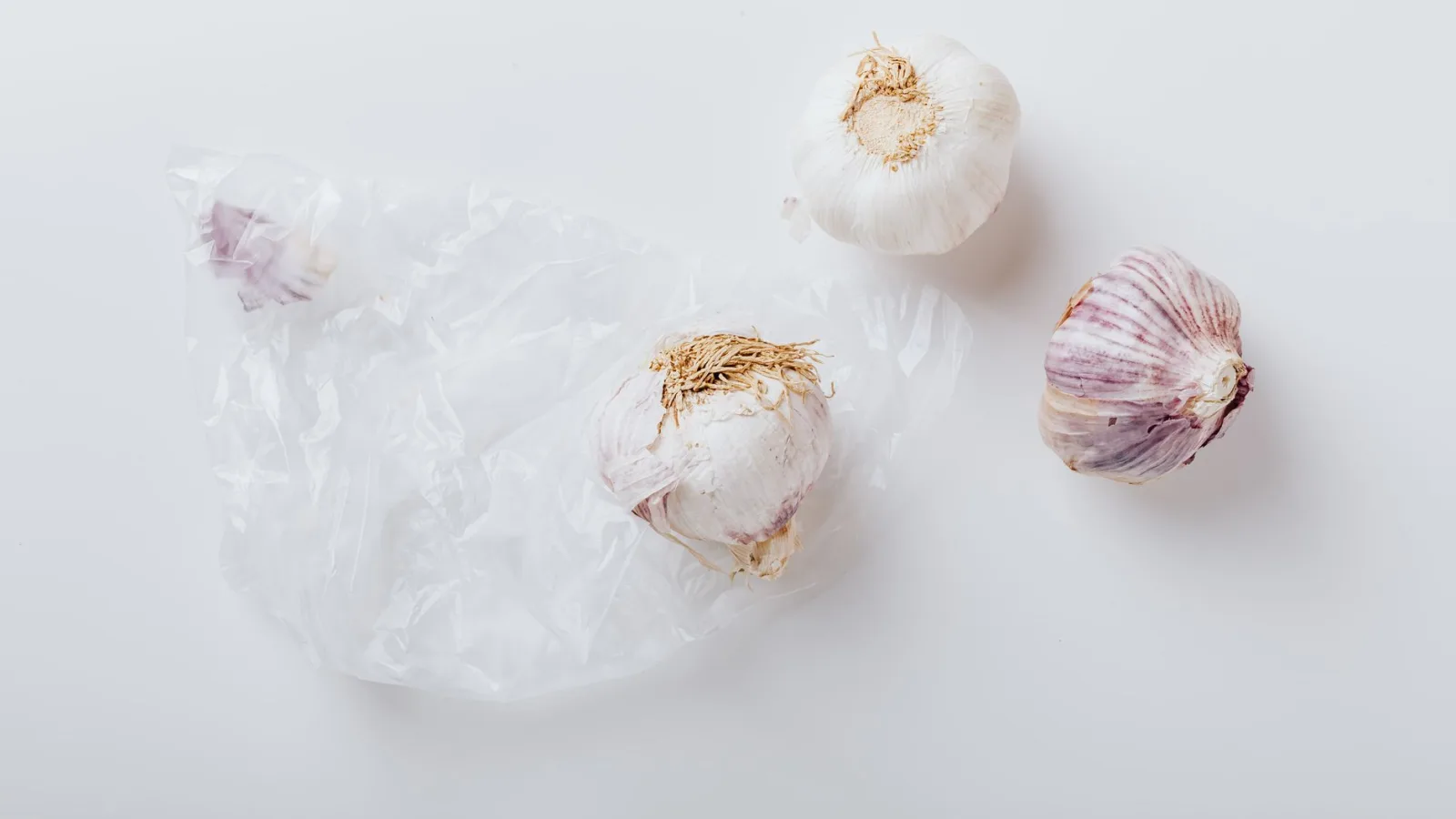
The garlic bed emptied out back in June, and by July the soil has gone dry and crumbly. Drag a hoe across the rows and a pale cloud lifts to face level. Under the eaves, whole heads of garlic hang in rows, curing. A study published this year happens to take on both halves of that scene: the silica in the dust, and the allicin in the garlic.
Allicin Only Shows Up When You Chop
A whole clove of garlic contains no allicin at all. A compound called alliin and an enzyme called alliinase sit in separate compartments inside the cell, and the moment you slice with a knife or crush in a mortar, the two mix and allicin forms. That sharp sting in your nose when you mince garlic is the signal. Allicin is fragile in the face of heat and time — leave it minced too long, or drop it straight into a screaming-hot pan, and a good share of it converts into other compounds.
Lungs That Stiffen with Silica Dust
Silicon dioxide, plentiful in sand, cement, and stone dust, does not come back out easily once it settles deep in the lungs. Breathe it long enough and it leads to pulmonary fibrosis, a hardening of lung tissue, and there is still no good treatment for reversing tissue that has already stiffened.
In an experiment published this year, researchers exposed human lung cells to silica particles and then added allicin, and set up the same conditions in mice to check the result. The allicin side showed less hydroxyproline, a marker that climbs as tissue hardens, and lower readings for ferroptosis, a form of cell death that runs through iron. The team also found that silica exposure drives up a protein called Serpinb2, and that keeping that protein suppressed slowed the fibrosis. Allicin lowered the protein as well, and downstream of it, the inflammatory NF-κB signaling quieted down.
That said, these results come from culture dishes and mice. It does not mean anyone's pulmonary fibrosis improved because they ate garlic, and garlic is no stand-in for treatment. For now, the fair reading is that researchers have mapped one more pathway allicin works through.
What to Take Into the Garden and the Kitchen
- When you're turning dry soil or handling stone or cement dust, wet things down first to settle the dust and wear a dust mask. There's no way to pull silica back out of your lungs, so breathing less of it in is the whole strategy.
- Try mincing or crushing garlic and letting it sit for about 10 minutes before it goes near heat. Giving the allicin time to form means less of it vanishes once you cook.
- One or two raw cloves a day is plenty. If garlic leaves your stomach burning, or you take blood-thinning medication, don't push the amount higher — talk it over with your doctor.
- Black garlic and long-sautéed garlic taste mellow, but almost no allicin survives in either. To bring the sharp edge back, try laying a little raw garlic on at the end.
Next month, pick the thickest, firmest heads out of the bunch hanging under the eaves and set them aside as seed garlic; plant them from late September into early October and you'll dig them up the following June. This fall, try adding just one more row. And tonight, mince some garlic, let it sit 10 minutes, and stir it into your namul, the seasoned greens on the table.
Source · a study published in 2026 in a journal of biochemical and molecular toxicology