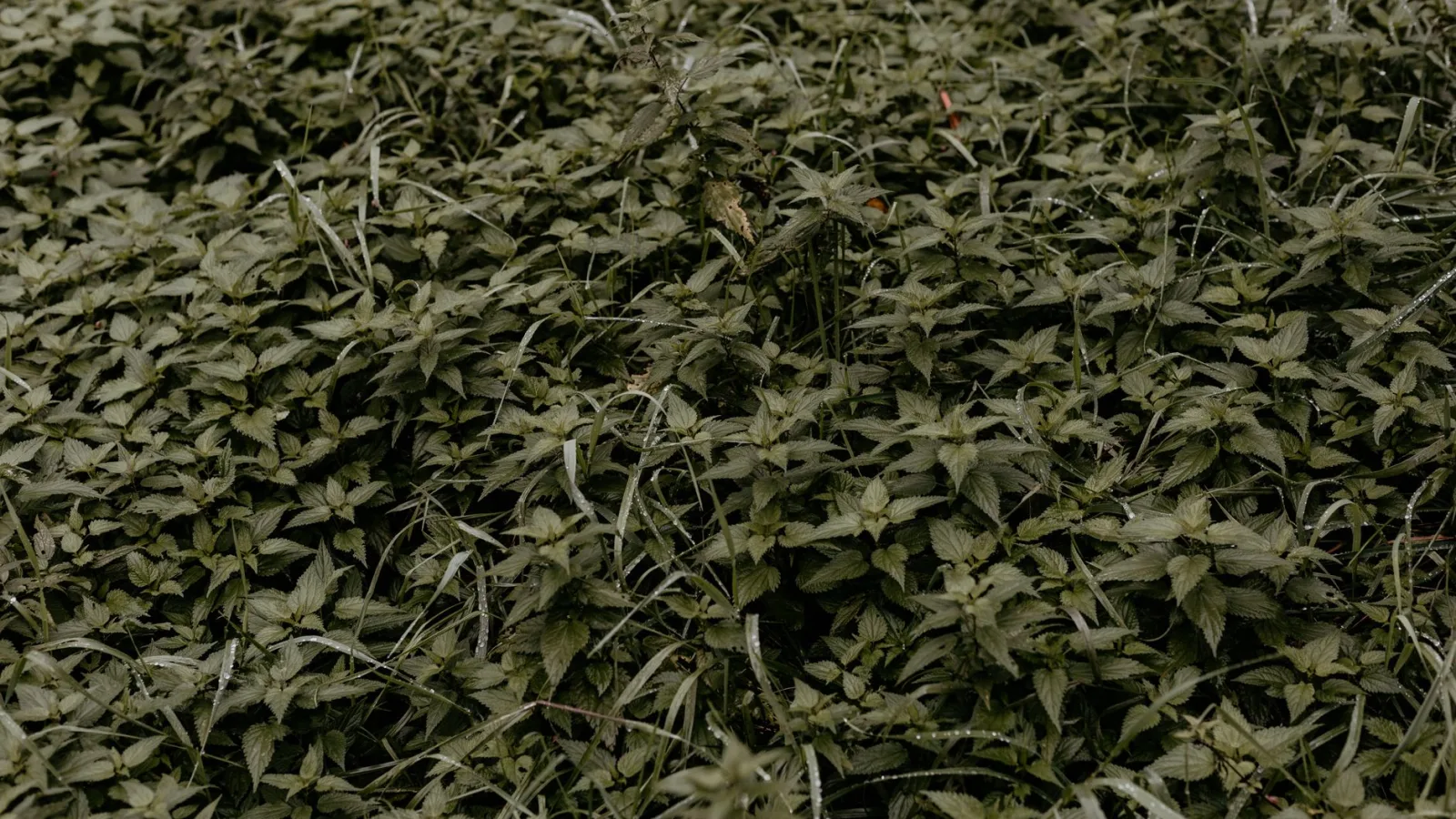
In an August garden, look at the spot that stays wet the longest — the edge of a ditch, the ground beside a water inlet — and you'll find a low, spreading plant with a single small white flower tucked into each leaf axil. Snap off a stem and rub the sap on the back of your hand: within moments it turns black. That's false daisy. In the Northern Hemisphere the harvest window runs July through September, which makes August the heart of it.
What to check before you pick
False daisy is an annual in the aster family, growing wild across China, India, and Korea. It likes paddy banks and ditch edges where the soil never fully dries; it does best at 20–30°C and holds up anywhere between 15–35°C. Heat and humidity it handles easily, but let the soil go dry and the leaves droop immediately. Cold is another matter — one frost ends it for the year, and the seed it drops comes up in the same spot the following season. If you're starting from seed, sow in April or May in the Northern Hemisphere.
In Korean the name sits one syllable away from hallyeon — garden nasturtium — a completely unrelated plant native to South America. When you're buying seed or dried material, don't go by name alone; check the botanical name too.
The Donguibogam, the seventeenth-century Korean medical compendium, lists it in the Herbs section as 鱧腸 (yejang), also known as yeonjacho, and notes that people commonly called it hallyeonja. It is described as neutral in nature, sweet and sour in taste, and free of toxicity; found nearly everywhere, dug in the third and eighth lunar months and dried in the shade. The original text also preserves the observation that its fruit resembles a small lotus seed, and that when you pick a shoot the sap runs out and darkens in an instant. That's a record from an old medical text, and it isn't how we'd assess the plant today.
Jujube and licorice take the edge off
Dried false daisy simmered in plain water has a grassy smell strong enough that a few sips is about all anyone manages. So in go two or three jujubes (Korean red dates) or a single slice of licorice root. The sweetness settles in, the grassiness recedes, and it becomes something you can actually drink.
- Dried false daisy, the whole plant
- Two jujubes, or one slice of licorice root
- Enough water to cover everything generously
Put it all in the pot and bring it up over high heat, then turn the heat down as soon as it boils and let it barely tremble. Halving the jujubes pulls the sweetness out faster.
One pass in a dry pan
If you want to cut the grassiness further, toast the herb before you simmer it. Spread the dried plant in an ungreased pan and turn it gently over low heat. Stop the moment the color deepens a shade, and take it straight off. Burn it and all you're left with is bitterness — no amount of jujube will bring it back. Toasted, it picks up a warm, nutty flavor, good enough that you can pour water over it and simmer with nothing else added. Do a batch all at once, let it cool completely, store it in an airtight container, and scoop out what you need.
What has been identified so far
Several reports have isolated wedelolactone and demethylwedelolactone from the whole plant. These belong to a class of compounds called coumestans, and they serve as markers for the plant's chemical profile. The same reports also note saponins — triterpene glycosides — identified within the genus. All of this is analysis of chemical composition, nothing more; it has no bearing on preventing or treating any illness. Treat the simmered drink as the long-standing food custom it is, and if something feels wrong with your health, talk to a doctor.
The other use for black sap
That darkening sap has uses well beyond the cup. Pound fresh stems and leaves, press out the juice, work it into cloth, and the color takes. This is exactly the property that made it a black dye for generations. The drinking use and the dyeing use come from one and the same trait. If you've measured out what you need for the pot and a few stems are left over, don't throw them away — rub them on a scrap of white cotton and see. It stains fingertips too, so gloves are the smarter choice.
If you've gathered a handful from an August paddy bank, shake off the soil and spread it out in the shade. A few days of drying, a light pass in a dry pan, and you'll have something to simmer with a couple of jujubes all the way through fall.
Sources: Donguibogam, Herbs section, 鱧腸 (yejang) · Korean Plant Names Index