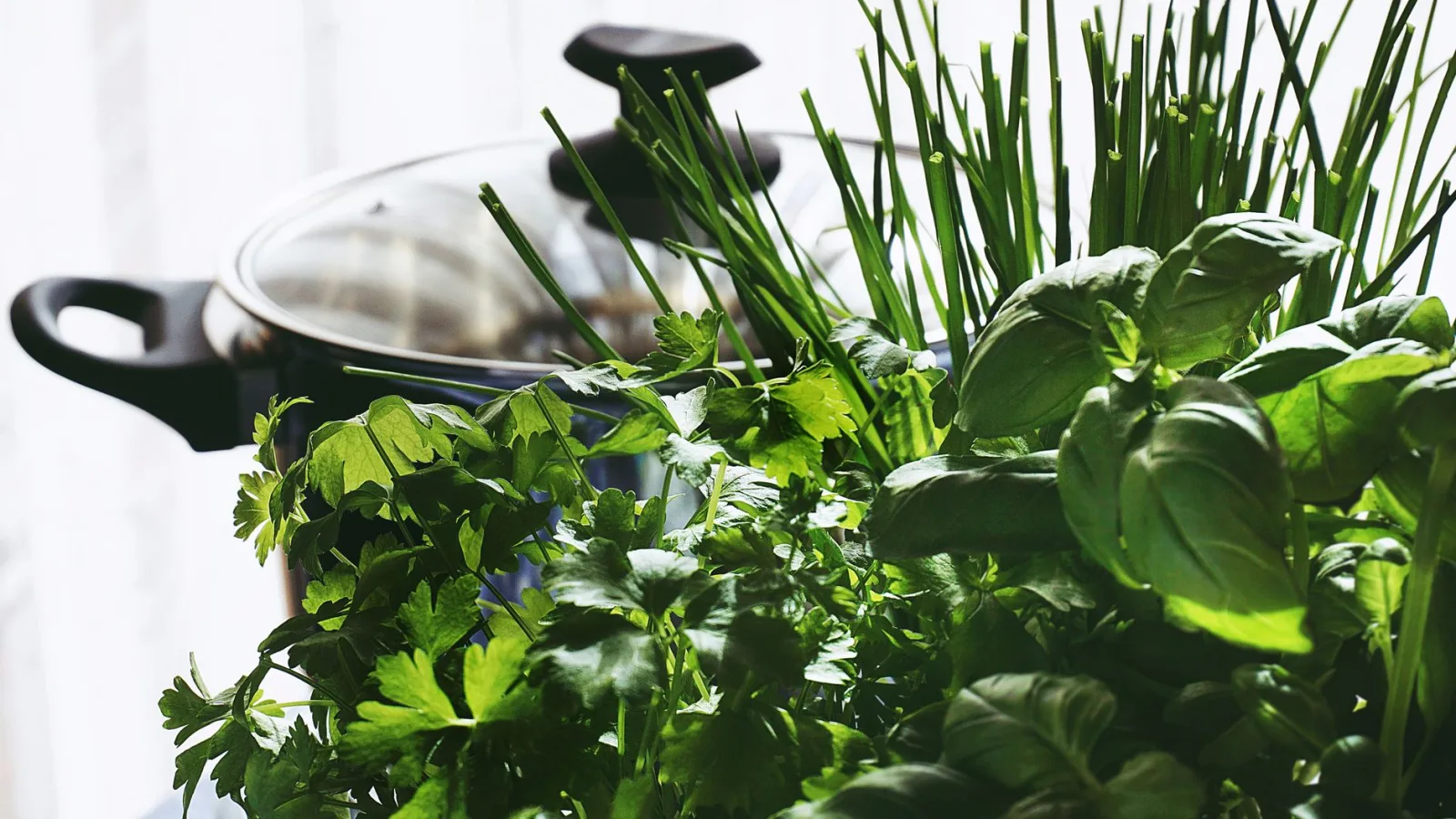
The Scallion in Your Garden Bed
Scallions — jjokpa, the slim Korean kind — are among the least demanding crops in a kitchen garden. Plant them once and the clumps divide and multiply on their own; whenever you need some, you take hold of a white base, pull, and it goes straight to the table. You slice them into pajeon batter (a savory scallion pancake), scatter a handful into a pot of soup just before it comes off the heat, work them into kimchi seasoning. An ordinary vegetable, in the best sense of the word.
Precisely because it is so ordinary, it rarely occurs to anyone that it might be medicine. It sits beside the seasoning bowls all day, less a vegetable you set out to eat than one you add to something else. And yet the Donguibogam — the great Korean medical compendium compiled in the seventeenth century — recorded this little scallion not as a seasoning but as a remedy that warms the body. It is often the most common things that held the old physicians' attention longest, and the scallion is one of them. Today, let's look at the scallions in the garden through the eyes of an old medical text.
How the Donguibogam Saw It
The Donguibogam described the scallion as warm in nature, strongly pungent in flavor, and free of toxicity. Its effects were said to reach the lungs and the stomach. The white base — chongbaek (蔥白) — was the part used as medicine.
The use it mentions most often is for wind-cold colds and for inducing a sweat. Simmering the white parts in hot water and drinking it was thought to help at the very start of a cold brought on by a chill. The long Korean habit of dropping a handful of scallions into bean-sprout soup or miyeok-guk (seaweed soup) belongs to the same lineage.
There is also a record of it warming the spleen and stomach — digestion, in other words. Here it plays a supporting role after cold food or something heavy and oily. The old reasoning was that a warm-natured plant warms the gut, which follows naturally from the table custom of serving scallions alongside cold dishes. For a stuffed nose or a tight chest, that sharp aroma was said to loosen things up, and the plant was noted as one that helps yang energy circulate. In much the same vein as garlic and garlic chives, it was also treated as a plant that acts on circulation and blood stasis. That is as far as the Donguibogam goes, so we will leave it there rather than adding claims beyond it.
Held Up Against Modern Nutrition
Seen through the lens of modern nutrition, the scallion doesn't land far from where the old text placed it. Scallions belong to the allium family along with garlic, onions, and garlic chives, and the sulfur compounds these plants share are what give them their bracing bite and aroma. The pungency the Donguibogam connected to circulation and blood stasis is, today, explained under the name sulfur compounds.
Add to that vitamin C, dietary fiber, and the chlorophyll in the green leaves. Where the Donguibogam treated the earliest stage of a cold with a warm-natured plant, we might now say, more modestly, that a bowl of hot broth warms you and helps you rehydrate. The old prescription and the modern habit are not saying quite the same thing, but the grain of it — eating a strongly aromatic vegetable, and eating it hot — is the same. Even so, it is hard to claim outright that these compounds cure anything. A scallion is less a medicine than a vegetable that slips naturally onto the table every day, and it seems right to take it as something whose steadiness makes a meal a little richer. When an old record and today's common sense point in the same direction, you gain one more reason to enjoy eating it.
From the Garden to the Table
There are plenty of ways to enjoy scallions. Most often they finish a soup or a stew; you can fold a generous amount into pajeon batter and fry it, or fill a plate with scallion kimchi (pa-kimchi) or a quick seasoned scallion side. And when a cold is just coming on, there is the old method of simmering the white bases and drinking the liquid like a hot tea.
A few cautions, though. The Donguibogam advised restraint for what it called a yin-deficient, heat-prone constitution — the kind that leaves you with a dry mouth and a flushed, overheated feeling. If you deal with gastritis or acid reflux, you'll be more comfortable going easy on the pungent seasonings, and eating a lot of raw scallion at once can irritate the stomach. Paying attention to how your own body is doing and adding them in moderation — that is how you go on eating an ordinary crop well, for a long time.
The white base and the green leaves are put to somewhat different uses. The part the Donguibogam treated as medicine is mainly the white base, chongbaek (蔥白), so if you are simmering a tea, using a good amount of the white portion stays closer to the old method. The green leaves belong in soups and seasoned sides, where they carry aroma and color. And rather than lifting a whole clump at once, snipping only the leaves you need will keep the plant feeding you far longer out in the garden.
A single clump, divided and replanted in the garden, becomes the aroma of one meal — and sometimes a warm cup on a cold day. Tonight, why not lay a light handful of scallions over a bowl of soup?