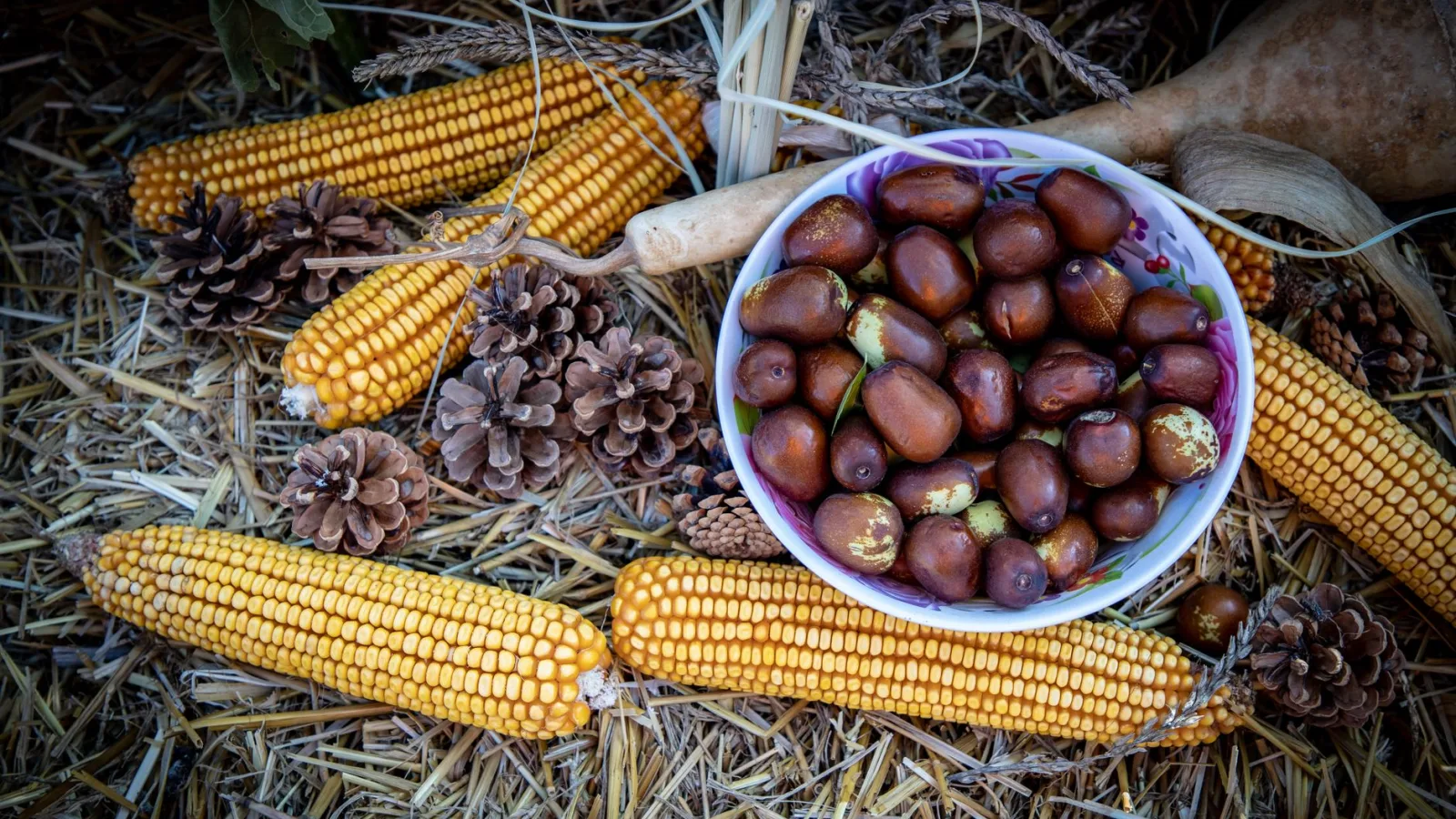
In the Northern Hemisphere, once mid-September passes, the fruit on a potted jujube tree starts turning red, one side first. Saplings go in during March or April, but they bear nothing that first year. It usually takes two to three years to see the first fruit, and after that you'll pick from the same branches every year. Jujubes leaf out very late in spring, and plenty of gardeners pull them up, sure they're dead. A single tree can set fruit on its own, so keeping one on a balcony is an easy commitment. The tree is widely grown in China, Korea, Iran, and India, so you'll find the dried fruit, often labeled "red dates," in markets in many countries.
After all that waiting, once your harvest is drying, one question almost always follows: will eating jujubes help me sleep? That question actually covers two different ingredients.
The sleep studies are about the seed, not the fruit
Many of the studies cited on sleep look at sour jujube seed (sanjoin in Korean, suan zao ren in Chinese, 酸棗仁), not the jujube fruit. The sour jujube is a variety of the same species (Ziziphus jujuba var. spinosa), and the part used medicinally is the seed, not the fruit. Because the trees are close relatives and the names overlap, search results lump them together. Still, findings from simmered seeds can't simply be carried over to the dried fruit.
At the market, the two look nothing alike. Dried jujubes are sold as whole, wrinkled red fruit. Sour jujube seed is sold as flat seeds with the flesh removed. If sleep is what sent you shopping, first check whether the thing in your basket is a fruit or a seed. And if a cup of jujube tea seemed to help you sleep, give some of the credit to the quiet minutes you spent slowly sipping something warm before bed.
What we know about the fruit
Some studies have measured antioxidant markers of polysaccharides extracted from jujubes in test tubes and in animal models. Evidence from humans is still limited, so it's too early to say the same thing happens in the body of someone who eats them. The fairest reading is that they might help.
The fruit's makeup changes as it dries. Vitamin C dissolves in water and drops sharply with drying, while fiber becomes more concentrated as the moisture leaves. The skin and flesh contain triterpenic acids. Fresh and dried jujubes are best treated as two different foods.
Decide how many before you start
Dried jujubes are roughly 70% sugar, which puts them among the most sugar-dense fruits. If you're keeping an eye on your blood sugar, decide in advance how many you'll eat in a day. Tea counts too, because the sugar steeps into the water. If the tea tastes sweet, that sugar is going into you as well.
There's one way to keep them from being pure sugar. Split a dried jujube, take out the pit, and tuck a walnut or hazelnut in its place. With fat coming in alongside the sugar, your blood sugar rises more slowly than it would with a sugar-only snack. Two or three at a time is plenty.
Pit them, and split them before cooking
Jujube pits are hard and sharply pointed, and biting down on one without thinking can damage a tooth. Children can also swallow them whole, so have an adult pit the fruit first.
- When adding them to tea or soup, split them first. They release more flavor than whole fruit with the pit still in.
- For children, remove the pit and give them only the flesh.
- Eat fresh jujubes two or three at a time rather than a handful at once. If they sit heavy, steam them first.
The Donguibogam, Korea's 17th-century medical classic, lists daejo (大棗, "large jujube") in its fruit section and says to split it before adding it to a decoction. The same book adds a caution: eating a lot of fresh jujubes causes bloating and diarrhea, so steam them before eating. That advice comes from a historical medical text, not from modern medicine. Even so, anyone who has eaten jujubes straight off the tree knows that the tough skin and heavy fiber make several at once slow to digest.
Simmer dried jujubes with ginger and dried tangerine peel and you have a tea to keep on hand all winter. The jujubes' sweetness softens the ginger's heat and the peel's bitter edge. Adding a few to baeksuk, a whole chicken simmered until tender, is also a long tradition. The broth picks up a gentle sweetness, and the other ingredients blend together more evenly. In soups they often go in whole; just set the pits aside as you eat.
If you're drying this year's harvest, do just one thing today. Pick out the well-dried fruit, split each one in half, remove the pits, and set aside one day's portion in its own container. Planting and harvest months and good companion ingredients are all in our jujube guide, so take a look the next time you're standing by your pot.