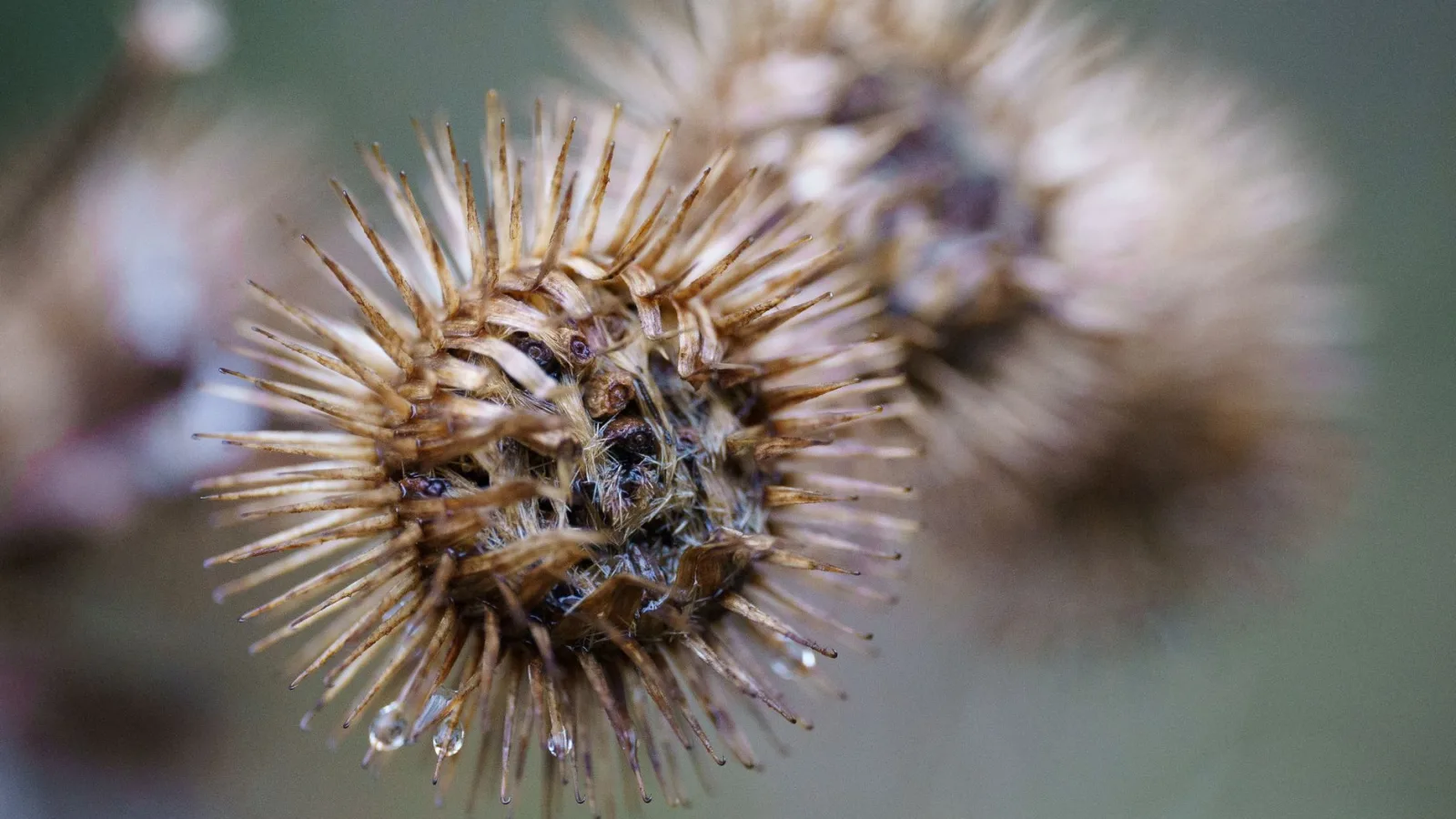
When autumn deepens, the first place a gardener looks is the balloon flower patch at the edge of the plot. Count the leaves, count how many stems have pushed up, and decide that this year it's ready to dig. You can't see underground, so you read what's above it.
People who dig wild ginseng in the United States use the same method. The difference is that over there, the standard isn't each person's eye — it's written into law.
A harvest rule built on age and leaves
American ginseng belongs to the same family, Araliaceae, as Korean ginseng. Its root has long been used medicinally, so people have gathered it in the mountains for generations, and even today a sizable share of what gets exported comes from wild stands. As populations thinned, the United States set rules about which plants may be dug. They vary by state, but in general only a plant that is at least five years old with three or more leaf stalks — three prongs, in the harvester's phrase — may be taken. Seed from that plant has to go back into the hole it came out of.
The reason age and leaf count became the standard is simple: out in the woods, that's all you can check. You can't weigh the root or tally the seed it set over the season, so a number you can count with your eyes stands in for the rest.
What a leaf count doesn't tell you
When a research team at the Yale School of the Environment reanalyzed population data on American ginseng, they found that age and leaf count are poor predictors of the traits that matter most for conservation. How much seed a plant sets, whether it survives to the following year — none of that lined up neatly with the number of prongs.
Growth rate almost certainly has something to do with it. In deep shade, under a thick blanket of leaf litter, a plant can spend years and still hold at three prongs, while in a spot with the right light and moisture it puts up a fourth far younger. Reading age off a leaf count leaves that difference out of the rule entirely.
The result can be a local population that barely recovers even though every plant taken was dug by the book. Rather than leaning on a single countable number, the team wrote, the standard needs revising to weigh the plant's actual size as well.
Reading the moment to dig in your own garden
Garden root crops are much the same. Balloon flower root (doraji), deodeok (bonnet bellflower root), and burdock are usually dug on the basis of how many years old they are, but plants sown the same day from the same packet can end up with strikingly different root thickness depending on where they landed.
- Leave a few plants for seed. Mark the ones with the thickest flower stalks and fullest seed heads first.
- Before digging, scrape back a hand's span of soil and feel the top of the root with your fingers. If it's thinner than your finger, it's better off with another year in the ground.
- Even within a single row, try holding off a year on the shadier end.
- Every hole you empty, put seed from that same plant back in it the same day.
This fall, look at each plant's leaves and flower stalk before you look at the planting date you wrote down. Plants of the same age are not equally ready to come up.
Source — an analysis of American ginseng harvest regulations by a research team at the Yale School of the Environment, published in the journal Environmental Research Letters.