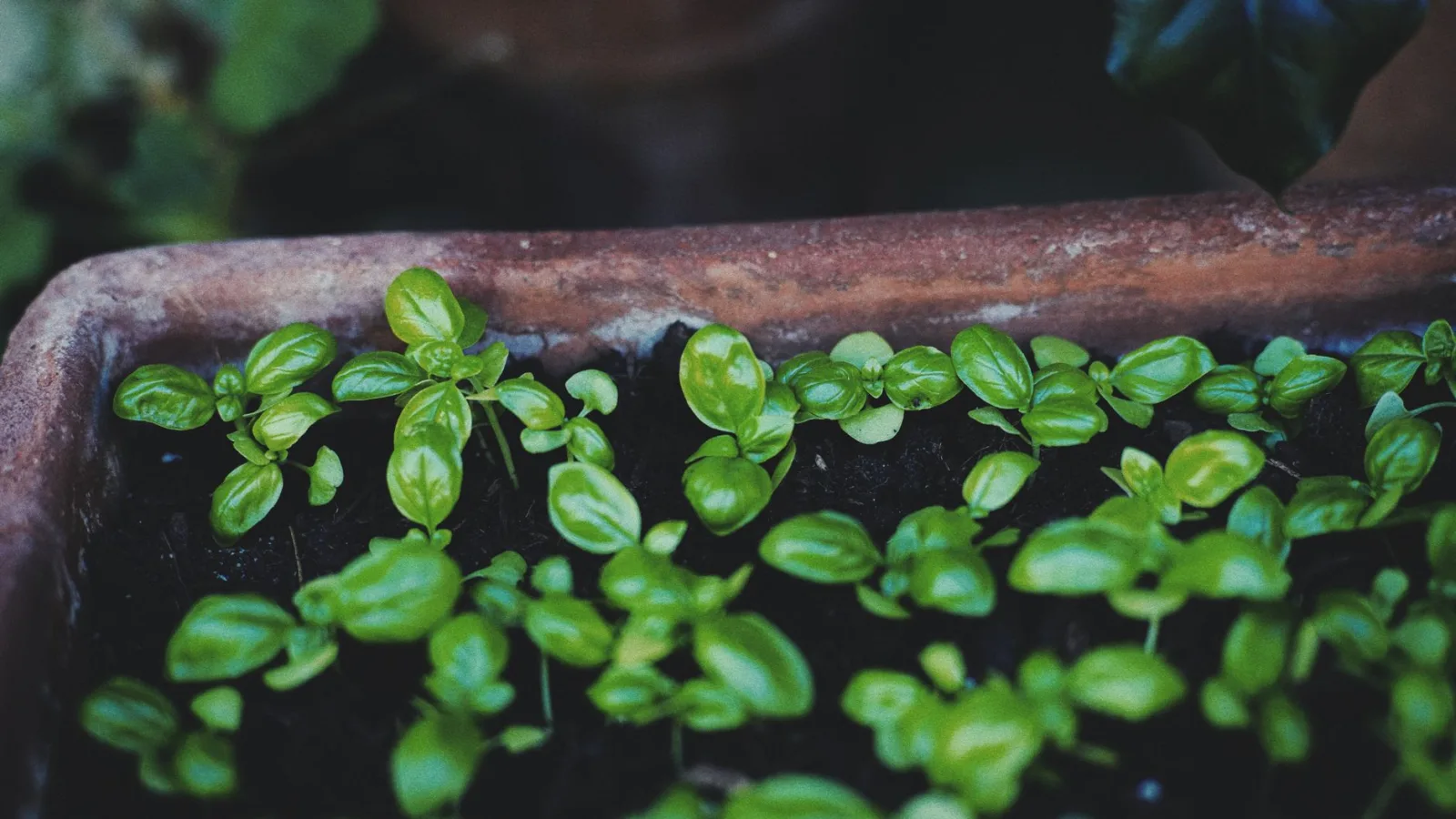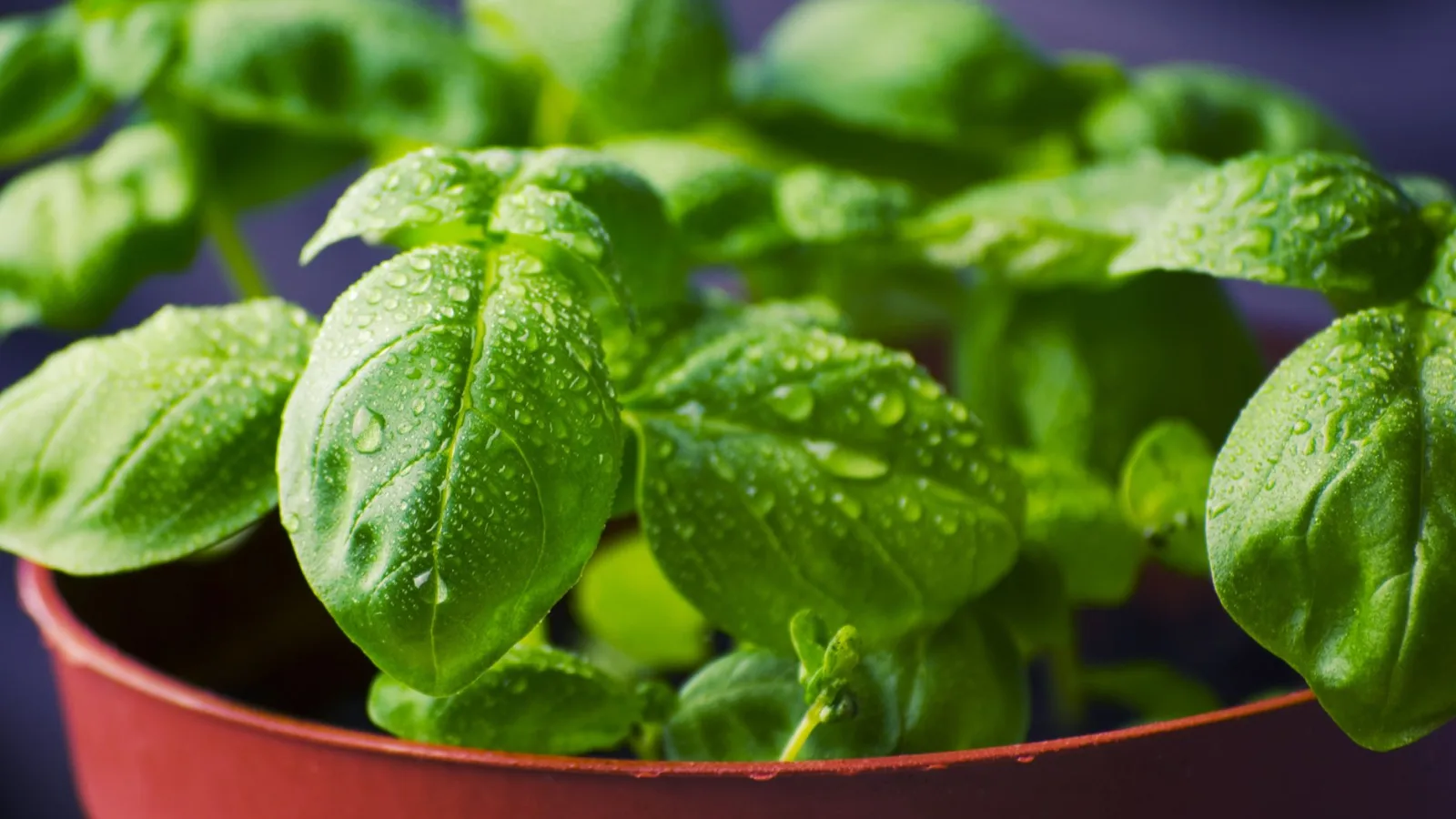
If you've grown basil in a greenhouse through midsummer, you know the pattern: leaves turn papery sooner than expected, or the edges go crisp and brown. It's tempting to assume more direct sun is always better. For basil, it isn't. A 2026 study in the journal Plant Physiology and Biochemistry tracked what happens inside the plant when solar panels mounted on a greenhouse roof are used to dial the light up or down, following the crop across two growing seasons.
Basil adapts when the light drops
The researchers grew basil under three roof conditions: uncovered, half covered, and fully covered. Under the fully covered roof, the plants raised their chlorophyll a and chlorophyll b content by roughly 29% and 27%. That's a textbook physiological response — when light is scarce, the plant builds more pigment to capture what's left.
But under those same conditions, total polyphenols fell by about 51%, flavonoids by about 25%, and antioxidant activity by about 28%. The plants held onto their photosynthetic machinery while cutting back sharply on antioxidant defense compounds. Under the half-covered roof, none of those numbers dropped much at all: polyphenols and flavonoids held up reasonably well across both seasons.
Half-shade rewrites the aroma profile
At 50% shade, the blend of compounds in basil's essential oil shifted. Two rose noticeably: eucalyptol and linalool. Eucalyptol carries a cool, bright, almost minty note; linalool leans floral. When the ratio between compounds like these changes, so does the basil flavor you actually taste in a dish.
Under the fully covered roof, a volatile compound called neophytadiene moved in a different direction entirely. In short, the level of shade determines which aromatic mix the plant assembles.
Full sun leaves basil carrying oxidative stress
Basil grown under high light accumulated 20–28% more malondialdehyde (MDA) than shaded plants, consistently across both seasons. MDA is a standard marker for oxidative damage to cell lipids, so the numbers point to real strain on plants sitting in intense sun.
The study also tested a foliar spray — a solution of 30% ethanol and 30% methanol — applied to the leaves. It lowered MDA levels and improved the plants' biochemical profile overall. The researchers attribute the effect to protection of the cell membranes. The same treatment also pushed neophytadiene higher. One caveat: this was greenhouse work, and home-garden conditions differ enough that the results don't transfer directly.
Growing basil on a balcony or in a greenhouse
Through the peak-sun weeks of midsummer, try cutting the light roughly in half with shade cloth. You may keep the antioxidant content intact while encouraging richer aroma compounds like eucalyptol and linalool. Don't black the light out completely — antioxidants drop off steeply at full shade. Fifty percent is the number to aim for.
Source: Plant Physiology and Biochemistry, 2026 — "Biochemical characteristics of greenhouse basil: effects of solar shading and foliar alcohol spray"