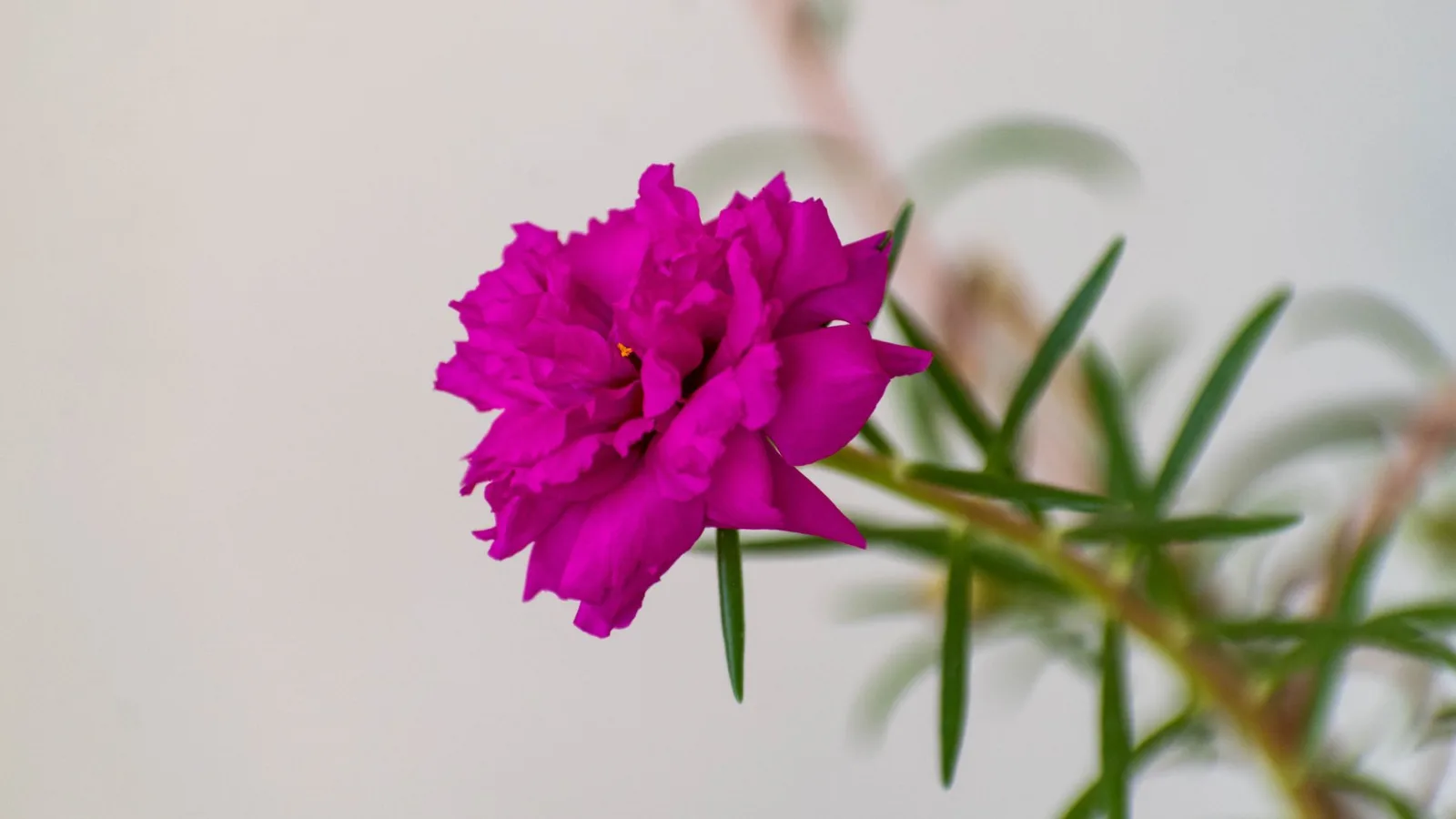
Look under the pepper stakes in a September garden and you'll find red stems fanned out flat against the soil. Press a thumbnail into one of the thick leaves and water beads up. You don't remember planting anything there last spring, and yet there it is, spreading through the gap between the raised beds and the path: common purslane (Portulaca oleracea).
Pull it up and it lives on for days more on the water stored in its stems; step on it and it pushes new shoots out of the flattened spot. It's a weed you yank while weeding — and also a green people have been blanching and eating for a very long time.
The Dongui Bogam recorded it as machyeon
In the vegetables section (菜部) of the Dongui Bogam, purslane appears as machyeon (馬齒莧), or "horse-tooth greens" — named, the text says, for leaves shaped like a horse's teeth. The same entry preserves a second name. Green leaves, red stems, yellow flowers, white roots, black seeds: five colors, and so it was also called ohaengcho (五行草), the five-element herb.
What the old medical texts prescribe reflects the judgment of their own era, which is not the same thing as today's evidence — so what we carry over here are only the names and the description of the plant. You can read the heading and the full gloss in one place at the Dongui Bogam entry for machyeon.
Five colors, and what today's chemistry explains
Of those five colors the old record left us, is there one we can account for now? The red stem, as it happens. Purslane carries pigments called betalains, and they deepen the stronger the sun. A stem that has taken full sun all day at the edge of a bed runs redder than one down in a shaded furrow.
The tart edge you taste when you chew a leaf comes from oxalic and malic acid. The slipperiness after blanching comes from mucilaginous polysaccharides. Purslane is also unusually high, for a leafy green, in the fatty acid alpha-linolenic acid (ALA). That said, a plant containing a lot of something and that something changing the body of the person who eats it are two different claims. The evidence for the second one isn't there yet.
Planting and harvesting
It shrugs off heat and dry ground, so it asks very little of you. In the Northern Hemisphere, sow between April and June and cut shoots from June through September. In the Southern Hemisphere, sow from October to December and harvest from December through March.
- Broadcast the seed somewhere that gets sun all day long. The seeds are tiny, so cover them with only the thinnest layer of soil.
- Don't cut down to the base — take just the upper shoots, and side shoots will come up again.
- Once the yellow flowers fade and the black seeds ripen, it will reseed itself and return next year. If you'd rather it not spread, harvest around the time the flowers drop.
For sowing and harvest months, nutrients, and what it pairs well with, see the purslane crop guide, calendar included.
How to blanch and eat it
Blanch briefly in boiling water, then rinse under cold. Squeeze the water out firmly, or the dressed greens will turn watery. Summer and early-autumn shoots are the most tender and the best eating.
- Chogochujang (gochujang chili paste loosened with vinegar): blanched purslane brings a sour note of its own, so the two get along easily.
- Perilla oil and sesame seeds: a drizzle of nutty perilla oil makes the slippery texture much easier to enjoy. ALA is a fat as well, so it's better eaten alongside oil.
- Tofu and dried anchovies: the idea is to serve something calcium-rich so the oxalic acid binds with calcium in the gut first. A little tofu spooned over the dressed greens makes the dish easier on the system.
If you're heading out to weed today, leave one handful of those red stems along the path. September shoots are still tender. Blanch them, squeeze them dry, dress them with chogochujang, and there's a plate for the dinner table.