In mid-September across the Northern Hemisphere, a handful of garden soil feels colder in the morning than it did a week before. Pulling up spent pepper stalks, watering the furrows where the fall cabbage is coming in — you can feel the ground giving up the heat it held all summer.
The soil under the pines on the mountain is cooling at the same time. Once the temperature underground drops below 19°C and a rain passes through, matsutake push up beneath the old pine trees. It isn't a mushroom you can raise in a backyard plot, but pick one up at an autumn market and the scent reaches you before anything else does.
It grows alongside a living pine
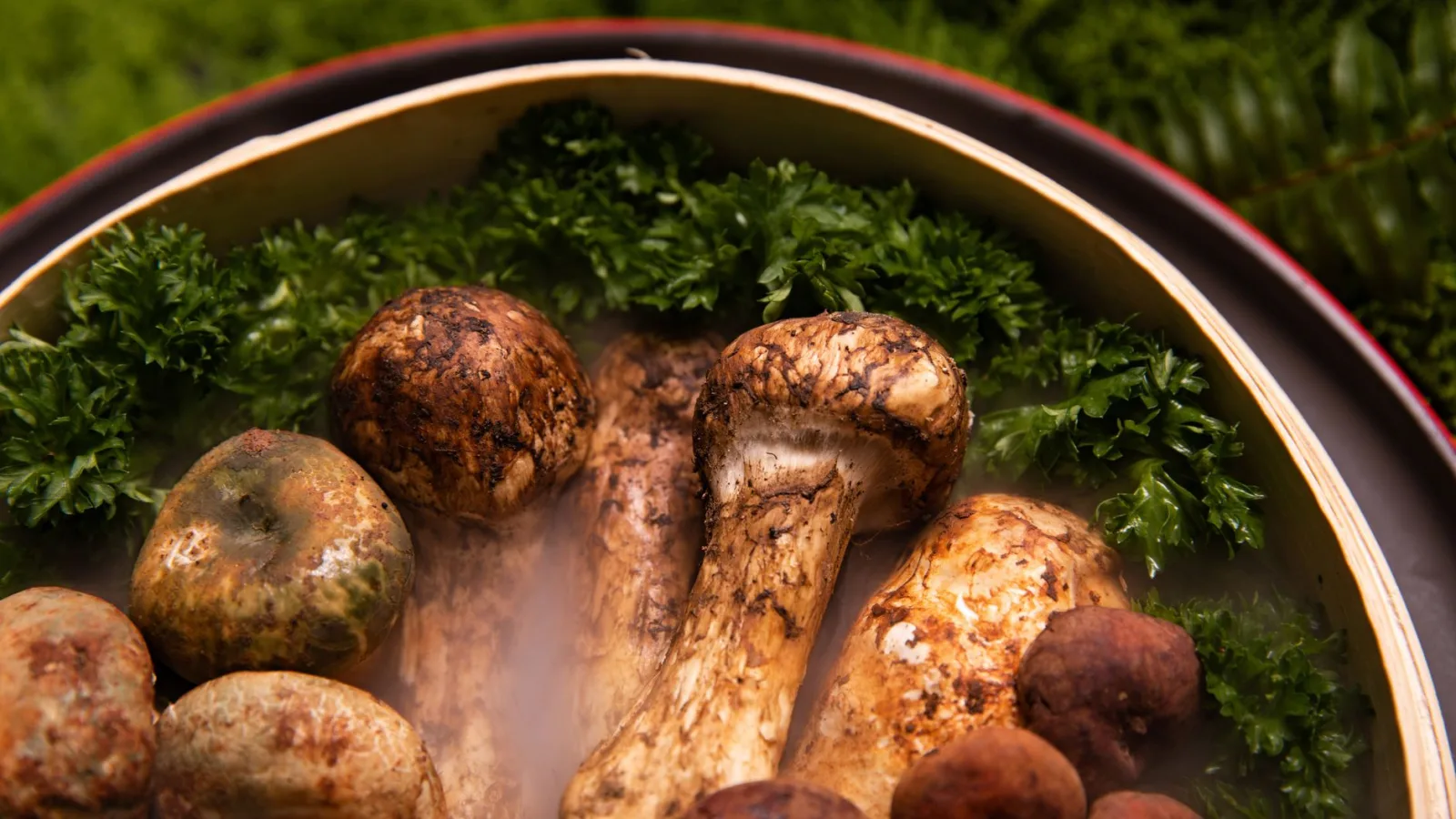
Matsutake — songi in Korean — grow by forming mycorrhizae with the roots of living pines: a partnership in which fungus and root live joined together. Shiitake can be raised on inoculated sawdust blocks or logs, but that method doesn't work here, and matsutake still resists cultivation entirely. Where it appears depends on the age of the trees and the condition of the forest, so it turns up mostly in older pine stands.
When the mushrooms come up is set by soil temperature, not air temperature. The mycelium spreads well at 22–25°C, and 15–19°C is the right range for fruiting. If the summer runs too hot or the fall rains never arrive, a year can pass with almost nothing. China produces the most; Korea, Japan, Bhutan, and Canada also harvest a great deal. In the Northern Hemisphere the season runs from late September into October.
Two compounds make the scent
The main contributors to matsutake aroma are methyl cinnamate and 1-octen-3-ol. Methyl cinnamate gives the mushroom its distinctive scent; 1-octen-3-ol is the volatile alcohol behind the smell most of us simply call "mushroom."
Both are highly volatile and scatter into the air easily, and how much survives depends on how you clean and cook the mushroom. Matsutake also holds a lot of water, so it softens quickly, and as it softens the aroma fades with it. That's why it's worth eating the same day you buy it.
Matsutake in the Dongui Bogam
The Dongui Bogam, the Joseon-era medical compendium, lists the mushroom in its vegetable section under the Chinese characters 松耳, "pine ear." Its nature is neutral, the text says, its taste sweet, and it carries no toxicity. In Korean medicine, "neutral" describes something that neither warms nor cools the body. It has an excellent scent and flavor and something of the pine about it, the entry goes on, and it grows beneath old pines deep in the mountains, taking that quality from them. The book calls it the finest of the mushrooms that grow on trees, citing sokbang — prescriptions handed down among ordinary people.
That is a record from an old medical text, though, and not the same thing as a modern medical judgment. Current research deals with the aroma compounds and the ecology, and there is as yet no basis for claiming that matsutake prevents any particular disease. What to expect from it is closer to this: the scent and taste of one meal in its season.
Cleaning and cooking so the scent survives
Matsutake never goes under water. Washing rinses away the volatile aroma compounds along with the dirt. Scrape the soil off the base with a knife, taking only a thin layer, then wipe the cap and stem with a damp cloth. The simpler the cooking, the longer the aroma stays.
- Salt and sesame oil: tear the mushroom into strips along the grain, lay it in a hot pan just long enough that the surface doesn't dry out, and dip it in salt or sesame oil. Every seasoning you add covers a little more of the scent.
- Beef: start a grilling cut — rib eye or strip loin — in the pan, then add the matsutake and cook them together. The fat from the beef carries the aroma. For jeongol (a simmered hot pot), add the mushroom at the very end and turn off the heat.
- Songi bap (matsutake rice): once the rice has come to a boil, just before it goes into its final steam, lay sliced matsutake over the top and put the lid back on. Add it at the start and most of the scent boils off. Serve the soy seasoning separately at the table.
If you've foraged your own, matsutake is easy to confuse with lookalikes, so have someone experienced check them before you eat.
If you came home with matsutake today, reach for a damp cloth instead of a bowl of water.
Sources: Dongui Bogam, vegetable section, 松耳 · Korea Forest Service, forest products information