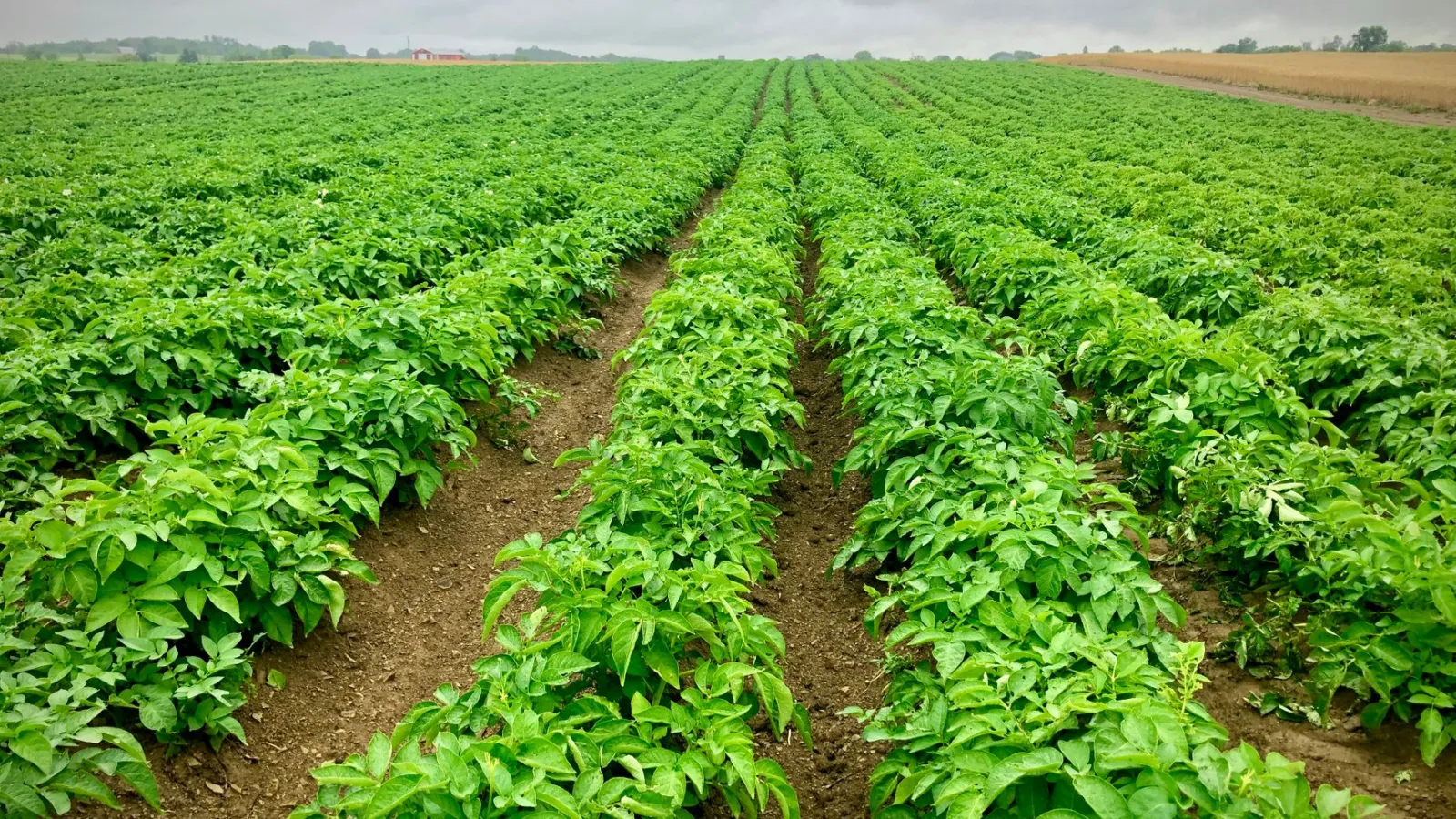
Some days you boil the potatoes you dug from the garden and leave them sitting at the edge of the table until dinner. Once the steam is gone and the surface has firmed up, they are not as fluffy as they were fresh from the pot. It is easy to assume they have lost something, but by this point the starch inside them has changed in a small but real way.
The Starch That Grows in a Cooled Potato
Potatoes, sweet potatoes, kidney beans, and underripe bananas all contain a kind of starch the small intestine has trouble breaking down. It is called resistant starch. It passes through largely untouched by digestive enzymes and travels down to the colon, where it becomes food for the microbes living there. Cooling boiled potatoes or freshly cooked rice increases the amount of it. When starch is hot, its chains are loose and open; as the temperature drops, they bind back together into a tighter structure. Even if you refrigerate the potatoes overnight and warm them gently the next day, much of that gain stays put.
Polydextrose is a dietary fiber made by linking glucose molecules together, and it is used in beverages and processed foods to adjust sweetness and calories. Both it and resistant starch are fermented by colon microbes, but they ferment at different speeds and in different places.
Where the Two Fibers Part Ways: Bile Acids
Bile acids are compounds the liver makes from cholesterol and stores in the gallbladder, releasing them into the small intestine whenever you eat fat. They help the body absorb fat and fat-soluble vitamins, and most of them are reabsorbed at the far end of the small intestine. The remainder continues into the colon, where microbial enzymes convert them into different forms. The ones fresh from the liver are called primary bile acids; the ones microbes have altered are secondary bile acids. Beyond aiding digestion, bile acids also send signals to receptors involved in blood sugar and fat metabolism.
In one clinical study, healthy adults ate 23 grams of resistant starch a day for 50 days, and several kinds of bile acids rose in their blood. Forms bound to taurine or glycine went up, and so did deoxycholic acid. In the group that ate polydextrose, blood levels did not change; instead, the share of bile acids converted to secondary forms in their stool went down. Over the same period and in the same participants, the two fibers left their marks in different places.
The connection to gut bacteria diverged as well. Among participants who ate resistant starch, those with more bacteria of the genus Akkermansia had higher levels of taurine-bound bile acids in their blood. Akkermansia lives in the mucus lining of the gut, and several reports have tied it to metabolic markers. Still, this study followed healthy adults for a short time. That the makeup of their bile acids shifted is fairly well established. Whether that shift carries through to body weight or blood sugar is not yet known.
How to Get It From the Garden
Polydextrose is an ingredient in processed foods, so there is no garden path to it. Resistant starch, on the other hand, comes straight from what you dig up. Potatoes bulk up in cool weather, and sweet potatoes are harvested in September and October in the Northern Hemisphere. How you eat this season's harvest decides how much of that starch reaches your gut.
- Let boiled potatoes and steamed sweet potatoes cool a bit before eating. Served cooled in a salad or a lightly dressed side dish (muchim, a Korean seasoned vegetable dish), they taste good without reheating.
- Rice can be cooked, cooled, kept in the refrigerator, and reheated when you are ready to eat.
- Try boiling kidney beans, peas, or chickpeas and stirring them into rice or soup. Legumes hold on to their resistant starch even without cooling.
- Increase the amount gradually over several days. Jumping in all at once brings gas and bloating.
Tonight, instead of eating your potatoes straight from the pot, let them sit for about an hour before bringing them to the table.
Reference: European Journal of Nutrition, study on the effects of resistant starch and polydextrose on plasma and fecal bile acid composition and the gut microbiota