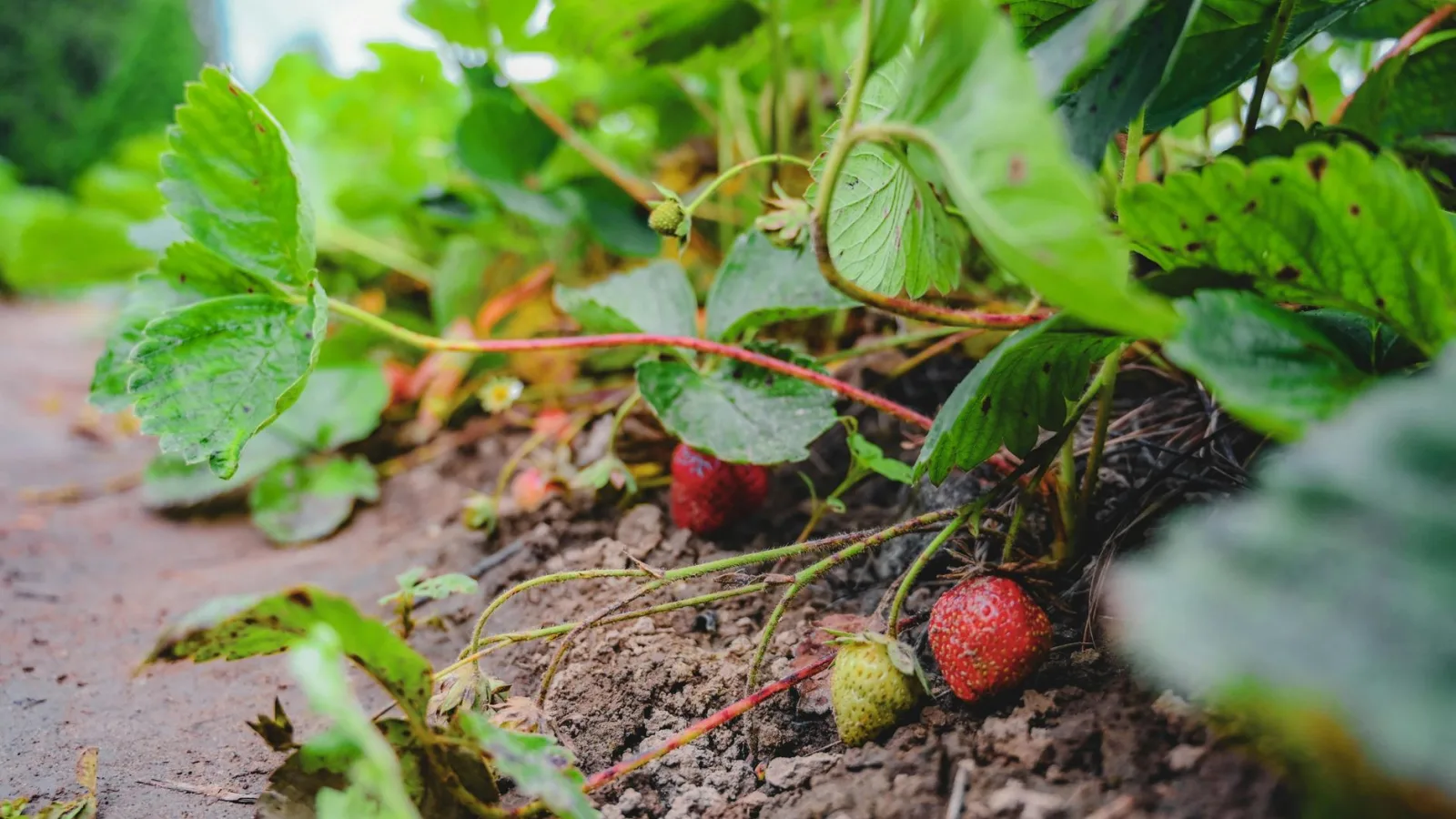
In May and June, north of the equator, garden strawberries ripen a few at a time, every morning. You pick the red ones, set them in a flat basket on the kitchen windowsill, and two days later the berries resting against the bottom have already gone soft. A strawberry begins to spoil the moment it leaves the plant.
A Frog-Derived Molecule, Five Minutes on a Strawberry
Researchers at the Tupã campus of São Paulo State University, in Brazil, dipped Oso Grande strawberries in a solution of a peptide called Ctx(Ile21)-Ha. The dip lasted five minutes. A peptide is a short chain of amino acids. This particular molecule came from the skin of a frog native to the Cerrado, the savanna belt across central Brazil.
That five-minute soak alone appeared to push back the point at which the berries turned soft. Molecules of this kind from frog skin are known to slow the growth of microbes, and the researchers think something similar happened on the surface of the fruit. It's worth noting that this is a lab finding so far; testing it through a real harvest and a real supply chain still lies ahead.
Why a Strawberry Can't Make It Two Days
A strawberry has no thick rind, the way an apple or a citrus fruit does. The entire red surface sits exposed, and roughly 90% of the berry's weight is water. Let gray mold get a foothold and a single berry turns to mush within a day or two, then the mold travels to whichever berry it's touching. If you can't bring the fruit's temperature down right after picking, the whole process runs faster.
Strawberries fill out best in cool weather. When daytime highs sit between 17 and 23°C (63–73°F), the berries swell firm; string together days above 30°C (86°F) and they ripen soft. The biggest growers worldwide are China, the United States, Egypt, Mexico, and Türkiye.
Buying Your Picked Strawberries Another Day
- Pick in the cool of the morning, before the sun climbs. The colder the fruit, the slower it softens.
- Don't wash them — store them as they are. Any moisture left on the skin is where mold grows first. Rinse just before eating.
- Spread them one layer deep in a shallow dish. Softening starts wherever a berry is pressed.
- Pull out soft berries as you spot them. Leave one in place and you'll lose its neighbors along with it.
- Picked more than you can eat? Hull them and freeze them. They're ideal for smoothies.
A 100g serving of strawberries holds 50–60mg of vitamin C. Because you eat them raw, very little of it is lost. Vitamin C goes into building collagen, the protein that makes up skin and blood vessels. A handful a day helps cover your share.
If you're picking strawberries today, skip the rinse, lay them one layer deep in a shallow dish, and slide them onto a lower shelf of the refrigerator. The five-minute dip has a long way to go before it reaches anyone's garden, but handling temperature and moisture is something you can do this afternoon.
Source — São Paulo State University, Tupã campus; strawberry shelf-life trial using the Ctx(Ile21)-Ha peptide