When the first frost warning comes, ginger is the first thing gardeners dig up. Ginger can't handle the cold, so the rhizomes have to come out of the ground before they freeze. White cardamom comes from the same family: it's the dried fruit of a plant in the ginger family (Zingiberaceae). This plant, though, prefers even warmer, more humid conditions than ginger does. It grows best at 22–28°C and can survive anywhere from 15 to 35°C. In the wild it grows on the forest floor beneath tall trees, taking in the soft light that filters through the leaves. It can't tolerate frost, and it can't even tolerate dry wind. It's native to Cambodia, also grows wild in Thailand, and is harvested widely in China, Vietnam, and Indonesia. Getting it to fruit in a city garden is a long shot, so home cooks buy the dried pods instead.
White Pods and Green Pods
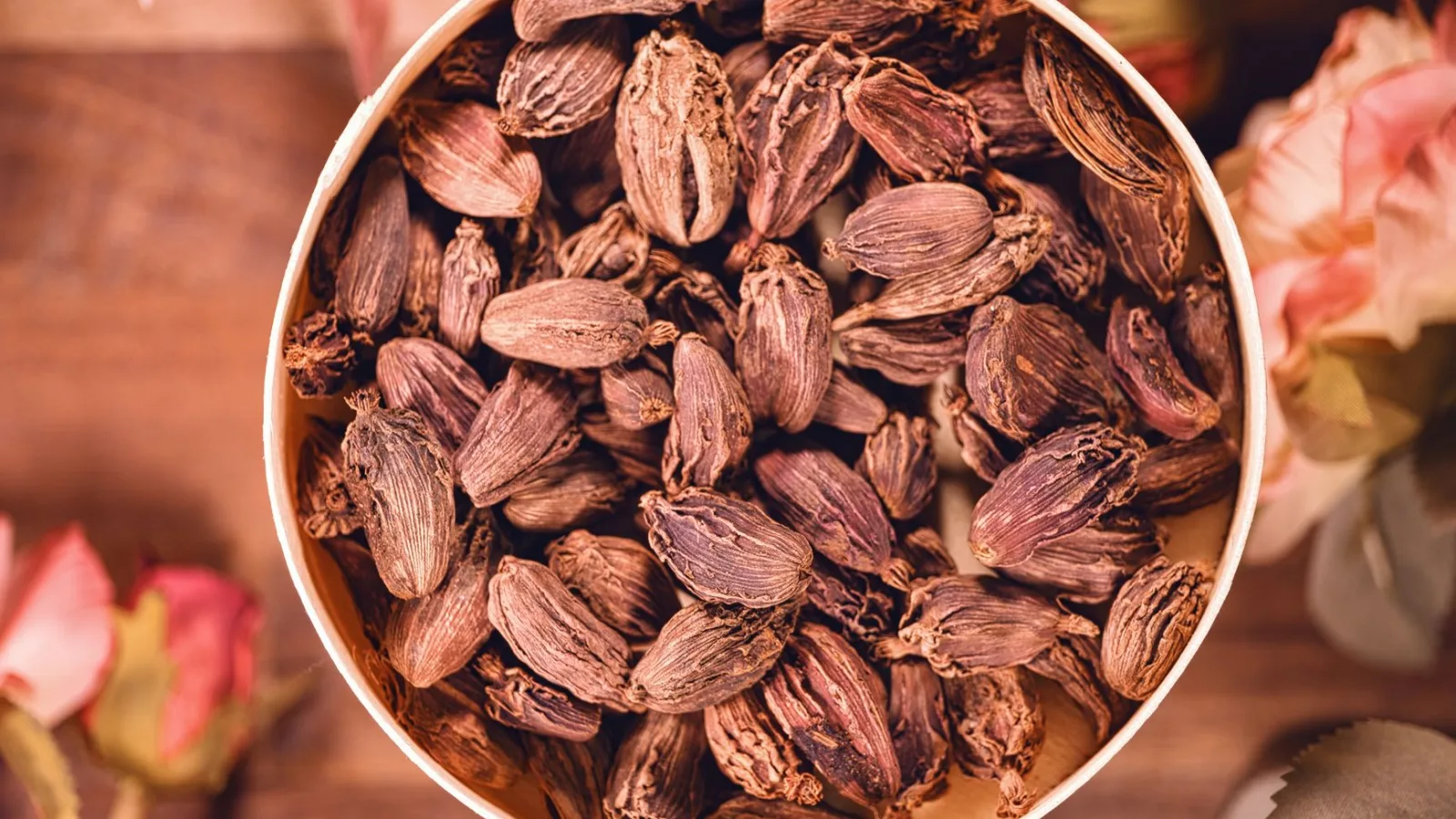
The green pods sold as cardamom at the supermarket are usually Elettaria cardamomum. In Korea, herbal medicine shops and Chinese grocery stores sell round, white pods under the name baekdugu (white cardamom), and these belong to the genus Amomum. Botanically, the two are different species. Even so, the main compound in the essential oil of both is 1,8-cineole, so they smell alike. The same compound is abundant in eucalyptus leaves, which is why it's also called eucalyptol, and it gives off a cool, clean scent. That shared compound is why the two names often get mixed up in the kitchen. The proportions of other compounds, such as α-terpinyl acetate, vary by species, so the strength of the aroma differs a little even in the same dish.
The Herbs section (草部) of the Dongui Bogam, the 17th-century Korean medical classic, lists white cardamom as an imported medicinal, marked with 【唐】, and describes it as very warm in nature, pungent in taste, and nontoxic. It notes that the fruit grows in clusters, green when fresh and turning white as it ripens, and it even gives preparation instructions: harvest in the seventh lunar month, remove the husk, and grind. Scholars disagree about which modern species the text's baekdugu refers to. It's best to read its description of the herb's nature as part of an older system of medicinal classification, and to choose by aroma in the kitchen.
For Milk and Black Tea, Crack Them Open
Chai is black tea simmered with milk and spices. For two cups, crack 3 to 4 white cardamom pods with the back of a knife and add them to 200 ml of water along with 5 g of sliced ginger and a piece of cinnamon stick (about 3 cm). Simmer over low heat for 5 minutes. Add 5 g of black tea leaves and steep for 2 more minutes, then pour in 200 ml of milk and turn off the heat as soon as small bubbles form around the edge of the pot. Strain through a fine sieve before serving to remove the pods and ginger.
The pods go in cracked because the whole process takes less than 10 minutes. If you leave them whole, the water can't easily reach the seeds inside the husk, and the flavor won't fully steep out in that time. With the heat of ginger and the sweetness of cinnamon in the pot, the cardamom blends in instead of standing out on its own. Ginger freshly dug from the garden has tender fibers, so it's easy to slice thin.
For Curry, Let the Cooking Time Decide
In curry, how strong the cardamom tastes depends on when you add it. Heat 30 ml of oil in a pot over medium-low, toast 2 to 3 whole pods for about a minute to bring out their aroma, and then add the onion and other spices. If the pods go in at the start and simmer for a long time, their aroma spreads lightly through the whole sauce and its sharper edge mellows. If you instead grind just the seeds from 2 pods and sprinkle them in right before turning off the heat, the cardamom reaches your nose before any of the other spices.
For a long simmer, add the pods whole at the start; for a short one, grind the seeds and add them at the end. Use whole pods for a meat curry that cooks for more than an hour, and ground seeds for a vegetable curry made with garden kabocha squash or carrots that's done in under 20 minutes. Ground seeds lose their essential oil quickly, so crush them in a mortar or with the back of a knife right before you use them.
Two Pods for a Rich Meat Braise
When you braise fatty meats like pork or duck in soy sauce, the way Korean jorim dishes are made, white cardamom makes the richness feel less heavy. Two whole pods per 600 g of meat is enough. Any more and the cool aroma becomes strong enough to overpower the soy sauce. Leave the pods whole during the hour or so of gentle simmering, and remove them before serving. If someone bites into a pod, the flavor floods their mouth all at once and drowns out everything else.
Store the pods whole in an airtight jar somewhere out of direct light. If you crack or grind only what you need each time, the aroma will last a long while, even as you reach into the same jar for chai, curry, and braises.
Sources: Dongui Bogam, Herbs section (草部), White Cardamom (白豆蔲) · Homiclub Crop Guide (compounds, pairings, growing climate)