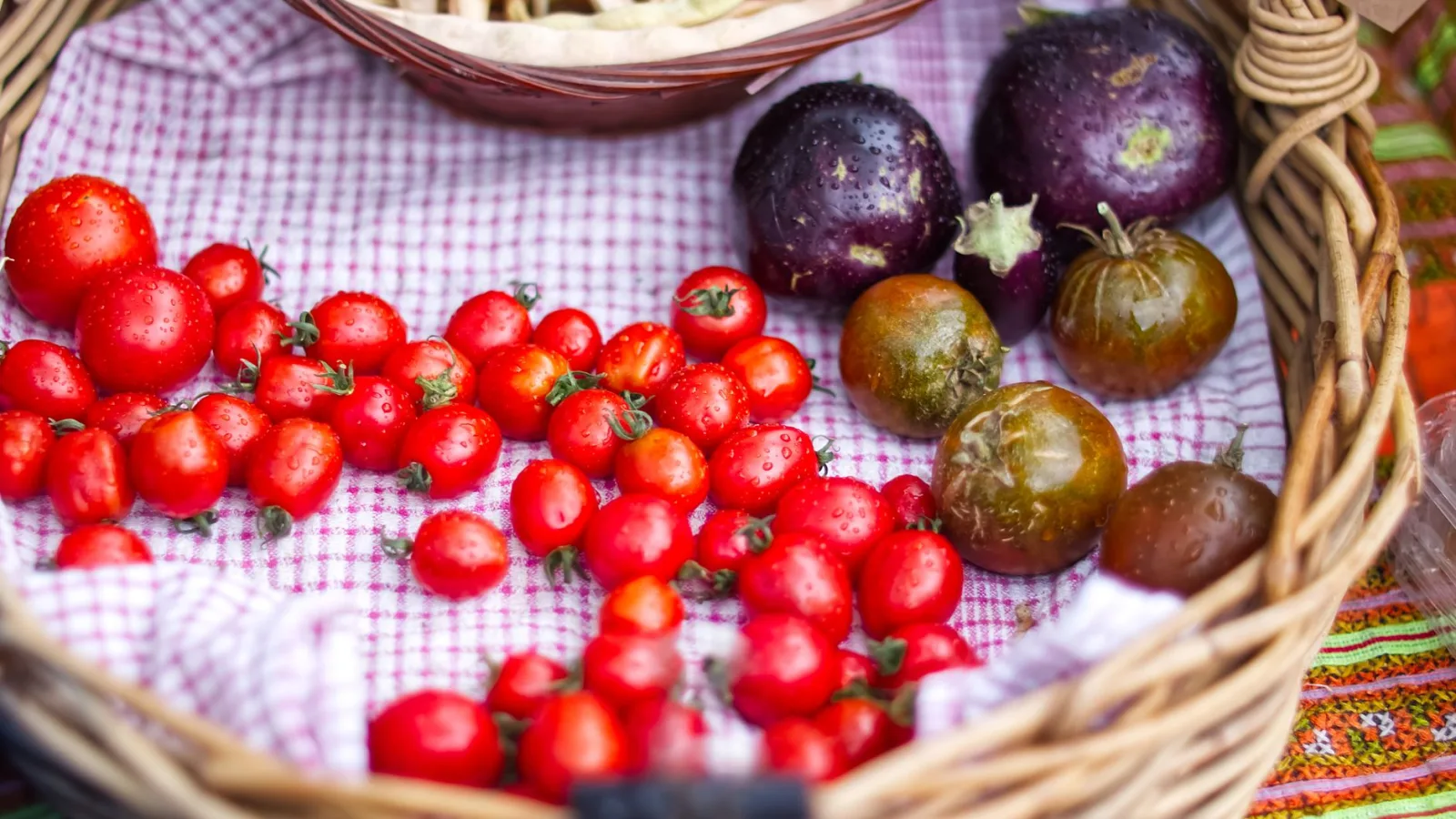
Bring in a basket of cherry tomatoes from the late-summer garden, and for the first day or two the skins are taut and glossy. Leave them on a corner of the table for a few days, though, and wrinkles start at the stem end and the fruit gives easily under a fingertip. Because they ripen all at once, they often go soft before you can finish them.
A study published in 2026 in a food chemistry journal approached the problem from the packaging side. The researchers added three plant compounds to a thin film made of starch, wrapped cherry tomatoes in it, and tracked how much less they softened. The film also changes color with the acidity around it.
Why Cherry Tomatoes Go Soft
Even after picking, cherry tomatoes keep respiring and slowly lose moisture through the skin. As water escapes, they lose weight and wrinkle, and the cell walls in the flesh loosen, so the texture turns soft. Oxygen in the air oxidizes their compounds, and if mold or bacteria slip in through tiny breaks in the skin, spoilage speeds up further.
The red of a cherry tomato comes from a pigment called lycopene. Lycopene and vitamin C are both known to help counter oxidation in the body. Vitamin C, however, tends to decline the longer the fruit sits, so eating tomatoes while they are fresh is the better choice nutritionally as well.
What Went Into the Starch Film?
The base of the film is starch, treated with heat and water so it can be spread into a thin sheet. Starch is commonly obtained from crops such as potatoes and corn, and because it breaks down in nature more readily than petroleum-based plastic, research into using it as a packaging material continues.
- Berberine: a yellow compound found in the roots of goldthread and barberry, with bacteria-inhibiting properties.
- Oligomeric proanthocyanidins: the astringent compounds in grape seeds, apple skins, and the like, which slow oxidation.
- Tea tree oil: an aromatic oil extracted from the leaves of the Melaleuca tree, native to Australia. It is a different plant from the tea plant used for brewing tea, and it inhibits both bacteria and mold.
When berberine and proanthocyanidins are dissolved together in water, they cluster on their own into tiny particles known as nanoparticles. The researchers loaded these particles with tea tree oil and were able to pack about 62 mg into each 1 g of particles. The oil held inside did not evaporate all at once but seeped out slowly. All three compounds slow oxidation, so one film effectively carries three antioxidants.
Putting It to the Test on Cherry Tomatoes
The film with the particles added tore less easily than film made from starch alone, and it let less gas pass through. Its ability to slow oxidation and hold back bacteria grew as well.
The researchers set cherry tomatoes wrapped in this film side by side with unwrapped ones and with ones wrapped in ordinary polyethylene plastic film. The starch-wrapped tomatoes lost less weight and softened less than the unwrapped ones, and performed about the same as those in plastic. In lab tests on cells, the film caused no significant harm. The color change is meant as a freshness check. Spoiling food often shifts the acidity around it, and the idea is that a glance at the film's color would hint at the condition of what is inside.
There are caveats to keep in mind when reading these results. A single team tested a single product, cherry tomatoes, in a lab. The researchers themselves noted that more work is needed on how much of the film's compounds migrate into the fruit, and on whether the same effect holds at other temperatures and humidity levels and with other foods. This film is not something you can buy in a store yet.
How to Store Cherry Tomatoes at Home
- Leave freshly picked cherry tomatoes unwashed and dry, and rinse them just before eating. Moisture left on the skin makes it easy for mold to spread.
- Keep fully ripe cherry tomatoes at cool room temperature and eat them within a few days. Any you need to hold longer can go in the refrigerator's crisper drawer, but too long in the cold can dull their aroma and leave the texture mealy.
- Eat the ones that give under a fingertip first. Slightly soft cherry tomatoes are good sautéed in olive oil or simmered into a sauce, and lycopene tends to be absorbed better when cooked with some fat.
- Tea tree oil is not a food oil. It can be harmful if swallowed, so never apply it directly to food or fruit skins.
Leave today's cherry tomatoes unwashed and dry, and reach for the soft ones first.
Reference: Paper published in Food Chemistry: X, 2026, on a starch-based indicator packaging film with berberine-proanthocyanidin nanoparticles carrying tea tree oil