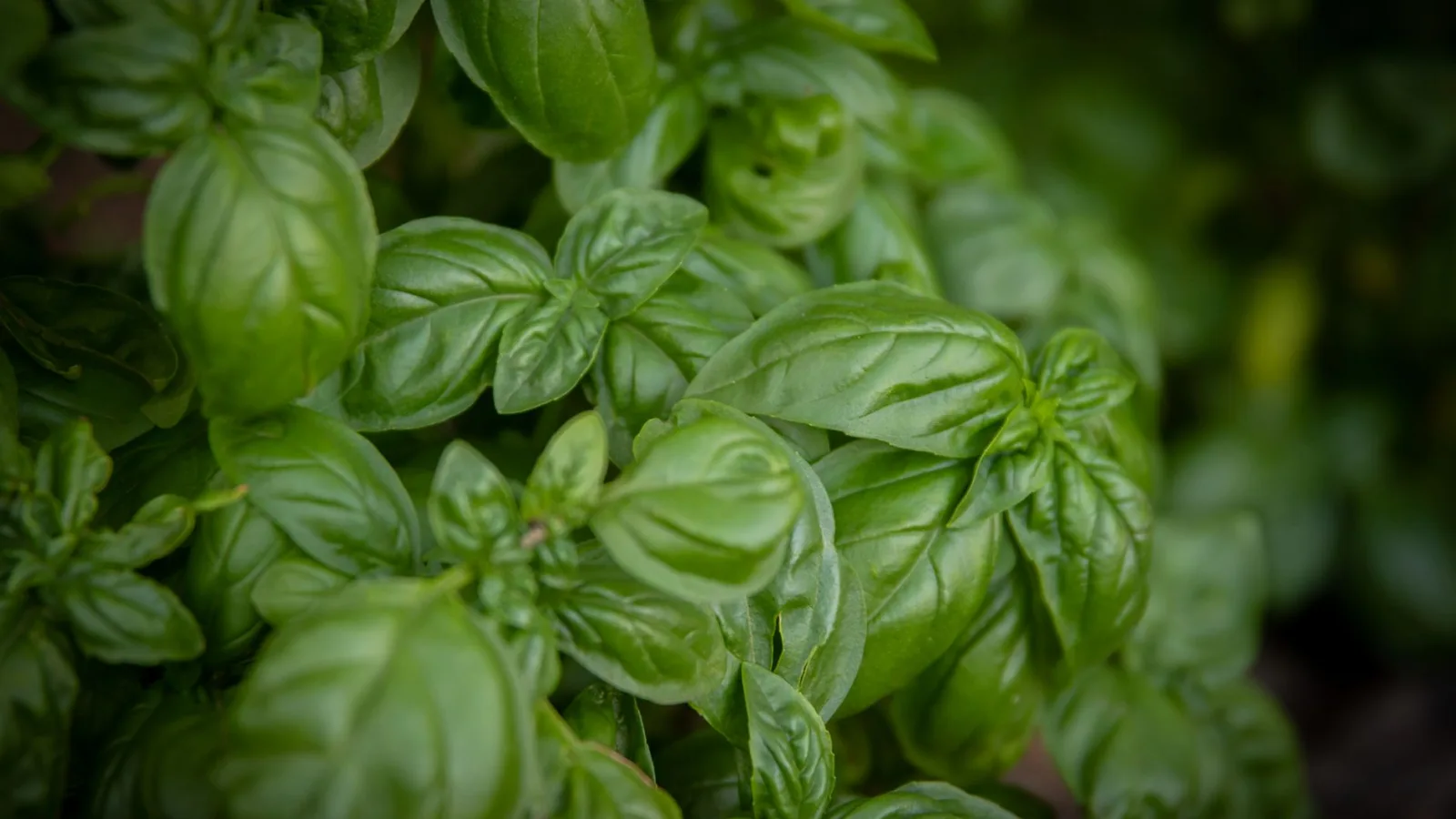
Put a small growing tray by the window, and in just a few days basil microgreens will be about a knuckle high. The seed leaves have a strong fragrance, and a handful on a salad or a bowl of pasta brightens the whole plate. But even from the same seeds, basil grown under different light comes out with a noticeably different height, aroma, and nutrient content.
How the Light Mix Shapes the Sprouts
In one study, researchers in an indoor vertical farm grew basil microgreens under three kinds of LED light and compared the results. The first light was 70% red and 30% blue. The second was a broad, full-spectrum light close to natural sunlight. The third was 65% red and 25% blue, plus 5% white light and 5% far-red light (red light with a longer wavelength). Water and temperature were the same for all three. Only the color mix of the light changed, yet the plants turned out different in height, yield, color, and the compounds that give them flavor.
Under the third light, the one with a little far-red added, the basil grew the largest and gave the biggest harvest. The stems stretched longer below the seed leaves, the leaf color was brighter, and the plants had more phenolics, a group of antioxidants. Far-red light is known to push plants to grow bigger, and that effect showed up even at the microgreen stage.
It Depends on What You Want Most
Each light had its own strengths, so the right choice depends on your goal.
- If you're after yield, size, and a glossy look, the third light, with far-red added, came out ahead.
- If you want more vitamin C and aromatic compounds (essential oils and flavonoids), the full-spectrum light closest to sunlight did best.
- If you want sprouts packed with dry matter and minerals, meaning more substance once the water is taken out, the first light, with only red and blue, had the advantage.
For commercial growers, the researchers concluded that the third mix is the most practical, since it delivers both a good yield and an appealing color. Keep in mind, though, that the study used a single basil variety under specific conditions. Results could differ with other varieties or growing setups.
Growing Microgreens at Home
You can't fine-tune light this precisely at home, but the findings still point you in a useful direction. Start with a plant grow light that combines red and blue. Microgreens grow sturdier under it than under a plain white light. If you care most about aroma and vitamins, look for a full-spectrum model that mimics sunlight. If you want plump, generous harvests, choose one with plenty of red.
Give the sprouts around 14 hours of light a day. For the strongest flavor, harvest once the seed leaves have opened and the first true leaves are just starting to show.
Why not soak some basil seeds today, plant them, and set a grow light beside the tray? The light you give them now will decide how your table smells in a few days.