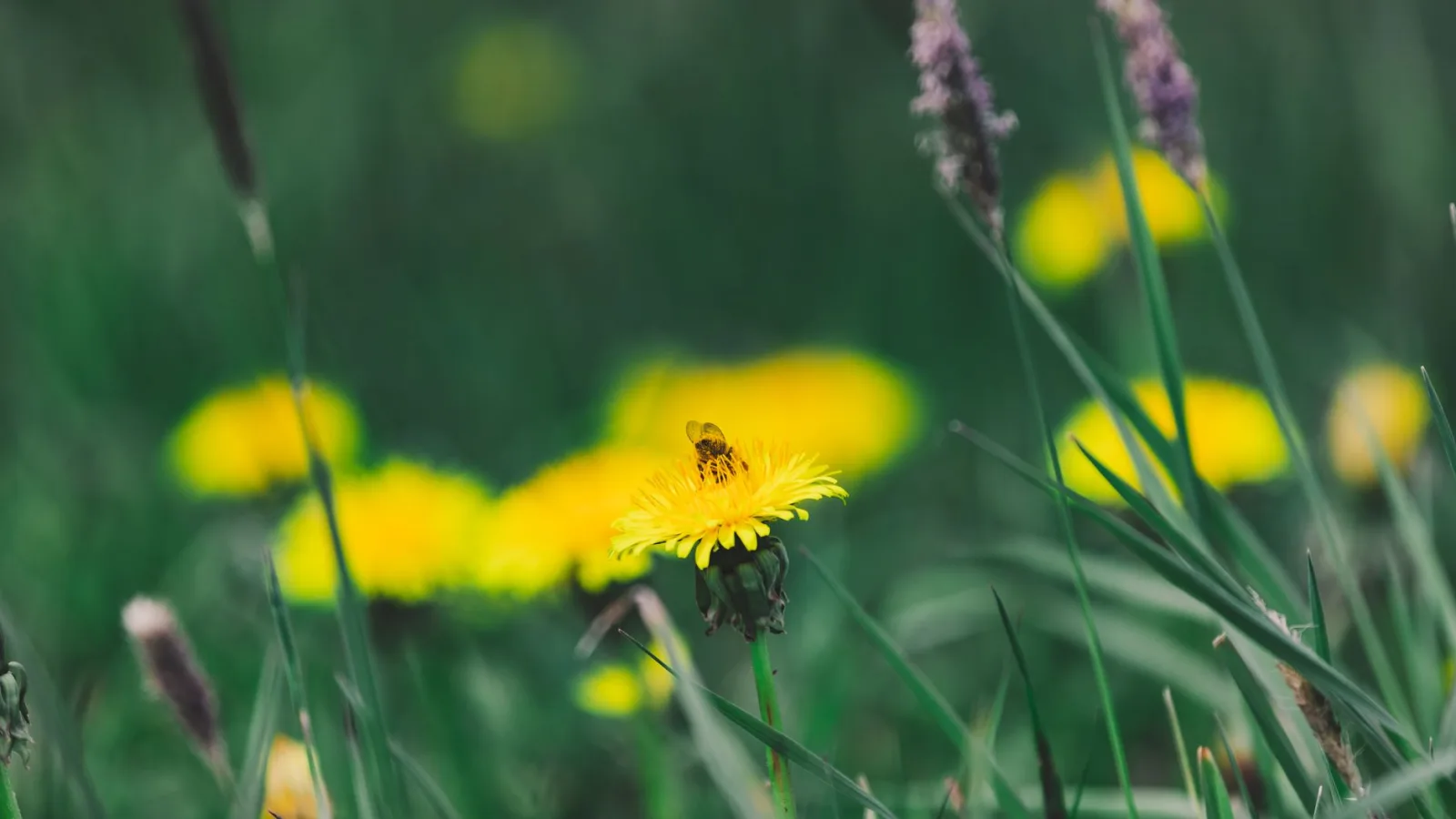
September gardens have gaps where the summer vegetables came out. If you have an edge bed that gets good sun but where the soil has packed down hard and nothing you plant ever amounts to much, try sowing dandelion. It's a perennial in the aster family, and it comes up on its own along roadsides — it will send a straight root down even in ground like that. In the Northern Hemisphere, now is the time to sow.
When and where to sow
Sow in March through April and again in September, Northern Hemisphere. Dandelion grows best at 15–22°C (59–72°F) and will grow anywhere between 5 and 28°C (41–82°F), so seed sown once the worst of the heat has broken comes up evenly. Midsummer afternoons turn the leaves coarse and sharpen the bitterness. Cold is no trouble: the plant overwinters on its thick root and takes temperatures down to around −20°C (−4°F). If you garden in the Southern Hemisphere, shift these dates by six months.
- Sun: a spot that gets sun for most of the day
- Soil: it will grow in compacted ground — it just can't sit in water
- Seed: the seed is tiny, so broadcast it and cover with a thin layer of soil
What you see in vacant city lots and sidewalk cracks is usually common dandelion (Taraxacum officinale), a naturalized species. The Korean native dandelion (Taraxacum platycarpum) grows in open fields and hills. It's native to Korea and Japan, while China, France, and the United States grow dandelion as a field crop. Either one is planted the same way.
How deep should the pot be?
The root runs straight down, so use a pot at least 30 cm (12 inches) deep. In a shallow pot the root hits the bottom and bends, and even if you dig it in fall you won't get anything thick enough to roast. If you're only after leaves you can go a little shallower, but if you want the root too, start with depth.
There isn't much to do after that. Water when the surface dries out, and thin the seedlings wherever they're crowded. The thinnings go on the table that same evening. Once a flower stalk goes up the leaves turn tough, so cut the stalks if you want to keep picking. One or two plants left to bloom is plenty for saving seed.
Leaves in spring, roots in fall
Leaf harvest runs April through June and October through November, Northern Hemisphere. Sow in fall and the plants carry through winter to give you their best leaves the following spring. Cut a leaf or a stem and it bleeds white latex, which is stubborn stuff on skin — keep a bowl of water beside you while you clean them. The bitterness comes from taraxacin, and blanching takes the edge off it. Dig the roots in fall, wash the soil away, then slice and dry them.
What to do with the leaves and roots
Young leaves go into ssam (leaf wraps) or namul (a seasoned vegetable side dish); the root gets roasted for tea. Dress blanched leaves with doenjang (Korean fermented soybean paste) and perilla oil. The salt, the savory depth, and the fat in the oil cover the bitterness, so even leaves past their youngest stage eat well. A little garlic takes away the raw, grassy note. For raw leaves in a salad, a dressing generous with olive oil suits them best: vitamins K and A are fat-soluble, so you absorb more of them alongside fat. A splash of vinegar or lemon cuts the bitter finish short.
Roast the dried root and steep it and you have a coffee substitute. Blending it with chicory root — another member of the aster family — deepens the flavor, and you can dial bitterness and sweetness up or down by how dark you roast. Neither has caffeine, so a late cup is easy.
The root contains inulin. Human digestive enzymes can't break it down, so it travels to the large intestine and feeds the bacteria living there. It's a common fructan, present in other aster-family roots like chicory and Jerusalem artichoke. The leaves and roots also carry polyphenols such as luteolin and chicoric acid, and in test-tube studies those extracts showed antioxidant activity. That isn't the same as saying a plate of dandelion namul does the same thing.
The Donguibogam, the seventeenth-century Korean medical compendium, lists it in the herbs section (草部) as pogongcho (蒲公草). It's described as neutral in nature, sweet in taste, and free of toxicity, with leaves like those of ssambagwi (Korean bitter lettuce) and yellow, chrysanthemum-like flowers in the third and fourth lunar months. In everyday folk usage it was called pogongyeong (蒲公英). That's a record from an old medical text, not a modern medical judgment.
Today, pick out one deep pot, fill it with soil, and scatter the seed thinly. Taste the thinnings this fall, and leave the roots in the ground until next fall.
Sources: Donguibogam, 草部 蒲公草 · Rural Development Administration of Korea (Nongsaro) · USDA FoodData Central