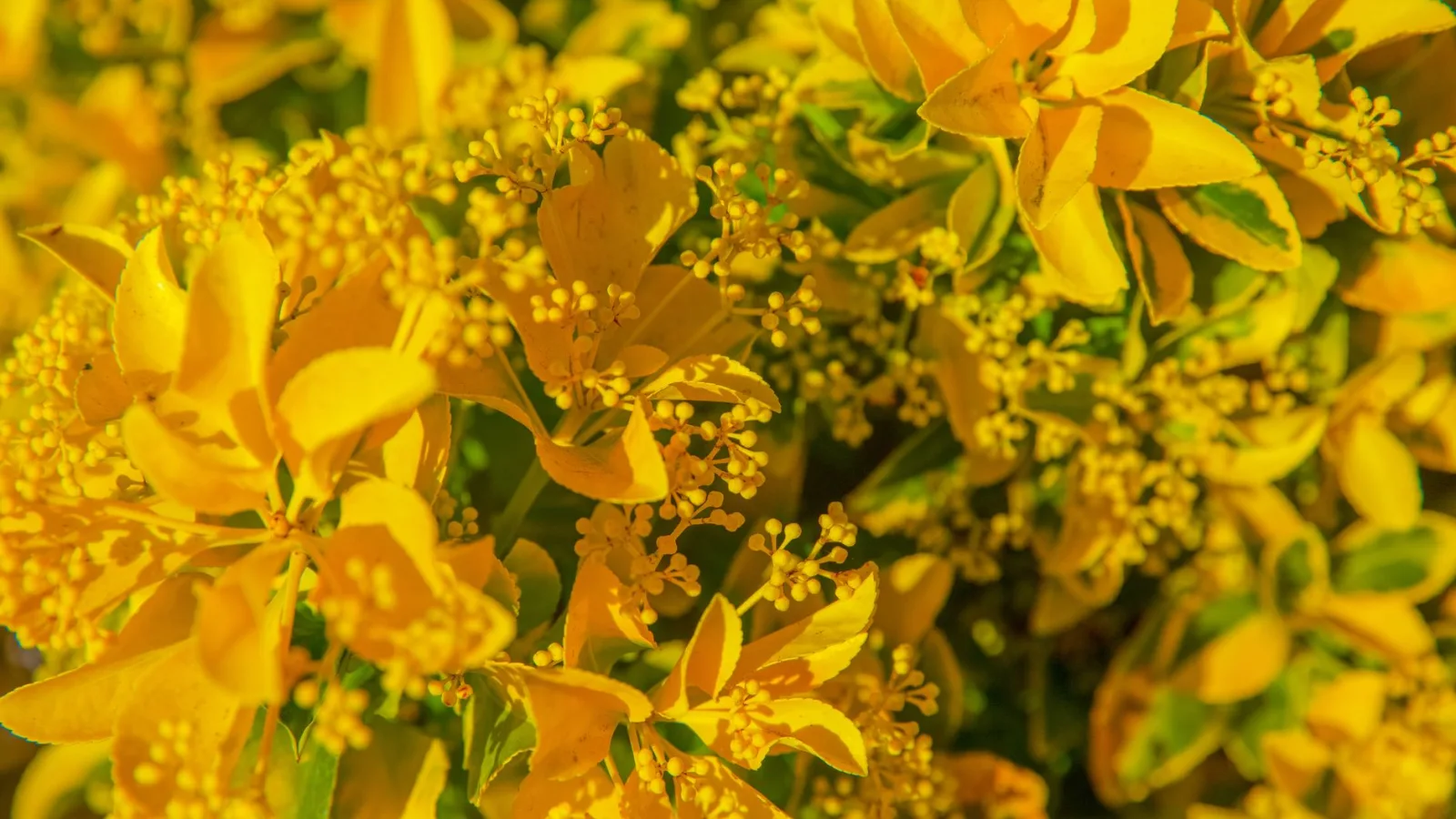
After the frost has come down two or three times, the patrinia flower stalks stand dry and brown. Pull up a plant while tidying the edge of a bed, and the purplish root gives off the smell of aged kongjang, a fermented soybean paste. The Donguibogam, the Korean medical compendium of the early 1600s, recorded this plant as paejang (敗醬), which means "spoiled paste." The name came not from the yellow flowers that bloom all summer but from the smell of the root.
Paejang as the Donguibogam Recorded It
In the Herbs section of its volume on decoctions, the Donguibogam gives matari as the Korean name for paejang and describes its nature as neutral, adding that some call it slightly cold. The taste is bitter and salty, with no toxicity. It grows in the mountains and fields, and its root is purplish and resembles that of bupleurum (siho, a medicinal root in the carrot family). The text also records how to prepare it: dig the roots in the eighth lunar month and dry them in the sun. The medicinal name paejang already appears in the middle grade of the Shennong Bencao Jing, an older Chinese materia medica, so the Donguibogam in effect gave a known drug the name of a Joseon plant. Still, this is a record left by an early-seventeenth-century medical text. Which ailments it treats, and how, cannot be read with the same weight as a clinical judgment made today. The original passage and a modern reading are available in the Homiclub Donguibogam entry.
The Source of the Bitterness: Iridoids and Saponins
What the old text simply called "bitter," modern analysis renames with the names of compounds. Studies of plants in the genus Patrinia have isolated iridoid glycosides and triterpene saponins, and they report higher concentrations in the root than in the leaves. Patrinoside, reported in 1974 by Taguchi and Endo in the Japanese pharmaceutical journal Chemical and Pharmaceutical Bulletin, was first isolated from this plant and took its name directly from the genus. Both groups of compounds register as bitter on the tongue, and saponins foam when stirred into water. The Donguibogam using the root as medicine and noting its bitterness, and chemical analysis finding the root richer in these compounds, are two ways of stating the same fact.
Not everything lines up. No compound corresponds to the old classification "neutral, slightly cold." And in the young shoots eaten as a green today, what actually reaches the body is less the medicinal compounds than dietary fiber and beta-carotene. Fiber gives blanched greens their chew, and beta-carotene is the pigment that increases as the leaves deepen in green, converted to vitamin A inside the body. What a plant contains and what those contents do in a human body are two different questions. For a single plate of greens, studies that answer the second question are hard to find.
Blanching and Soaking the Young Shoots
For eating as a green, use the young shoots that come up finger-length in April and May in the Northern Hemisphere. The bitterness fades as water-soluble compounds leach out, so blanching and soaking are nearly the whole of the preparation. Bring 1 liter of water to a boil with 5 g of salt and blanch the shoots for 30 seconds to 1 minute. Move them straight into cold water and soak for 1 to 2 hours, changing the water once partway through. Squeeze out the water firmly, then choose between a doenjang dressing and a soy sauce dressing.
- Doenjang and perilla seed powder: For 100 g of blanched shoots, toss with 1 teaspoon of doenjang (fermented soybean paste) and 1 tablespoon of ground perilla seed, which mellows whatever bitterness remains. A teaspoon of perilla oil keeps the leaves from clumping together.
- Soy sauce and sesame oil: A light toss with 1 teaspoon of soy sauce and half a teaspoon of sesame oil leaves the texture of the shoots intact. Heavy seasoning covers back over the flavor that soaking left behind, so start on the mild side.
A dish made from this one green alone turns tiresome quickly. Mix it half and half with a milder green from the same month, such as aster greens (chwinamul) or Korean wild parsley (chamnamul), and the plate empties evenly.
Sowing and Care
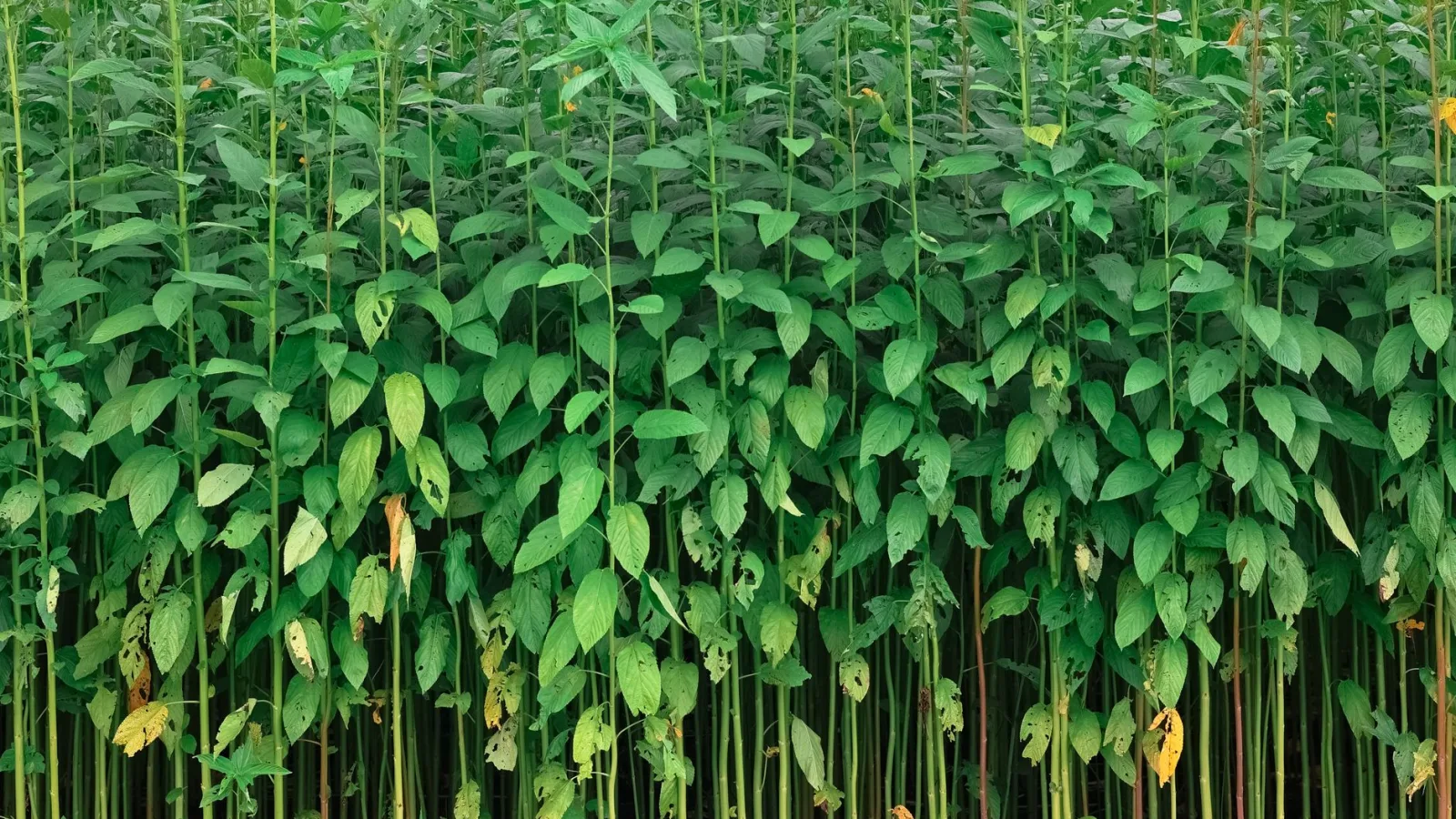
Patrinia is a perennial of sunny meadows across Korea, Japan, China, and the Russian Far East, reaching 60 to 150 cm when fully grown. In Korea it has long been gathered as a spring mountain green. In Japan it has counted among the seven flowers of autumn since the Man'yoshu, the eighth-century poetry anthology. Sow seed in March or April in the Northern Hemisphere. The seeds are small, so cover them with only about 5 mm of soil. At 15 to 20°C they germinate in 2 to 3 weeks. Transplant at 30 to 40 cm spacing once the seedlings have three or four true leaves. The first year goes to building leaves, and from the second year yellow flowers open from July to September. In well-drained ground the plant needs little fertilizer, and one watering a week carries it through summer drought. The planting calendar and companion plantings are gathered in the patrinia crop guide.
Starting the second spring, pick only three or four shoots per plant so that flower stalks remain. The dry stalks standing now can be left uncut. Seed that has dropped and passed through the winter cold sprouts more evenly in spring, and the shoots that rise in that spot become the first greens of the following April. All the while, the root keeps its smell of fermented soybean paste, unchanged underground.