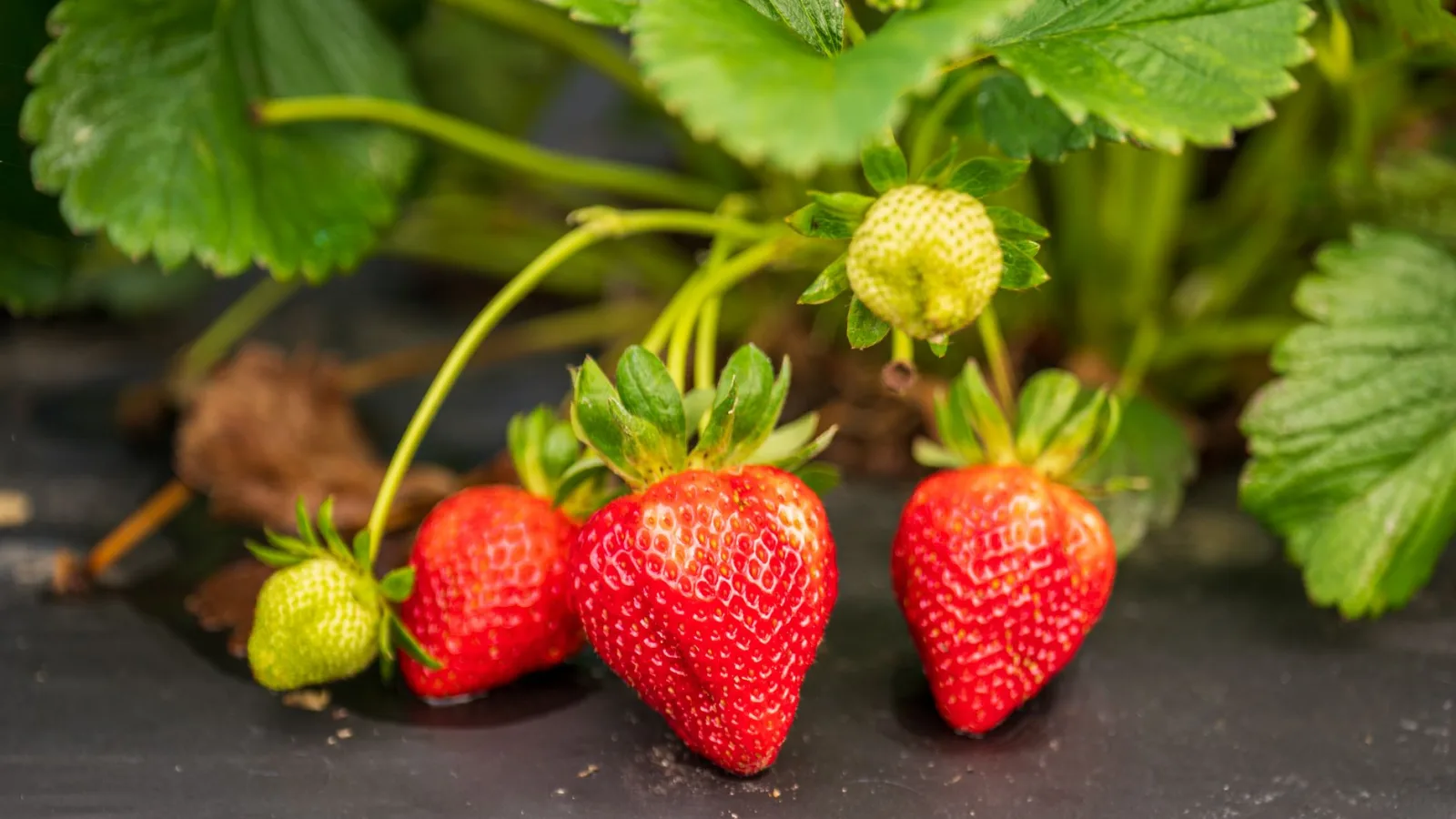
You're walking your strawberry bed when you notice it: a few brown spots on the leaves, and berries that should be ripening red instead going soft under a fuzz of white mold. A few years back, a strawberry grower named Austin Wren in North Carolina saw exactly the same thing in his greenhouse. It started with just a handful of plants, then swept through the whole row. The culprit was a fungus that had never caused much trouble before.
A strawberry disease with an unfamiliar name
The fungus is Neopestalotiopsis — strawberry growers just call it Neo-P. It belongs to a group of fungi that has always been common in soil and on plants, more or less minding its own business. Then, a few years ago, an aggressive form showed up: one that attacks strawberry leaves, crowns, and fruit all at once. It has since spread to growing regions around the world.
The most frustrating part is how it travels. Neo-P moves long distances mainly on infected transplants. A plant can look perfectly healthy while the fungus is already inside it, and you won't see symptoms until after it's in the ground. In the warm, humid air of a greenhouse or hoop house, it spreads especially fast.
What to look for in your own patch
Neo-P doesn't confine itself to one part of the plant. Symptoms show up on the leaves, crown, and fruit together, so checking each in turn makes it hard to miss.
- Leaves: round brown spots appear, ringed by a spreading yellow halo. You may see black clusters of spores in the center of the spot.
- Crown: leaf stalks and the crown turn brown and soften. The whole plant wilts or collapses.
- Fruit: berries go soft before they're even ripe and develop a white fuzz, making them unsellable.
These symptoms are easy to confuse with other strawberry diseases. But if you're seeing them on the leaves, crown, and fruit at the same time — and they multiply quickly after rain or on humid days — Neo-P is worth suspecting.
Stopping it before it spreads
There's still no spray that reliably wipes this fungus out. That makes good management, starting before anything goes in the ground, your most dependable defense. Here's where to begin.
- Buy clean plants from a disease-free source. If a transplant has spots on its leaves, don't bring it home in the first place.
- Water at the base of the plant, not overhead. Leaves that stay wet for long stretches are an open invitation to fungus.
- Give plants generous spacing so air can move between them, and ventilate often on humid days.
- Pull diseased leaves and plants as soon as you spot them, and dispose of them away from the garden or burn them. Left in place, they'll leave spores behind in the soil.
- Disinfect your shears and gloves after use, and don't replant strawberries in an affected bed the following season.
None of these five take much effort. But they'll slow — or stop — a disease that started in one plant from taking the entire row.
Take a lap around your strawberry bed today. Check the undersides of the leaves and the base of each plant, and if you find one where the spots have spread, pull it right away and dispose of it separately.
Sources — University of Florida Institute of Food and Agricultural Sciences; North Carolina State University Department of Horticultural Science, strawberry pathology research