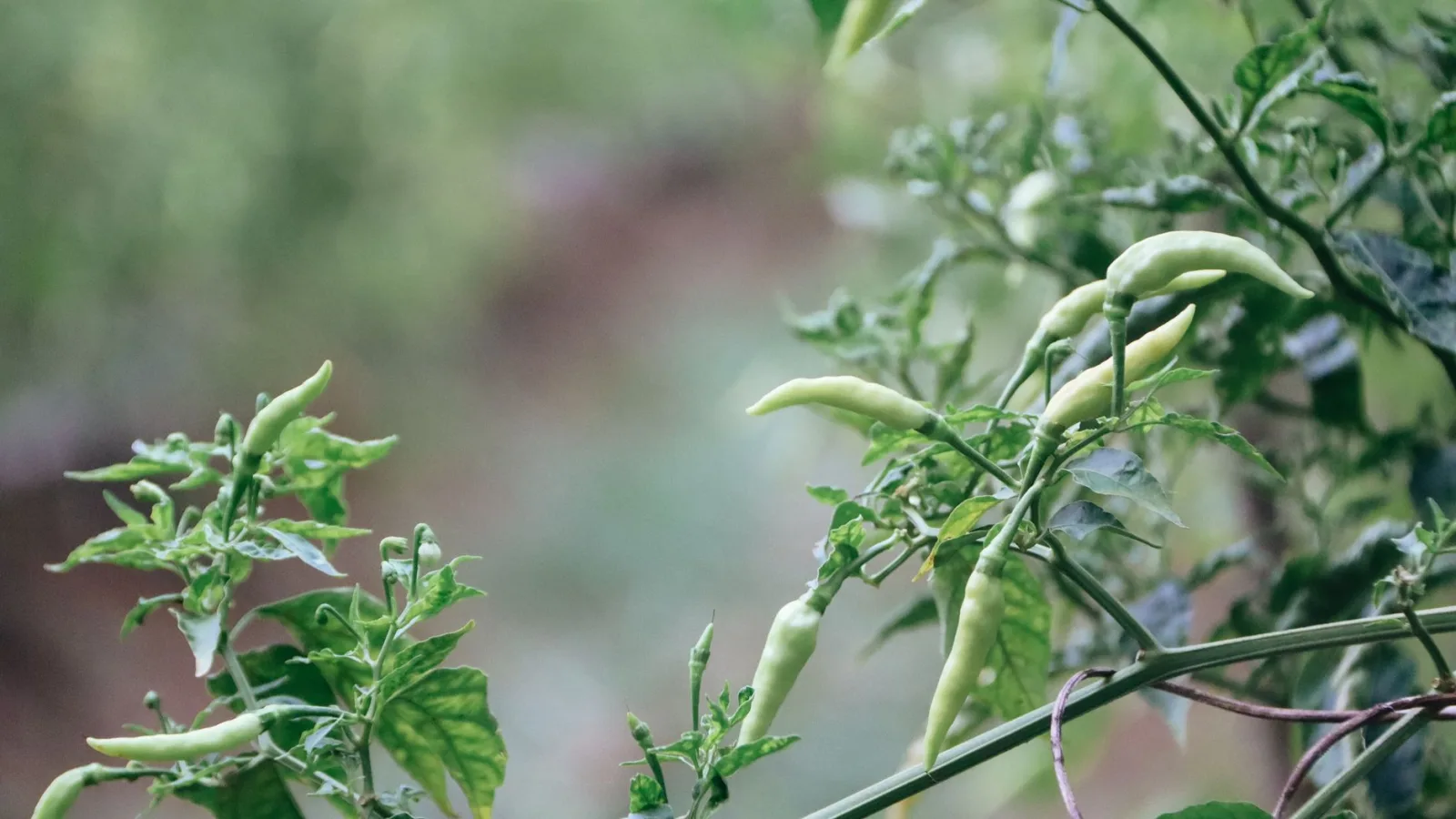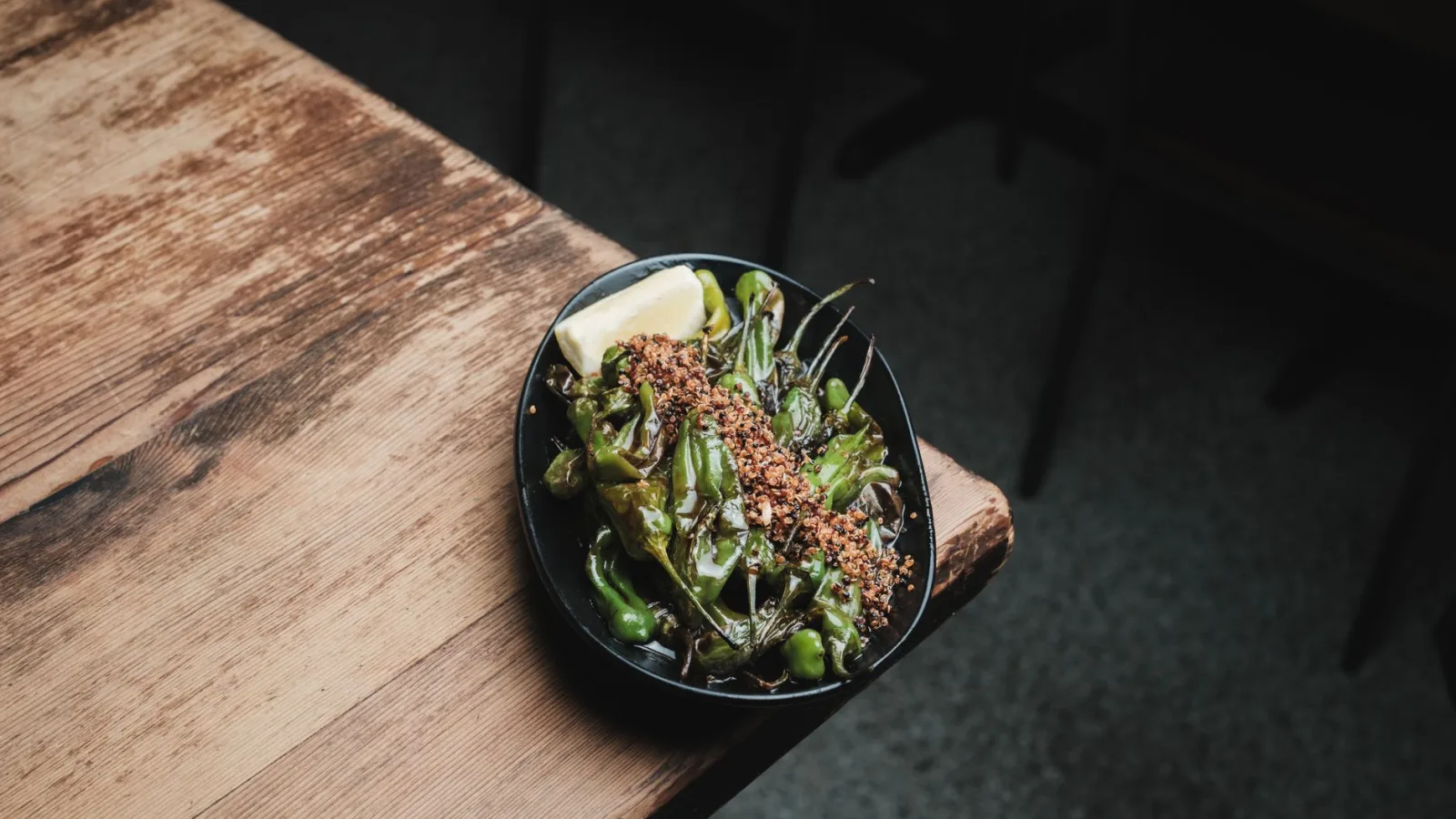
Shishito peppers in the September garden are still fruiting. You've been picking them all summer, and new wrinkled green pods are still forming at every leaf joint. In the Northern Hemisphere the harvest starts in June and runs through September, so these are the last few pickings of the year. Like other summer crops, shishitos die at the first frost, so you can keep picking until the frost comes.
Milder, but Otherwise Just Like Any Chili
Shishitos (called kkwari-gochu in Korean) are a variety of chili pepper (Capsicum annuum). They contain capsaicin, the compound that makes chilies hot, but so little that you can bite into one raw without your tongue burning. Only the heat is milder; the compounds and benefits are the same as any chili pepper's. They also contain vitamin C. For a closer look at what's inside, see our chili pepper page.
The pods are ridged and about the length of a finger. They're widely grown in Korea and Japan, and China is also a major producer. As a side dish, they're traditionally cooked whole, without seeding or slicing.
Thirsty Plants Make Hotter Peppers
If one pod from a plant is much hotter than the rest, check your watering first. Shishitos get hotter when they're short on water. If a plant's leaves droop at midday, the soil has probably been dry for several days. While the plants are fruiting, water deeply whenever the soil surface dries out, and the peppers will stay mild.
Watch the temperature, too. Flowers and fruit set best when days are 25–30°C and nights are around 18°C. Above 35°C, the pollen gets damaged and fewer pods form. The plants grow anywhere between 15 and 35°C. Day length doesn't affect them, so they keep flowering all season as long as the temperature and water are right. That's why they start setting fruit well again in September, once the late-summer heat breaks and the nights cool down.
Cook Them Briefly to Keep the Vitamin C
The vitamin C in shishitos dissolves in water and breaks down with heat. If you boil them for a long time or cook them in a lot of water, the vitamin C ends up in the cooking liquid. Instead, stir-fry them quickly over high heat and turn off the burner as soon as the skins start to wrinkle. They'll stay crisp and keep more of their vitamin C.
You can also eat them raw. Rinse them and dip them in doenjang (Korean fermented soybean paste). They're crisp and not hot. They also make a mild addition to ssam, where rice and other fillings are wrapped in lettuce or perilla leaves.
Pair Them with Anchovies for Calcium
In Korea, the most familiar use is a side dish stir-fried with tiny dried anchovies and soy sauce. The anchovies are eaten bones and all, so the dish also gives you calcium. Heat a little oil, toast the anchovies first, then add the shishitos and cook just until they soften. Season with soy sauce and something sweet.
- Anchovy stir-fry: Cook them with tiny anchovies and soy sauce, and you get calcium along with the peppers.
- Soy-braised: Leave the stems on and simmer them whole in soy sauce to serve with rice. Prick each one a couple of times with a fork so the seasoning soaks all the way in.
- Dipped in doenjang: Even raw, they're easy on the palate.
Serving Them to Kids
Even a mild variety produces an occasional hot pod, so a basket may have a few. If you're cooking for children, cut a little off the tip of each pepper and taste it before cooking. Pods that formed during a dry spell are the most likely to be hot.
In the Northern Hemisphere, seedlings go in during April or May. Transplants take hold only after the last frost has passed and the soil has warmed up, so as you finish this year's harvest, pick out a spot for next spring's planting.
This evening, pick a basket of the last shishitos, cut off and taste the tips, and stir-fry them with anchovies. If you skipped a watering or two this summer, you'll know where any heat came from.
Source: Crop information from Nongsaro, the agricultural information service of Korea's Rural Development Administration.