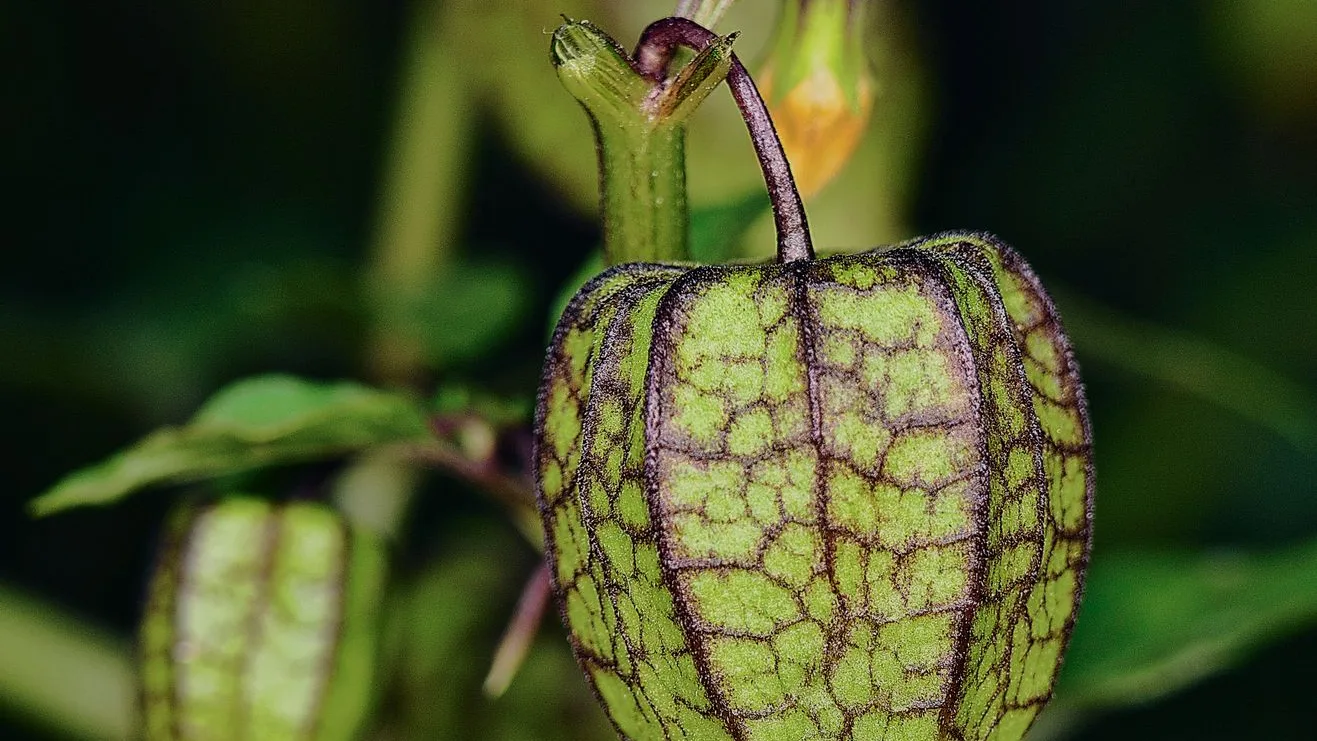
Come August in the Northern Hemisphere, the physalis plant at the edge of the garden has sprawled wide and low. Lift the leaves and you'll find puffed-up husks hanging in rows underneath, each one holding a single fruit. If a husk is still green, leave it longer; once the moisture drains out of it and it goes thin and papery, it's ready to pick.
First, tell the ornamental kind from the edible kind
The plants gathered under the name physalis all belong to one genus in the nightshade family, and inside that genus they split by use. You've probably seen a plant in a flower bed hung with bright red lanterns. That's the ornamental one, Chinese lantern (Physalis alkekengi). Its leaves, stems, and unripe fruit concentrate compounds in the withanolide group. This isn't a matter of bitterness. Eating those parts can bring on nausea, vomiting, and diarrhea, so they aren't eaten at all. If you've put one in a pot or a bed, take a moment to check whether it's within reach of small hands.
The ones grown for their fruit are cape gooseberry, ground cherry, and tomatillo. They're different species in the same genus, and everything below about planting and eating applies to this group.
Sow indoors in March–April, transplant in May
In the Northern Hemisphere, start seed indoors in March or April, raise the seedlings, and move them outside in May. The edible kinds are annuals that a single frost will kill, so transplant only after the last frost has passed. Chinese lantern is a different story: it overwinters on underground runners, takes cold down to around −20°C, and comes back up the following year as a perennial.
- Sowing — March–April, indoors
- Transplanting — May, after the last frost
- Harvest — August–October, up until frost
Choose a spot that gets sun all day long. Whichever kind you grow, too little sun means the fruit never fills out properly. They do best between 18 and 28°C and will grow anywhere from 10 to 32°C. The genus is native to Mexico, widely cultivated in Colombia and Peru, and grows wild in China. If your summer temperatures fall in that range, plant in open ground; if your summers run cool, use a pot you can move around to follow the light.
Let the husk tell you when
You'll be picking from August right up until frost. As the fruit ripens, the husk dries, thins out, and turns brown. Peel it back and the fruit inside has colored up yellow or orange. Look closely at cape gooseberry and the other physalis fruits and you'll find carotenoids and vitamin C in the fully ripe ones, with carotenoid levels climbing the longer they ripen. Rather than rushing the pale ones off the plant, give them a few more days.
The leaves and stems, along with unripe fruit, carry comparatively more of those withanolide compounds. That's exactly why you leave the underripe fruit where it is.
Eating them the day you pick
Strip off the husk and use only the fruit. Halve fully ripe cape gooseberries over plain yogurt and the tartness plays against the milk fat for a nice balance. Scattered through a salad, they work just as well.
If you've picked a lot at once, cook them down. There's enough pectin in them that they'll set with nothing but sugar added. A little lemon juice keeps the color bright. The seeds are small enough that you can leave them in without ever noticing them. One caveat: vitamin C is fragile in heat and drops off when cooked, so it's worth setting aside a share to eat raw.
If you planted tomatillos, peel off the husk, wash away the sticky film underneath, then roast or blanch them. Blend with onion, chile, and cilantro and you have a green salsa. Blended raw they carry a strong grassy edge, so cook them first.
A line from the old records
The Donguibogam, a classic Korean medical text, lists it in the Herbs section (草部) under the name sanjang (酸漿). It records the plant as neutral in nature yet cooling, sour in taste, and free of toxicity, and explains the name by noting that the taste is like a sour juice. The root, it adds, resembles that of water dropwort (minari), is white, and tastes fiercely bitter. This is a historical record, and it doesn't line up with the judgments of modern medicine.
When you go out to the garden today, start with the color of the husks. Leave anything still showing green and pick only what has dried and gone thin. You have a few more weeks of picking before the frost arrives.
Source — Donguibogam, Herbs section (草部), sanjang (酸漿)