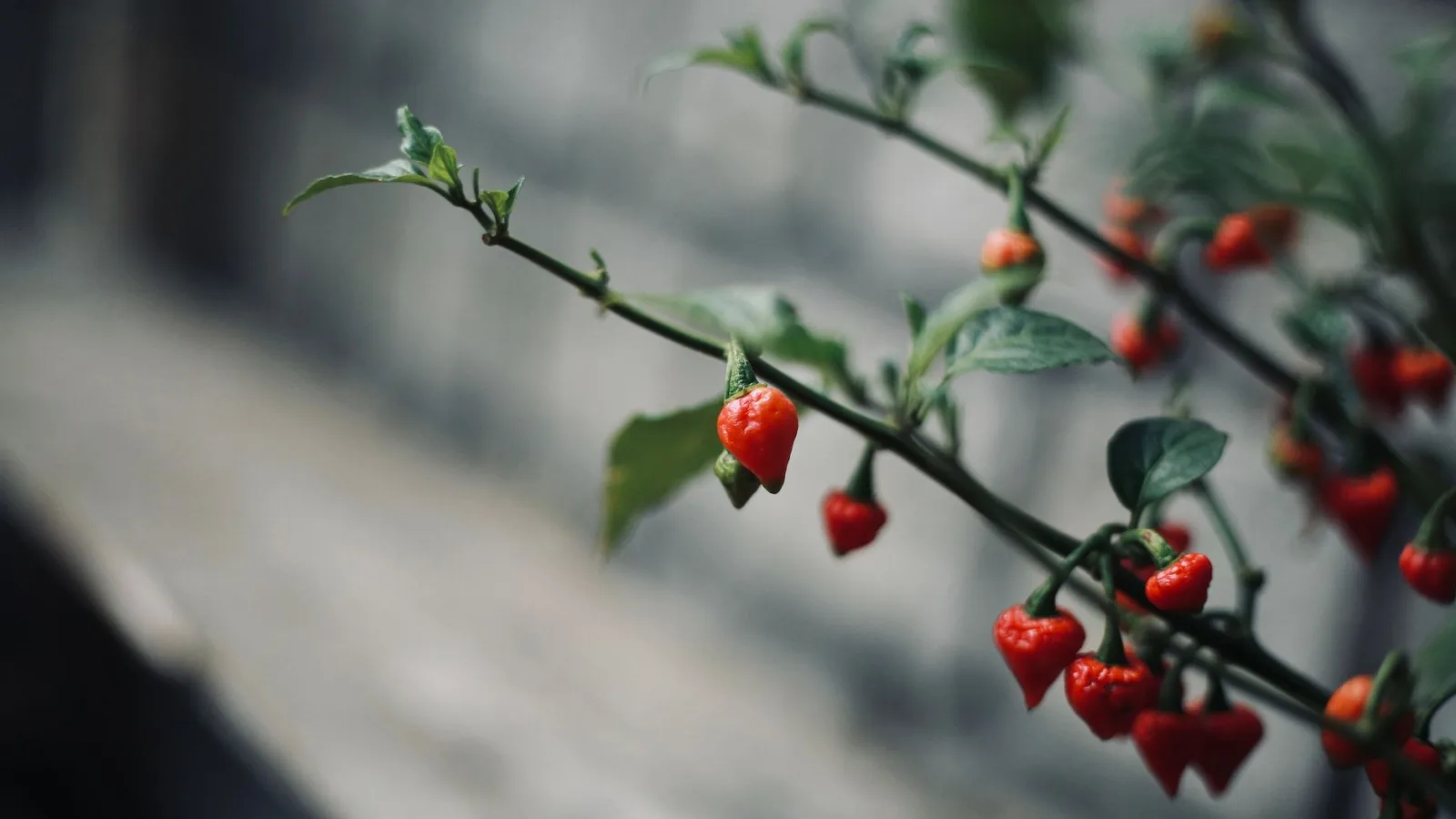
As you tidy up the pepper bed ahead of the fall harvest, you may notice soft, round spots on the last peppers of the season. If the center of a spot sinks in and rings spread outward from it, anthracnose is the first thing to suspect. Anthracnose is a fungal disease that strikes many crops grown in warm, rainy places, including strawberries, cucumbers, apples, and mangoes.
Fungal diseases rank among the leading causes of crop losses around the world. A review paper on the future of crop protection took a close look at how the anthracnose fungus and the rice blast fungus make their way into plants. Along the way, it reexamined an explanation that has been accepted for decades.
How a Fungus Gets Inside a Leaf, Step by Step
The two fungi follow a similar sequence. A spore carried in by rain or wind lands on a wet leaf or fruit and germinates. It then grows a short filament and forms a single rounded cell at the tip. That cell is called an appressorium.
The wall of the appressorium builds up melanin, a black pigment. The melanin wall keeps the glycerol inside the cell from leaking out. As water flows in from outside, the pressure inside climbs sharply. In the rice blast fungus, that pressure is known to reach around 8 megapascals (MPa). Using that force, the appressorium pushes a thin penetration peg downward and drives it through the plant's outer skin. Researchers have long called this process melanized appressorium-mediated entry.
Can a Fungus Get In Without Melanin?
This account has appeared in plant pathology textbooks for a long time. Yet observations are piling up of fungi that don't follow the sequence exactly. Cases have been reported of fungi entering plants without building up much melanin at all. That has researchers asking again whether melanin is truly required for infection.
It helps to weigh the two claims separately, because the evidence behind them isn't equal. That the anthracnose and rice blast fungi enter through melanized appressoria has been confirmed repeatedly in experiments over many years. How common melanin-free infection is, and which crops it affects, is still too early to call.
The Homiclub Take: Where a Home Gardener Can Step In
The paper was written with farm fields and laboratories in mind, so it has nothing to say about backyard plots. Even so, if you carry the infection sequence over to a home garden, a few points stand out where you can intervene. Most of them fall in the very first step, when a spore lands on a leaf and germinates.
- Don't let leaves and fruit stay wet for long: Spores need moisture to germinate. Water at the base of the plant in the morning, and cut back on evening watering that sprays the foliage.
- Let the air move: Space pepper plants 40 to 50 cm apart (about 16 to 20 inches). Pinching off the lowest leaves that touch the soil helps the foliage dry faster.
- Rain shelter: During stretches of frequent rain, like Korea's June-to-July monsoon season, try putting a plastic roof over the plants. It cuts down on spores splashed up by raindrops. In Korea, rain-shelter growing is widely used to reduce anthracnose on peppers.
- Remove diseased fruit: A single spot can send out a fresh wave of spores. Pick up fallen fruit too, carry it out of the garden, and keep it out of the compost pile.
- Split up nitrogen feedings: In rice, heavier nitrogen is known to make blast worse. For peppers and strawberries as well, divide side-dressings into smaller doses rather than applying a lot at once.
The research is worth keeping in mind when choosing a fungicide, too. For rice blast, fungicides that block melanin production have been used for a long time. Tricyclazole is one of them. Without melanin, the appressorium can't build pressure and can't push into the leaf. If melanin-free entry turns out to be more common than we thought, there may be cases where these products don't work well. To be clear, the paper doesn't say this. It is Homiclub's inference from the infection sequence.
That's why, in a home garden, it's better not to lean on any single product. Keep the foliage dry and clear out diseased fruit alongside whatever else you do. However a fungus gets in, fewer spores landing on the leaves means less disease.
From Harvest to Table
A pepper with anthracnose spots is often soft all the way through, even if you cut away the surface. Dry such peppers for gochugaru, the Korean red pepper flakes, and both the color and the flavor suffer. Pick only spot-free fruit for drying. Healthy peppers bring capsaicin, the compound behind their heat, along with vitamin C. With strawberries too, it's safer to set aside and discard any berry with a soft spot rather than eat it.
Today, start by gathering up the fallen fruit and diseased leaves in your pepper bed. Fewer spores overwintering in the soil means less to worry about from anthracnose next summer.
Reference: Review paper, "Fungal Plant Infection Strategies and the Future of Crop Protection"