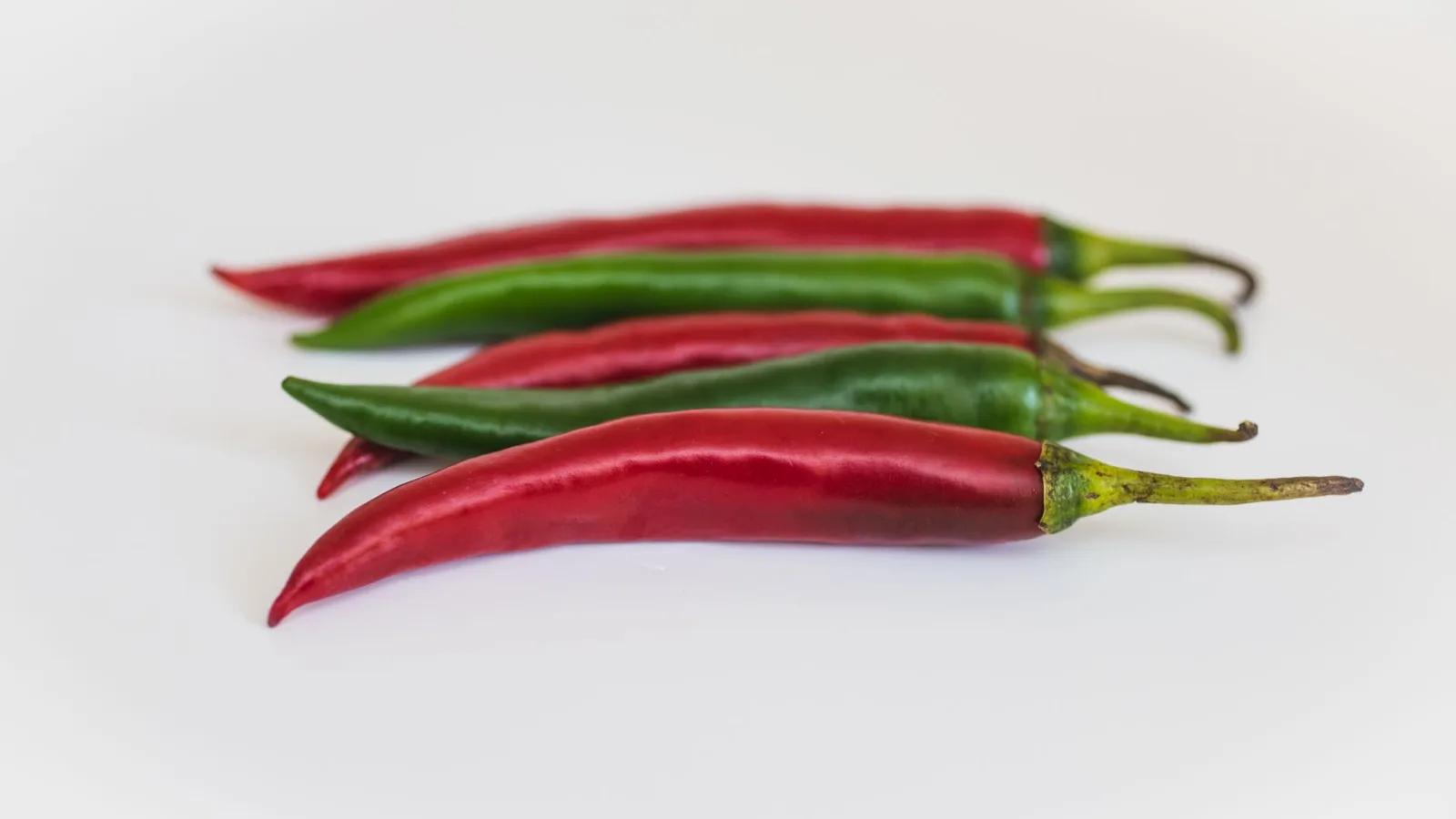
Stand in the pepper rows of a September garden and you'll spot red fruit scattered among the green. Two peppers can hang from the same branch, one still firm and green, the one beside it already half red. In the few days it takes for that color to change, what's inside the fruit changes quite a bit.
What Powers a Pepper's Turn to Red
As fruit ripens, reactive molecules derived from oxygen build up inside its cells. Plants clear them away as they form, and a compound called NADPH (nicotinamide adenine dinucleotide phosphate) is key to that work. NADPH is what returns the antioxidants glutathione and ascorbic acid, better known as vitamin C, to a state where they can be used again.
One of the enzymes that makes NADPH is 6PGDH (6-phosphogluconate dehydrogenase). Researchers identified two genes in pepper fruit that produce this enzyme. One appears to work in tiny organelles called peroxisomes; the other works in plastids, the structures that hold the fruit's pigments. As the fruit went from green to red, the peroxisome gene stayed nearly the same, while the plastid gene dropped off noticeably. Overall enzyme activity also declined gradually as the fruit ripened.
Peppers Treated with Nitric Oxide and Melatonin
Next, the researchers took harvested peppers and either placed them in a chamber filled with nitric oxide or treated them with melatonin, then examined them again. Both treatments slowed the decline of the plastid gene. The peroxisome gene, on the other hand, didn't budge under either treatment. Two genes that make the same enzyme had responded in different ways.
Nitric oxide and melatonin are also compounds that plants produce on their own. They come up often in research on slowing how quickly harvested fruit softens, but neither has been developed into a treatment home gardeners can use.
How Glutathione and Cysteine Lifted the Block
When the researchers separated the pepper's 6PGDH using gel electrophoresis, it split into three distinct forms. After testing a range of compounds in the test tube, they found that nitric oxide donors (compounds that release nitric oxide) and hydrogen sulfide suppressed the activity of the third form most strongly. But when glutathione or L-cysteine was added along with them, that suppression was lifted. In other words, this enzyme adjusts how hard it works depending on the redox (oxidation-reduction) balance around it.
So When Should You Pick Them, and How Should You Eat Them?
Fully red peppers contain more vitamin C and carotenoid pigments than green ones. If a pepper is only half colored, leave it on the plant another day or two and pick it once it has reddened evenly. Vitamin C dissolves in water and breaks down with heat, so red peppers are best chopped fine and tossed into geotjeori (a fresh, unfermented kimchi-style salad) or saengchae (lightly seasoned raw vegetables), or stir-fried briefly over high heat. If you plan to grind them into gochugaru (Korean chili flakes), dry them slowly in the shade so the color fades less.
When you head out to the garden today, try counting the peppers on each branch that are starting to color. Instead of picking everything early for the heat, let a few ripen all the way, and you'll harvest green and red peppers side by side from the same plant.
Reference: Nitric Oxide (journal), a study of redox regulation and gene expression of 6PGDH in pepper fruit, 2026