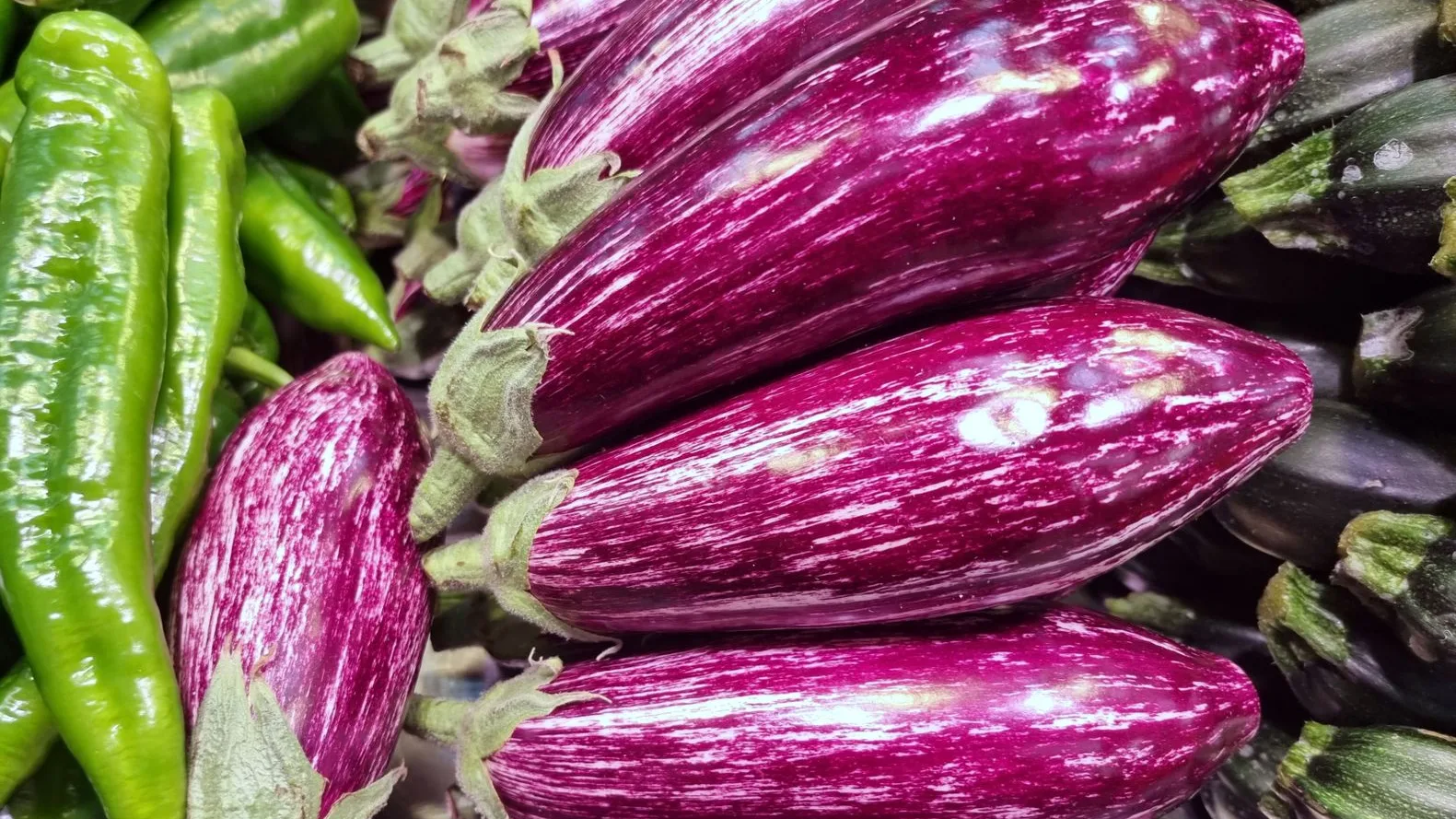
An August garden keeps your hands busy every morning. Put off the cherry tomatoes for a single day and they split; eggplant and Korean summer squash (aehobak) turn tough in two. Hand a child a basket and everything they pick goes straight into their mouth as they pick it. Then you cook dinner with the rest, and you feel settled — you got plenty of vegetables into them, so the job's done. But it turns out that adding vegetables to a child's plate, on its own, doesn't deliver the result we expect.
The numbers moved when the question became what to cut, not what to add
Researchers took the food records of 1,153 children and teenagers, ages 3 to 17, who took part in Portugal's national nutrition survey, and ran simulations that rewrote their diets. The benchmark was the planetary health diet from the EAT-Lancet Commission — built on whole grains, vegetables, legumes, and nuts, with animal foods scaled back, and weighed for human health alongside farmland and greenhouse gases.
First, the finding that held across every age group: what these children eat today doesn't match the benchmark. Among all the versions the researchers modeled, the changes that raised diet scores while lowering greenhouse gas emissions and land use at the same time looked like this:
- For children ages 3 to 9: cutting back on eggs, meat, fish, and soft drinks
- For teenagers ages 10 to 17: cutting back on dairy — milk, cheese — and red meat
The target was different for each age group, most likely because dairy consumption climbs during the teenage years. Which means that even in the same house, eating from the same dishes, what needs adjusting for your grade-schooler isn't what needs adjusting for their older brother in middle or high school.
Why swapping in vegetables pushed emissions up
The scenario that brought childhood obesity down the most was the shift to a mostly plant-based diet. But under those same conditions, greenhouse gas emissions actually rose — from 3.9 kilograms per person per day to 4.1. The reason: children who were already eating little meat and dairy had their meals replaced with a plant-based diet that involved eating more food overall.
Vegetables and grains take resources to grow, move, and package too. Fix what people eat but leave how much they eat untouched, and emissions climb right along with the extra vegetables. Encouraging plant-based foods, cutting dairy, meat, and soft drinks, and managing total intake all have to move together. That's as far as the researchers' conclusion went.
One caveat: these numbers don't come from actually changing children's diets and watching their weight. They're calculated from survey data. The drop in obesity came in under 1 percent. Read it as a sense of direction, not a result.
What you can do in the garden tonight
"Cut back" is a hard thing to say to a child's face. Swap instead. An August garden is deep in eggplant, Korean summer squash, cucumber, perilla leaves, and garlic chives — plenty to work with.
- Trade one meat dish for grilled eggplant, or for hobak-jeon, summer squash rounds pan-fried in egg batter. You're not taking meat away so much as adding another vegetable dish, which lands more gently.
- Put cucumber spears or cherry tomatoes at eye level in the fridge instead of soft drinks. What sits where the hand reaches first changes how much gets eaten.
- Rather than adding more side dishes, try serving everything on one plate. You can only manage the total when you can see the total — that's what the math means.
Tonight, grill one eggplant your child picked, and serve it in the dish where the meat usually goes.
Sources: European Journal of Nutrition; Portugal's National Food, Nutrition and Physical Activity Survey; EAT-Lancet Commission planetary health diet