
Tangaek — Decoctions · Grains
葉 Yeop (엽)
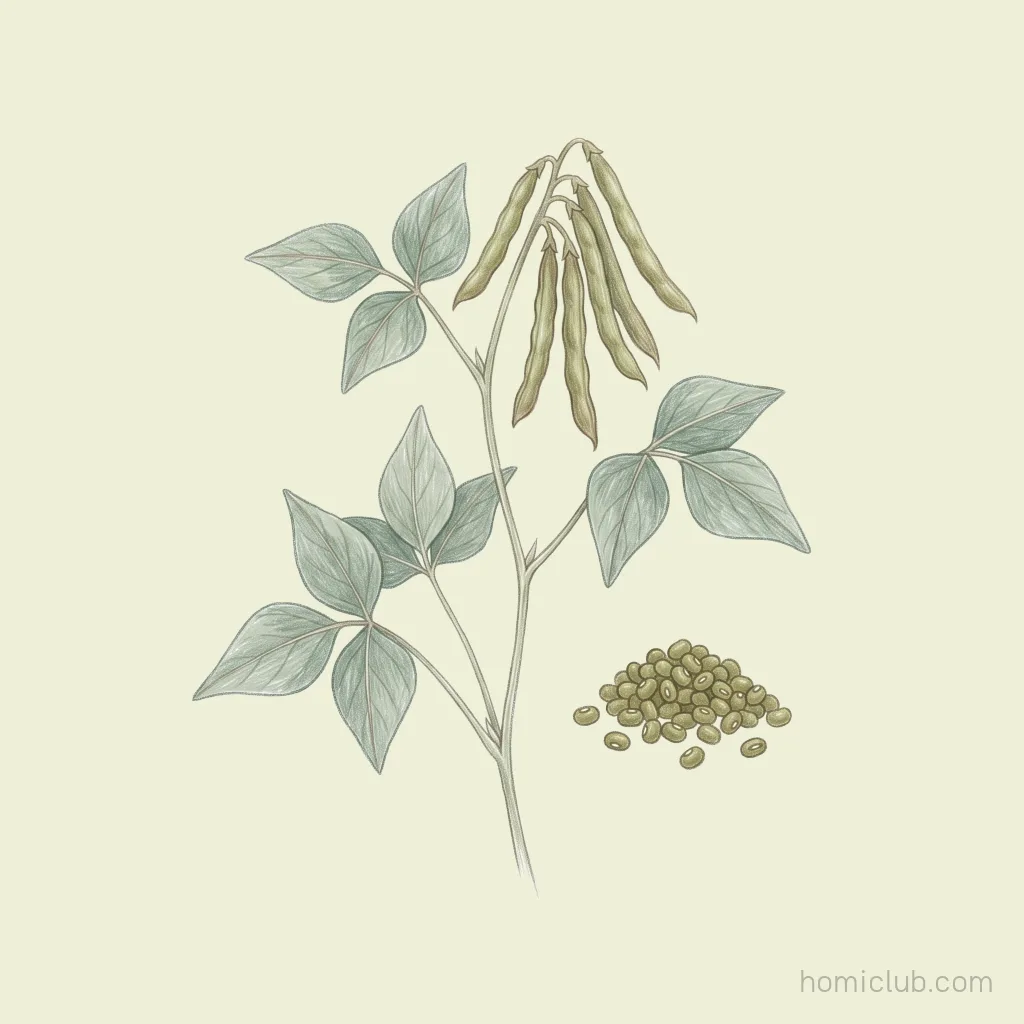
The leaf of the red adzuki bean. The Dongui Bogam places this entry in its section on grains (穀部, Gokbu) as a sub-item attached to the red adzuki bean itself (jeoksodu, 赤小豆); the accompanying vernacular Korean gloss of 1613 reads beulgeun pat nip — "red bean leaf." The original text notes that this leaf is called gwak (藿), and adds that the tender young leaves of the soybean go by the same name and can likewise be eaten as a leaf vegetable. That old custom survives in the Korean countryside today as kongnip-jangajji — soybean leaves put up in brine or seasoning and kept as a preserved side dish.
Unlike most drug entries in the Dongui Bogam, this passage records no nature and flavor (seongjil-mat, the warming/cooling character and taste by which traditional Korean medicine classifies a substance), no target organs, and no indications or cautions — it preserves only the leaf's name and its use as food.
Original, read line by line 東醫寶鑑 · Tangaek — Decoctions vol. 1
-
名藿. 止小便數, 去煩熱, 明目. 《本草》
It is named gwak (藿). It stops frequent urination, dispels beonyeol (煩熱, vexing heat), and brightens the eyes. 《Boncho (本草)》
HomiclubThe character gwak (藿) covered the leaves of beans and adzuki alike. The same character also writes sea mustard, so old records calling seaweed soup gwaktang (藿湯) are easily confused with this.
-
大豆嫩葉, 亦謂之藿. 可作菜食之. 《入門》
The tender leaves of the soybean are likewise called gwak. They can be made into a vegetable dish and eaten. 《Ipmun (入門)》
Grains — more entries
This is a cultural and historical record from a classical text, not a claim about any food’s effects. Nothing here is a health supplement or intended to prevent or treat disease. Consult a medical professional about health concerns. · Text: Korean Medicine Classics DB · Reading: Homiclub