
Tangaek — Decoctions · Grains
薏苡仁 Job's Tears
 Related Crop · Job's Tears →
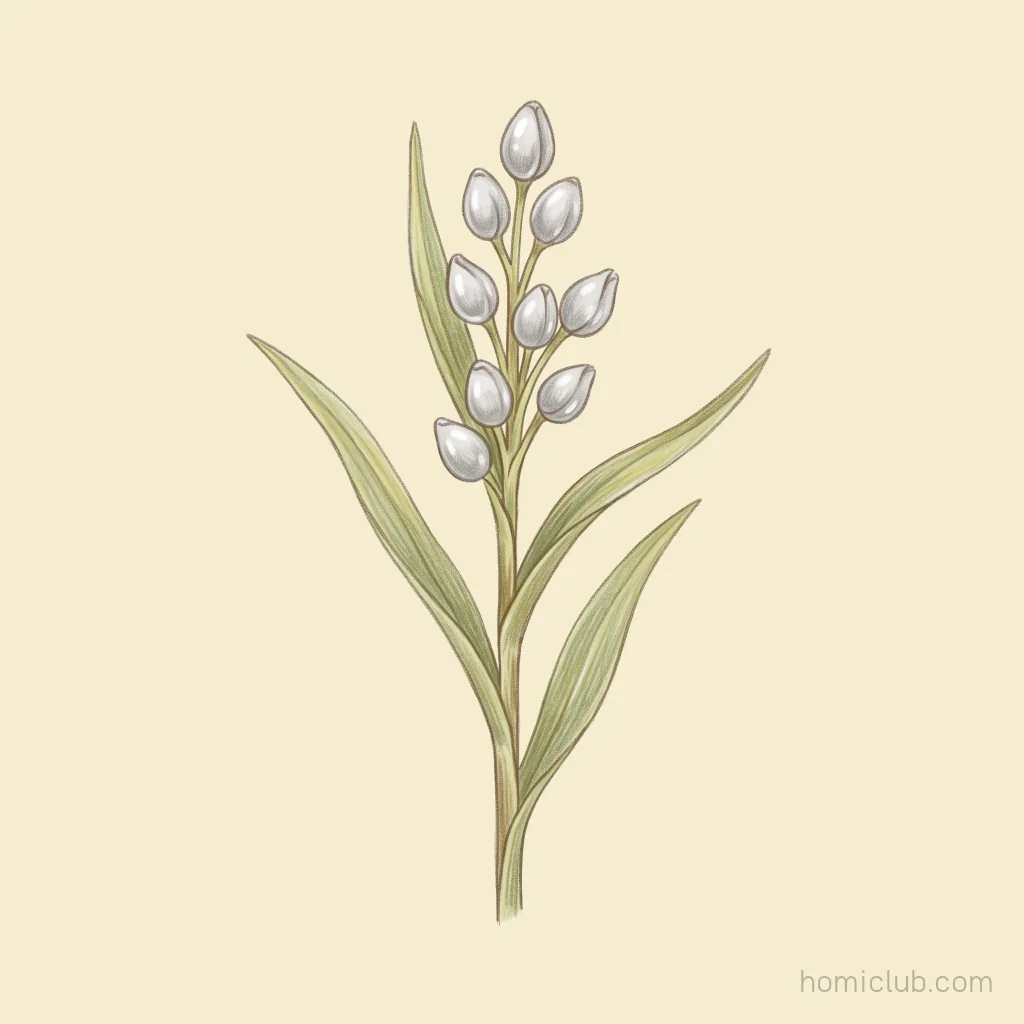
Uiiin is the hulled grain of Job's tears, a tall annual grass and the same crop in the guide. It is what goes into roasted yulmu tea and the rice bowls that carry its name. The text describes steaming the harvested fruit, drying it in the sun, then milling or rubbing it to free the kernel.
Original, read line by line 東醫寶鑑 · Tangaek — Decoctions vol. 1
-
性微寒一云平, 味甘, 無毒.
Its nature is slightly cold, though one account calls it neutral; its taste is sweet, and it is non-toxic.
HomiclubUiin is the kernel of Job's tears, an annual grass. It is the grain used in yulmu tea and mixed rice, sitting inside a hard, bead-like husk.
-
主肺痿肺氣吐膿血咳嗽. 又主風濕痺, 筋脉攣急, 乾濕脚氣. 《本草》
It governs pyewi (肺痿, lung atrophy) and pyegi (肺氣, lung qi disorder) with coughing up of pus and blood. It also governs pungseupbi (風濕痺, wind-damp impediment), tautness and spasm of the sinews and vessels, and dry and damp gakgi (脚氣, leg qi). 《Boncho (本草)》
-
輕身, 勝瘴氣. 《史記》
It lightens the body and overcomes janggi (瘴氣, miasmic qi). 《Sagi (史記)》
-
久服, 令人能食. 性緩不妬性緩, 須倍他藥用.
Taken long it enables a person to eat well. Its nature is slow and does not contend with others; being slow, it must be used at twice the amount of other medicines.
-
咬之粘牙者眞. 《入門》
The genuine kind sticks to the teeth when chewed. 《Immun (入門)》
HomiclubSticking to the teeth points to the glutinous starch of the kernel. The bead-making form of Job's tears, with a larger and thicker-shelled fruit once strung into rosaries, is kept apart from the edible kind.
-
此物力勢和緩, 須倍用, 卽見效. 《丹心》
The force of this substance is mild and slow, so it must be used at double the amount for its working to appear. 《Dansim (丹心)》
-
取實, 蒸令氣餾, 暴於日中使乾, 磨之或挼之則得仁矣. 《本草》
Gather the fruit, steam it until vapour rises, dry it in the sun, then grind or rub it to obtain the kernel. 《Boncho (本草)》
Related Crop
Job's Tears →
Reading on Job's Tears
Grains — more entries
This is a cultural and historical record from a classical text, not a claim about any food’s effects. Nothing here is a health supplement or intended to prevent or treat disease. Consult a medical professional about health concerns. · Text: Korean Medicine Classics DB · Reading: Homiclub