- Type
- Herbs & Aromatics
- Difficulty
- Easy
- Season
- Spring·Summer
- Sowing
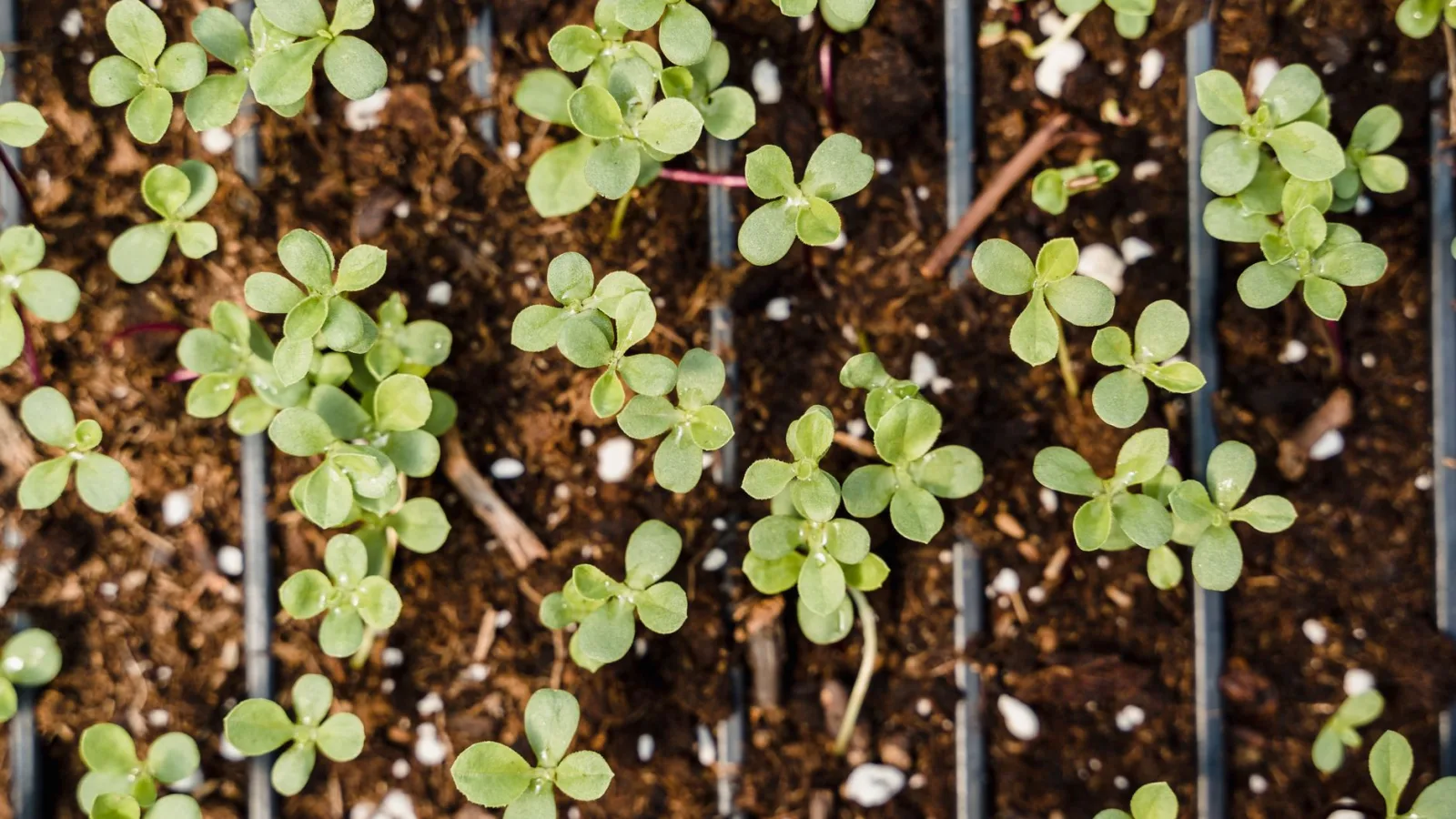
- From seed
Sicklepod
Senna obtusifolia
Anthraquinones · a roasted seed tea
Sicklepod is an annual legume grown for its seed. Sown in May, it passes 1m by midsummer, opens bright yellow flowers, and sets the long curved pods that give it its English name. It is a legume, but the group it belongs to forms almost no root nodules, so do not leave nitrogen out of the base dressing — feed it as you would any other garden crop. Most city dwellers meet it as a roasted tea sold by the bag, but a few plants in a sunny corner of a plot yield enough pods to harvest and roast at home. The Donguibogam lists it in the Herb Section as chogyeolmyeong, describing it as neutral in nature — cool by one account — salty and bitter in taste, and free of toxicity. The same entry explains the folk name majegyeolmyeong, given because the seeds sit in a pod and each grain resembles a horse's hoof, and records the handling: gather the seed on the tenth day of the tenth lunar month, dry it in shade for a hundred days, then roast it lightly.
Year-Round Calendar
- 1
- 2
- 3
- 4
- 5
- 6
- 7
- 8
- 9
- 10
- 11
- 12
- 5
- 10
- 11
Where It Grows
-
Main producer
Known as juemingzi, it is grown on a large scale in Anhui, Jiangsu and Sichuan, which supply most of the volume traded worldwide. Harvest September, October, November
- 9
- 10
- 11
- Major producer Having spread across the tropics, it is harvested for seed from plants that come up on their own along field edges and on vacant ground, and the seed is exported.
-
Major producer
It is grown for tea in Gangwon, North Chungcheong and elsewhere, but on a small scale, so a considerable part of the volume circulating within the country is imported. Harvest October, November
- 10
- 11
It appears to be native to tropical America, but since that is pinned down only as a region, no country-of-origin row has been set up for it. Carried by ships and by people, it spread through the warm parts of Asia and Africa and is now a pantropical weed, while the growing areas that harvest and sell the seed are concentrated in Asia. What reaches the market under the name gyeolmyeongja arrives as a mix of gyeolmyeongja (Senna obtusifolia) and gingangnamcha (Senna tora), so the species has to be read carefully.
- Optimum
- 20~30℃
- Range
- 15~35℃
- Hardiness
- Not hardy
A heat-adapted annual out of tropical America. It is killed outright by frost, and for the seed to fill it needs more than 150 days of warm weather running from sowing to the first frost. It takes drought well, but the roots rot where water sits.
In Korea Central Korea and south
Sown in May, the pods are gathered in October to November, before the frost comes. The further south, the more evenly the pods ripen; in the mountains of Gangwon, where the summer is short, unripe seed gets mixed in.
How to grow
- Light
- Six or more hours of direct sun. Too little and the plant stretches, falls over, and fills its pods poorly
- Soil and depth
- Free-draining sandy loam at least 20cm deep. Roots rot where water sits
- Spacing
- 20~25cm between plants, 60cm between rows. Drop two or three seeds per hole and thin to one
- Watering
- Keep it moist only while germinating and while flowering. Once established it takes drought well
- Feeding
- As a legume it fixes its own nitrogen through root nodules. Base-dress with phosphorus and potassium; heavy nitrogen gives leaf at the expense of pods
- Harvest
- Cut whole plants in October or November, once pods have dried brown and rattle when shaken. Dry a few days more, then thresh. Cutting before the pods dry gives unripe seed that crumbles in the pan
What makes the difference. The seed coat is hard, so soak overnight before sowing for even emergence. Roast in a dry pan over low heat, stirring; stop the moment the seeds start to pop and the colour deepens
Why this one is harder. Ripe pods split on their own and scatter seed. Volunteers come up across the plot the following spring, so hold a sack under the plants as you cut and avoid dropping pods on the bed
Common problems
- Bean bug (Riptortus pedestris) You will see Pods form but fill unevenly, leaving empty husks among the seed What to do Hand-pick in the cool of early morning. Watch closely through August and September while pods fill
- Aphids You will see Clusters on new shoots and flower stalks, leaves turning sticky What to do Wash off with a jet of water; if they return, use egg-yolk oil or an approved organic spray
- Damping off You will see Newly emerged seedlings pinch in at soil level and topple What to do Sow thinly and water less often. Lift fallen seedlings out with the soil around them
This page describes how a crop is grown and used. It does not claim health effects for any food, nor is it intended to prevent or treat disease. Component and study notes are references only and do not mean the same result occurs in people. Consult a medical professional about health concerns.
Health Benefits
What the Donguibogam records — nature, taste, name and handling. The Donguibogam lists it in the Herb Section as chogyeolmyeong. It is described as neutral in nature, cool by one account, salty and bitter in taste, and free of toxicity. The leaves are said to resemble those of alfalfa but larger, with yellow-white flowers opening in the seventh lunar month, and seeds set in a spike, like green mung beans but pointed. The entry also explains the folk name majegyeolmyeong — the seeds sit in a pod and each grain resembles a horse's hoof — and gives the handling: gather the seed on the tenth day of the tenth lunar month, dry it in shade for a hundred days, then roast it lightly. This is a record from an old medical text and differs from modern medical judgement.
Composition analysis by roasting condition. Analyses have reported that roasting temperature and time change the colour and compound profile of the extract. The ratio of anthraquinone-type to naphthopyrone-type compounds shifts along with it. This concerns processing conditions and composition, and has no bearing on the prevention or treatment of disease.
An old use as pillow filling. Old records mention packing this seed into pillows. The grains are small and hard, giving the same rustling feel as buckwheat hulls. Some people still dry the spent seed after brewing and use it as pillow filling. This is an old record and a folk use, and differs from modern medical judgement.
Nutrition
- Anthraquinone derivatives (emodin, chrysophanol, obtusifolin) (concentrated in the seed) — pigmented compounds repeatedly reported across the Senna genus
- Naphthopyrone glycosides (cassiaside, toralactone group) (profile shifts with roasting temperature) — compound group tied to the colour and aroma of the brewed seed
- Mucilaginous polysaccharides (found in the seed coat) — polysaccharides that dissolve into the water during brewing
- Minerals (potassium, calcium) (partly carried into the brew) — mineral makeup of the brewed liquid
Roasting decides the flavour Sicklepod seed is roasted rather than brewed raw. Temperature and time change the colour and aroma of the brew a great deal. Slow roasting over low heat brings out a nutty note, while high heat leaves bitterness and a scorched smell. Store roasted seed sealed and use it within two months.
Anthraquinone compounds Analyses have repeatedly reported anthraquinone derivatives such as emodin and chrysophanol in the seed. The same class of compounds turns up in other Senna species and in the knotweed family. Levels vary widely with origin, harvest timing and degree of roast. This class is known to irritate the gut and can bring on diarrhoea and abdominal cramps, which is why a daily amount is fixed in advance rather than left open. Stop for the day if cramps or loose stools appear. Anyone pregnant or nursing, and children, should take less again; if you are on prescribed medication, ask a doctor or pharmacist first.
Ratio and steeping time A common ratio is 15~20g of roasted seed per litre of water. Bring the water to a boil, drop the heat, steep for about 10 minutes and strain. Longer boiling deepens the colour but raises the bitterness with it. Seed that has been brewed once is not reused.
Pairings
○ Roasted barley — Blending with roasted grain tea is the usual approach. Brewed alone the bitterness leads; barley pulls the cup toward a toasted, rounder flavour. Start near one part sicklepod to two parts barley and adjust to taste. Barley
○ Cold brew — In summer, put the roasted seed in a bottle and leave it in the fridge for 6~8 hours. Cold brewing gives less bitterness and a clearer colour than boiling. Drink it within two days and strain the seed out.
○ Dried jujube — Two or three jujubes added to the pot bring a sweetness that makes the cup easier for children. Split the fruit so the flavour draws quickly. With that sweetness present, the brew need not be made strong. Jujube
△ Drinking it all day in place of water — The seed contains anthraquinone compounds. They irritate the gut, so several strong cups in a row can bring stomach cramps or loose stools. Set a daily amount and keep it out of the slot where plain water belongs. Stop for the day if cramps or diarrhoea appear. For children, brew it weaker and pour less.
△ Pregnancy, nursing, or a habitually loose stomach — Many sources advise against plant teas containing anthraquinone compounds during pregnancy. Anyone whose stomach is often upset or loose is better off with a smaller amount. If you take prescribed medication, ask a doctor or pharmacist first.
△ Seed of unknown origin — Senna occidentalis looks similar but is a different species with reported seed toxicity. When roasting seed you harvested, check the curve of the pod and the size of the grain, and keep seed of unknown origin out of the pot. Old texts also mention eating the leaves as a green, but today only the seed is roasted and used.
Varieties
- Senna obtusifolia (seed) — The main species traded as gyeolmyeongja in Korea. Pods curve long, like a bow
- Senna tora (seed) — Listed alongside it in the pharmacopoeia as a source plant. Hard to tell apart by appearance alone
- Chamaecrista nomame (seed) — A separate genus. Much finer leaflets and flat pods make it easy to separate
- Senna occidentalis (seed) — Similar in appearance but a different species with reported seed toxicity. Never mix it in
Source: Donguibogam, Herb Section, 決明子 · Korean Pharmacopoeia · RDA Nongsaro