- Type
- Leafy Greens
- Difficulty
- Easy
- Season
- Spring·Summer
- Sowing
- Transplant
Ramie (Mosi)
Boehmeria nivea
Fibre, calcium · a fibre crop whose leaves go into rice cake
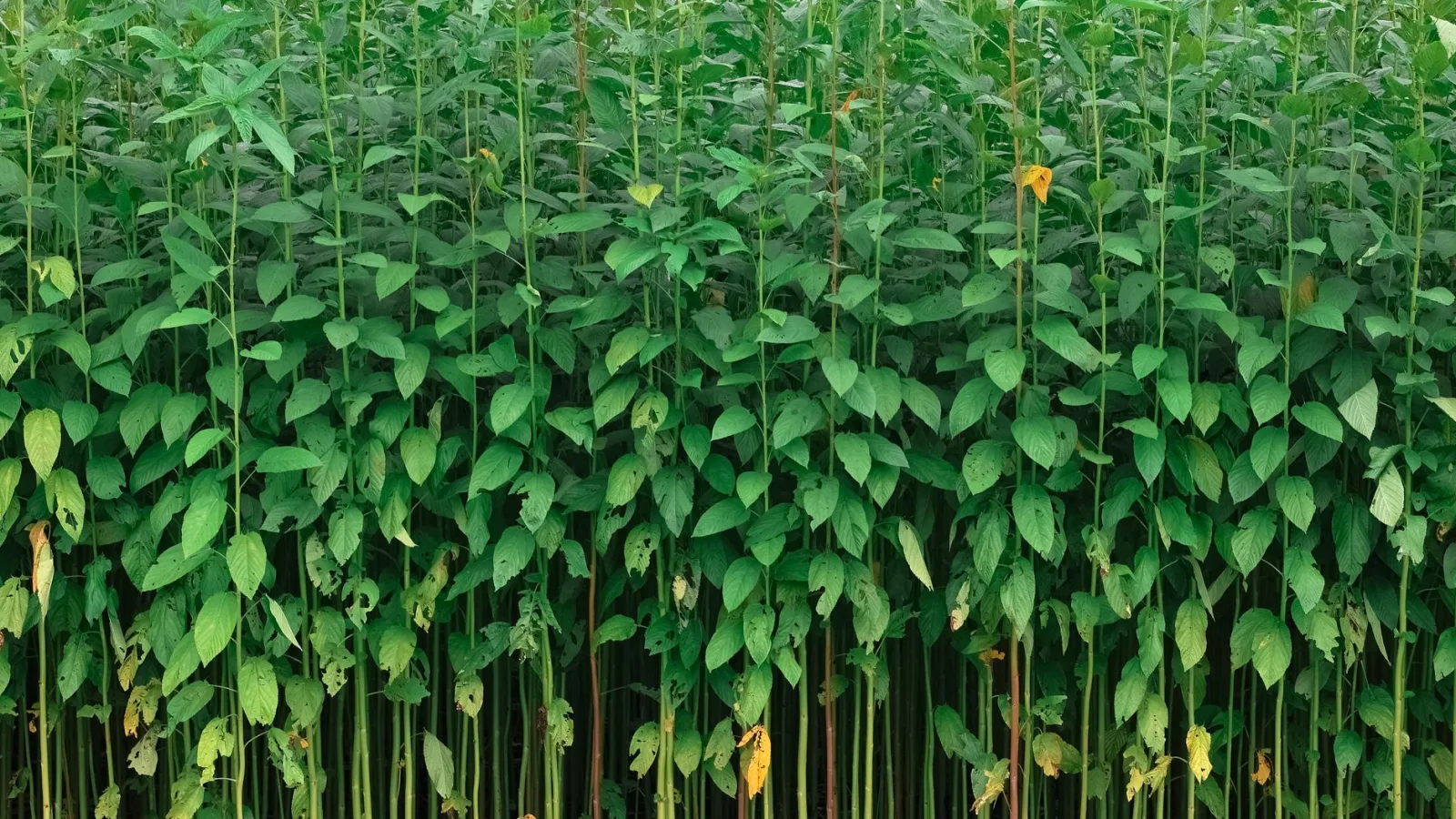
Ramie is a perennial in the nettle family: the stem bark yields the fibre woven into mosi cloth, and the leaves go into rice cake. Hansan in Seocheon, South Chungcheong, is the long-established growing area; plant divided roots in spring and one stand can be cut for years. The leaves are coarse, so they are blanched and ground fine before being worked into rice flour for mositnip-tteok and songpyeon. The Donguibogam lists 苧根, the ramie root, in the Herb section. It gives the root a cold nature, notes that some call it neutral, records a sweet taste and no toxicity, and glosses the name by saying that this is the root of the very ramie now woven into cloth.
Year-Round Calendar
- 1
- 2
- 3
- 4
- 5
- 6
- 7
- 8
- 9
- 10
- 11
- 12
- 3
- 4
- 5
- 6
- 7
- 8
- 9
Where It Grows
- Main producer Produces most of the world's ramie fiber. The centers are Hunan, Sichuan and Jiangxi, where summers are hot and rainy.
- Major producer Grown in the northeast, around Assam. Second to China, but by a wide margin in volume.
- Major producer Grown for fiber in the north and northeast.
- Major producer A newer growing area, reached in the twentieth century; the crop is grown in the south, in states such as Paraná. It declined for a time and is increasing again with the adoption of machine decortication (mechanical stripping of the fiber).
- Historic source In the mid-twentieth century it was grown widely for fiber on Mindanao, but it all but disappeared after synthetic fibers spread.
It appears to be native to southern East Asia, took hold as a fiber crop across subtropical Asia, where summers are hot and rainy, and by the twentieth century had crossed over as far as Brazil. In the mid-twentieth century it was grown in the Philippines and several other countries, but growing areas shrank sharply after synthetic fibers spread, and China now accounts for most of the world's output. Korea's Hansan mosi survives as a growing area for its weaving skill rather than its volume, so it does not appear in world production rankings.
- Optimum
- 25~30℃
- Range
- 15~35℃
- Hardiness
- Half-hardy
It grows well through hot, rainy summers and is cut two or three times a year. The top growth is killed by frost, but the rhizomes underground survive the winter, so the same stand is cut for several years running. Where winters are too cold, the rhizomes freeze and no plants come up the following year.
Harvested 2–3 years after planting. Planted in spring by dividing the roots, the stems are thin in the first year, so only a light cut is taken; from the second year on it is cut two or three times a year. The same stand is cut for several years running.
In Korea Central Korea and south
The area around Hansan in Seocheon, South Chungcheong, is the old growing region, and it extends along the west coast through North Jeolla and South Jeolla. If the rhizomes freeze in winter, no plants come up the following year, which makes the crop difficult from the central region northward.
How to grow
- Light
- Five hours of sun or more. It grows in part shade but the leaves come thin
- Soil and depth
- Free-draining loam. The roots run sideways, so work the ground at least 30cm deep
- Spacing
- 40 to 50cm between plants, 70cm between rows. Within a year or two the roots knit and close the row
- Watering
- Water generously in the morning if leaves wilt in a summer drought. Standing water rots the roots
- Feeding
- A generous base dressing of well-rotted compost, plus a side dressing after every cut
- Harvest
- Pick leaves from May to September. Once the stems pass knee height and the leaves reach palm size, strip from the bottom up, and cut the whole stand to the base two or three times a season to bring on new shoots. Early-summer leaf is the most tender for rice cake
What makes the difference. The roots run sideways and the stand widens every year. A board or bed edging sunk 40cm deep along the boundary keeps it out of the neighbouring row
Why this one is harder. In the first year the stand does not stand up properly and the stems stay thin. Strip only a few leaves that first year and leave the rest; from the second year it comes up as it should
Common problems
- Spider mites You will see Leaf undersides go gritty and the whole leaf bleaches pale What to do Hose the undersides clean, and mist the foliage morning and evening through a dry spell
- Cutworms You will see New spring shoots cut off at the base and lying over What to do Scrape the soil at the base to find and remove the caterpillars, and clear plot-edge weeds early
- Powdery mildew You will see White dust on leaf surfaces, spreading from inside the stool What to do Thin a crowded stand to open an air path and take off affected leaves
This page describes how a crop is grown and used. It does not claim health effects for any food, nor is it intended to prevent or treat disease. Component and study notes are references only and do not mean the same result occurs in people. Consult a medical professional about health concerns.
Health Benefits
What the Donguibogam records — nature, taste and the name. The Donguibogam lists the plant in the Herb section as 苧根. It gives a cold nature, notes that some call it neutral, and records a sweet taste with no toxicity. It glosses the name by saying that this is the root of the very ramie now woven into cloth. This is a historical medical record and differs from modern medical judgment.
Compositional analysis of the leaf. Analyses of ramie leaf report a high proportion of dietary fibre and, for a leafy green, high levels of calcium and other minerals. The same work reports that the figures move a great deal with leaf age and with whether the leaf was blanched or dried. This is compositional analysis and makes no claim about disease.
Nutrition
- Dietary fibre (why the veins and blade are so tough) — the polysaccharides that build leaf tissue
- Calcium (reported as high for a leafy green) — a mineral
- Chlorophyll (the deep green of blanched, ground leaf) — the green pigment that colours the rice cake
- Cellulose fibre (stem bark) (stripped from the bark and drawn into thread) — the part that becomes cloth
Working with a coarse leaf Ramie leaves have thick veins and a rough surface, which puts raw eating out of reach. Blanch them in lightly salted boiling water, rinse cold, squeeze dry and grind fine. Only ground that finely will the rice cake come out smooth rather than gritty. Freeze the blanched leaf in single portions and it lasts the year.
Calcium and minerals Ramie leaf is reported as high in calcium for a leafy green. The amount that actually goes into a rice cake is small next to the rice flour, though, so one cake is not a day's worth of anything. Dressed as a side dish or dropped into soup, far more of the leaf itself gets eaten. Published figures swing widely with leaf age and with whether the leaf was blanched or dried.
Fibre and colour Dietary fibre is what makes the leaf tough. Blanching and grinding break the tissue down enough to eat, but the fibre is still there. The deep green of the blanched leaf is chlorophyll, and long boiling turns it yellow-brown. To keep the colour in the cake, blanch briefly and drop the leaf straight into cold water.
Pairings
○ Rice flour — mositnip-tteok — Ground ramie leaf kneaded into non-glutinous rice flour makes a dough that stretches well. Filled with sweet red bean paste it becomes mositnip-songpyeon. More leaf means deeper colour but a stiffer cake, so raise the proportion gradually until it sits right.
○ Ground perilla seed — ramie leaf soup — Blanched leaf in a soybean-paste soup, with ground perilla seed stirred through, loses much of its rough texture. The perilla oil spreads through the broth and carries the leaf down easily. Add it just before the heat goes off. Perilla (Deulkkae)
○ Red bean paste and soybean powder — Filling the cake with red bean paste and rolling it in roasted soybean powder is the long-standing pairing. The grassy note of the leaf and the sweetness of the bean hold each other in check. Serve them straight from the steamer, or re-steam once cooled.
△ The root is not the edible part — What the Donguibogam records is 苧根, the root. What the plot supplies is leaf; roots are dug only when dividing the stand. Do not read the old record as an instruction to brew the root.
△ Raw leaf — The undersides carry fine hairs and the veins are tough, so raw leaf is unpleasantly rough in the mouth. Always blanch it. Discard the blanching water and rinse in cold.
△ Handling large quantities — Ramie is in the nettle family but has none of the stinging hairs. Working through the fine hairs on the leaf backs and through stem bark for long stretches does roughen the hands, so wear gloves. Cut stems are slippery at the cut face, so hold the base steady when cutting.
Varieties
- White-bark line (seedling) — Pale bark and fine fibre. Long grown for cloth
- Green-bark line (seedling) — Green bark and larger stools. Straightforward when the leaves are the point
- Hansan landrace (seedling) — Stock carried on around Hansan in Seocheon. The place name travels with it
Source: Donguibogam, Herb Section 苧根 · Rural Development Administration (Nongsaro)