- Type
- Leafy Greens
- Difficulty
- Easy
- Season
- Spring·Fall
- Sowing
- From seed
Dandelion
Taraxacum platycarpum
Inulin and luteolin — leaves for the plate, roots for the roaster
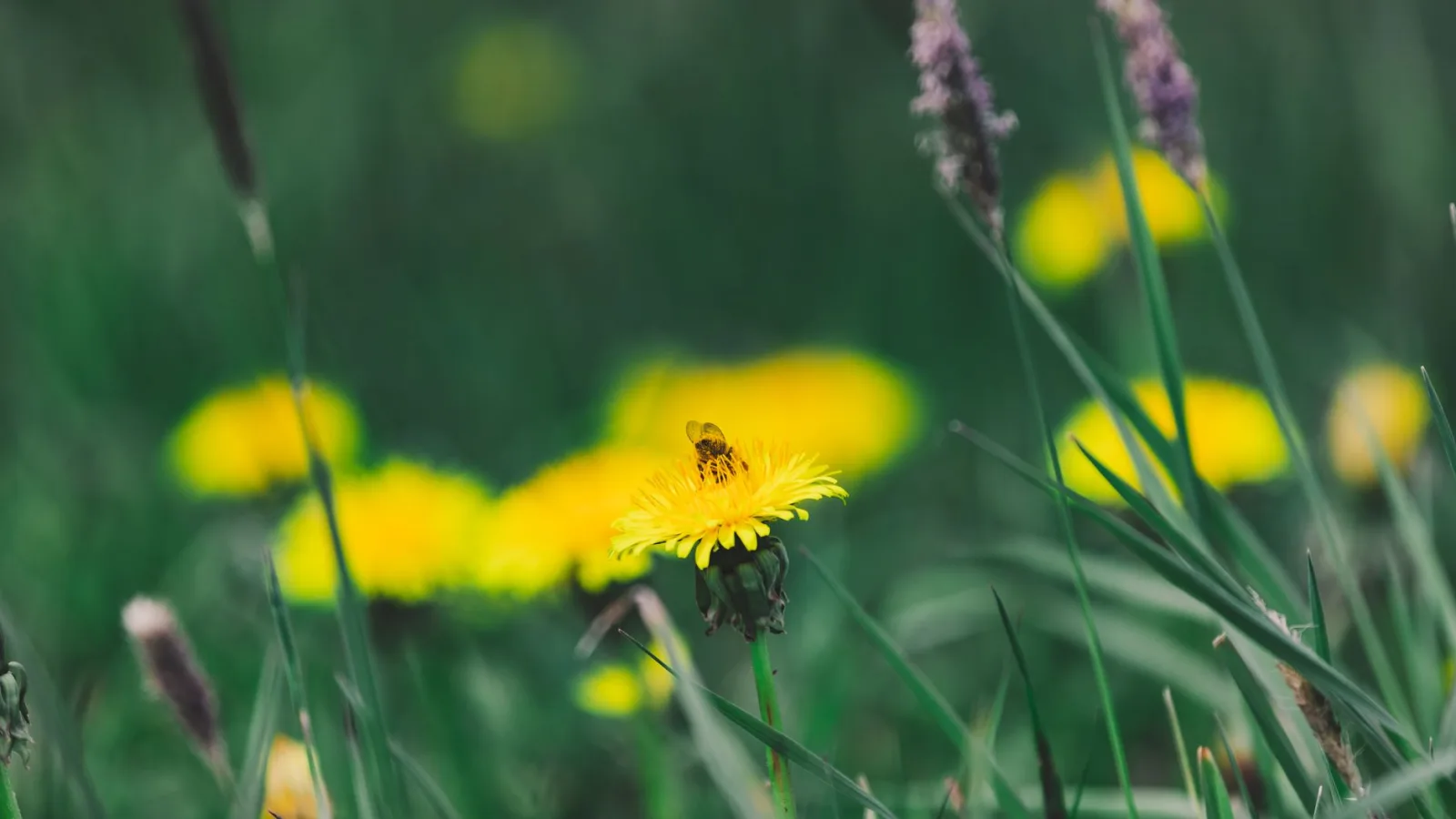
Dandelion is an Asteraceae perennial. The plants filling cracks in city pavement are mostly the naturalized Taraxacum officinale, while the native Korean dandelion, Taraxacum platycarpum, grows in fields and hills. Young leaves go into salads and Korean ssam wraps, while roots dug in late autumn are washed, sliced, and roasted into a coffee-like brew. The taproot drives straight down, so a pot at least 30cm deep is the minimum if roots are the goal. The Donguibogam, a Korean medical compendium of 1613, lists it in the herb section as 蒲公草, describing it as neutral in nature, sweet in taste, and non-toxic; it notes leaves resembling sowthistle, chrysanthemum-like yellow flowers in the third and fourth lunar months, white sap from cut stems, and the popular name 蒲公英. That is an old text and it does not match modern medical judgment.
Year-Round Calendar
- 1
- 2
- 3
- 4
- 5
- 6
- 7
- 8
- 9
- 10
- 11
- 12
- 3
- 4
- 9
- 4
- 5
- 6
- 10
- 11
Where It Grows
-
Wild population
The native dandelion (Taraxacum platycarpum) grows in open fields and at the foot of hills. The ones in vacant city lots are mostly the naturalized common dandelion. Harvest April, May, June, October, November
- 4
- 5
- 6
- 10
- 11
- Wild population The traditional dandelions of Kanto and Kansai are close relatives of the native dandelion, and here too the common dandelion has spread through the cities.
- Main producer Known as pugongying, dandelions are grown in fields on a large scale in Hebei, Shanxi, and elsewhere. In China, though, the name covers several species at once, including the Mongolian dandelion (Taraxacum mongolicum).
- Major producer Known as pissenlit, it is grown as a leaf vegetable in the north. The cultivated plant is the common dandelion (Taraxacum officinale), a different species from the native dandelion.
- Major producer It is grown as a leaf vegetable in New Jersey and California. This, too, is the common dandelion.
The native dandelion is indigenous to East Asia, including Korea, China, and Japan. The common dandelion (Taraxacum officinale), originally from Europe, has followed people across the temperate world, and the plants raised in fields as a vegetable or medicinal crop are usually either this common dandelion or China's Mongolian dandelion. They overlap only in name and use — the species are different, so the map should not be read as the range of a single one.
- Optimum
- 15~22℃
- Range
- 5~28℃
- Hardiness
- Hardy
Dandelions grow best in cool weather; in summer heat the leaves turn coarse. The plant overwinters on its thick taproot and can withstand cold of around -20℃. It sends its root straight down even in spots where the soil is trodden firm, such as sunny fields and roadsides.
Harvested 1–2 years after planting. A perennial, the dandelion sends up new leaves from the same plant every year once it has settled in. Spring-sown plants can be picked for leaves from that first summer, but the thick root is dug in late autumn of the planting year or in the autumn of the following year.
In Korea Nationwide
It grows in fields and at the foot of hills across the country. The dandelions common in sidewalk cracks and vacant lots in cities are mostly the naturalized common dandelion, while the native dandelion holds on in sunny fields and along the lower slopes of hills.
How to grow
- Light
- Five hours or more. It grows in part shade, but the leaves stretch and thin out
- Soil and depth
- 30cm deep or more. The taproot goes straight down, so a shallow pot yields no root
- Spacing
- 20 to 25cm. The leaves spread flat like a rosette
- Watering
- Soak it when the surface dries. The deep root makes it tougher on drought than shallow-rooted greens
- Feeding
- Base compost is enough. Feed weakly once a month only if you keep picking leaves
- Harvest
- Take outer leaves one at a time in spring, before the flower stalk rises. Dig roots in late autumn of the first year or the following autumn
What makes the difference. Cut the flower stalk the moment you see it. The leaves stay tender far longer and nothing goes to seed
Why this one is harder. Once the seed head opens, the wind carries seed into every neighboring pot and bed. Cutting the stalk before the flower fades is the only reliable answer
Common problems
- Aphids You will see New growth and flower stalks pack with black or pale green insects What to do Wash them off with a jet of water; if they return, use a soap or oil spray
- Powdery mildew You will see White floury patches spread across the upper leaf surface What to do Open up the spacing for airflow and pick off affected leaves
- Slugs You will see Leaf margins are chewed away in wide bites overnight What to do Pick them off in the evening, or ring the pot with coffee grounds or diatomaceous earth
This page describes how a crop is grown and used. It does not claim health effects for any food, nor is it intended to prevent or treat disease. Component and study notes are references only and do not mean the same result occurs in people. Consult a medical professional about health concerns.
Health Benefits
Polyphenol antioxidant activity. Chicoric acid, chlorogenic acid, and luteolin have been identified in dandelion leaf and root, and studies report that such extracts showed antioxidant activity in laboratory assays. Laboratory results do not mean the same thing happens when a person eats the leaves as a vegetable.
Fermentation behavior of root inulin. Research reports that the inulin in dandelion root passes undigested by human enzymes and reaches the large intestine, where it serves as a fermentation substrate for gut bacteria. Inulin is a common fructan, also found in chicory and Jerusalem artichoke roots.
Nutrition
- Inulin (Storage carbohydrate in the root, higher in autumn) — A fructan that human digestive enzymes do not break down
- Luteolin and chicoric acid (Polyphenols in leaf and root) — Polyphenol compounds identified in the leaf and root
- Taraxacin (Sesquiterpene lactone in the leaves) — Bitterness; softens with blanching
- Vitamin K (778 mcg/100g (raw leaves, USDA)) — Fat-soluble vitamin
Taraxacin and bitterness The bitterness of dandelion leaves comes from taraxacin and related sesquiterpene lactones. Young leaves picked before the flower stalk rises carry less of it and taste noticeably milder. A quick blanch in salted water followed by a cold rinse strips much of the bitterness, and oily seasonings such as doenjang or perilla oil mask the rest. If you want the bitterness, fold a few raw leaves into a salad instead.
Inulin in the root Inulin is the storage carbohydrate that builds up in dandelion roots — a fructan, a chain of fructose units rather than glucose. Human digestive enzymes barely touch it, so it travels intact to the large intestine, where gut bacteria ferment it. Roots dug in late autumn, once the leaves have died back, hold the most. Roasting browns them and brings out a nutty aroma, which is why they stand in for coffee.
Vitamin K, vitamin A, and potassium USDA figures for 100g of raw dandelion greens list 778 mcg of vitamin K, 508 mcg RAE of vitamin A, 397 mg of potassium, and 187 mg of calcium. Among leafy greens that puts it high for both vitamin K and calcium. Vitamins K and A are fat-soluble, so a little oil in the cooking improves absorption. Keep in mind that a realistic serving is far smaller than 100g.
Pairings
○ Doenjang and perilla oil — Blanched dandelion leaves dressed with doenjang (fermented soybean paste) and perilla oil is the standard Korean preparation. The salt and savor of the paste plus the fat of the oil cover the bitterness, which makes even older leaves workable. A little minced garlic clears up any grassy edge.
○ An olive oil dressing — Served raw in a salad, dandelion wants a dressing with plenty of oil. Vitamins K and A are fat-soluble, so fat helps them along, and the acidity of vinegar or lemon cuts the bitter aftertaste short.
○ Roasted chicory root — Roasted dandelion root brews up rounder when blended with roasted chicory root, another Asteraceae taproot. Neither has caffeine, so a late-evening cup is easy, and varying the roast lets you shift the balance between bitter and sweet. Chicory
△ Asteraceae allergy — Dandelion belongs to the Asteraceae family, so anyone allergic to ragweed, mugwort, or sunflower may react to it. Stop immediately if your mouth itches or your hands develop contact dermatitis. On a first try, eat a leaf or two and wait.
△ Roadside and herbicide-sprayed ground — With wild dandelion the real issue is location, not chemistry. Road verges, parking lot edges, and apartment flowerbeds are the places most likely to have taken exhaust and herbicide. The deep taproot can carry soil contaminants up with it, so use plants you grew yourself or ones with a known source.
△ While on anticoagulants — The leaves are high in vitamin K, so anyone taking an anticoagulant such as warfarin should avoid sudden swings in how much they eat. Steady, consistent intake is the practical rule, and it is worth telling your doctor before adding it to a regular diet.
Varieties
- Korean native dandelion (Seed) — Bracts stay pressed against the flower head; blooms only in spring
- White-flowered Korean dandelion (Seed) — White flowers; wild stands have thinned, so seed is the practical route
- Common dandelion (Seed) — Outer bracts curl backward; the one you see everywhere in cities, flowering nearly year-round
Source: Donguibogam, herb section, 蒲公草 · Rural Development Administration (Nongsaro) · USDA FoodData Central