- Type
- Trees & Vines
- Difficulty
- Hard
- Season
- Fall·Winter
- Sowing
- Plant a sapling
Bitter orange peel
Citrus aurantium
Limonene and synephrine in the rind of the bitter orange
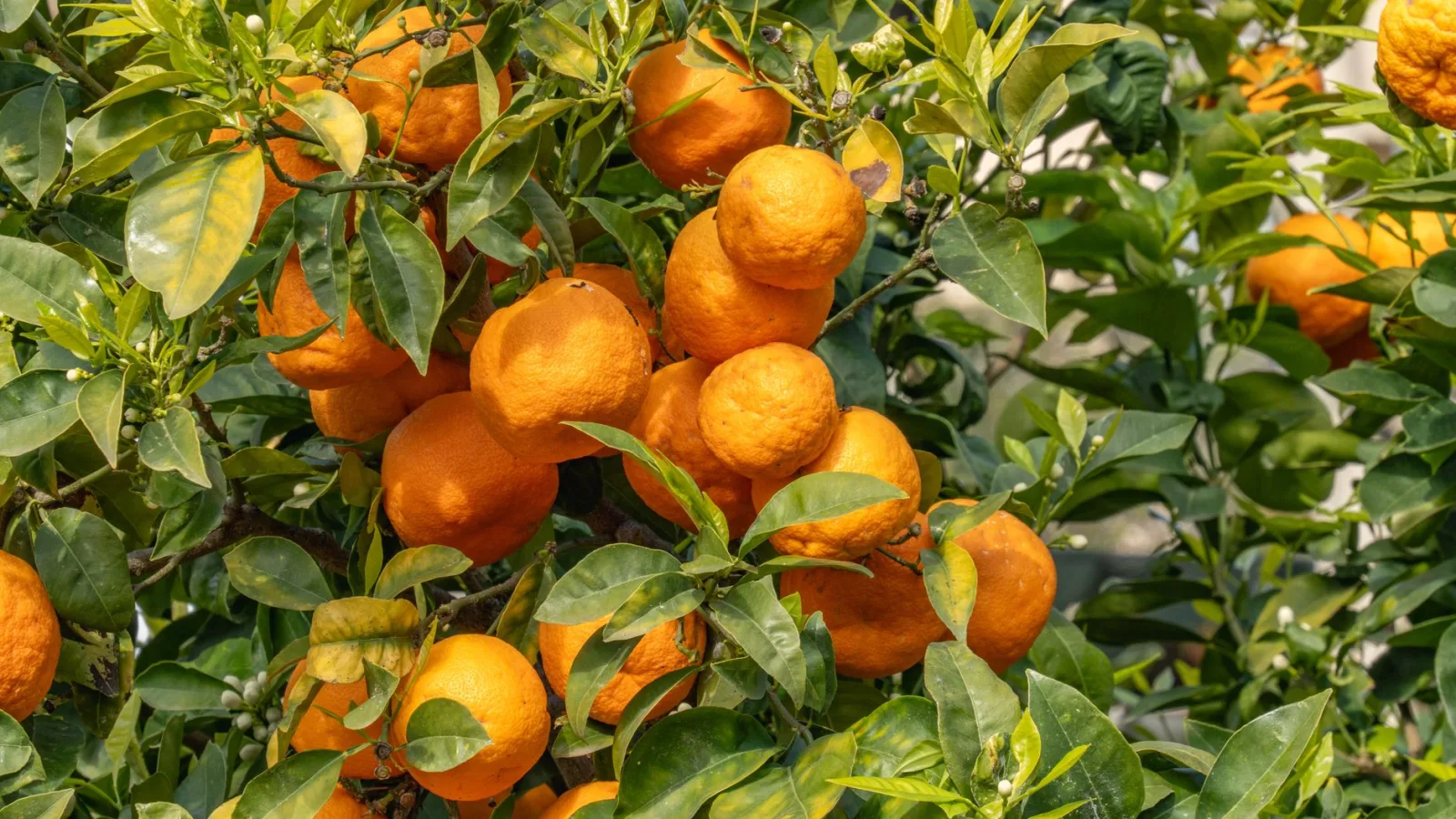
Deungjapi is the peel of the bitter orange. It is the sharpest of the citrus family for both sourness and bitterness, so the flesh is rarely eaten and the peel and flowers carry the value instead. Yuja (Citrus junos), a name that often travels alongside it, is a separate species and a different tree. The peel is candied into marmalade, the blossom yields the perfume oil neroli, and oil pressed from the leaves and twigs goes into fragrance as petitgrain. The ingredient appears by name in the fruit section of Korea's old medical texts, but today it turns up mostly as a bitter, aromatic supporting note. The peel oil carries furocoumarins, which can mark skin that sees strong sun afterward, so it is worth washing hands and forearms once the peeling is done. A small amount is grown on Jeju; most of what circulates in Korea is dried peel.
Year-Round Calendar
- 1
- 2
- 3
- 4
- 5
- 6
- 7
- 8
- 9
- 10
- 11
- 12
- 3
- 4
- 11
- 12
Where It Grows
-
Main producer
It grows along streets and in orchards across Andalusia, centered on Seville. Most of the fruit for British-style marmalade is shipped from here. Harvest December, January, February
- 1
- 2
- 12
- Major producer Grown in the hot lowlands around Veracruz, where both the peel and the sour juice are used.
- Major producer Grown on the Atlantic coastal plain; the flowers yield neroli oil and orange flower water.
- Major producer On the eastern plains, the leaves and twigs are cut and distilled into petitgrain essential oil.
- Major producer This falls within the tree's native range; in southern provinces such as Jiangxi and Hunan, the unripe fruit and peel are harvested as medicinal ingredients (zhishi and zhiqiao).
The tree belongs to a lineage that arose from a cross between pomelo and mandarin, and it is native to a region stretching from Southeast Asia to southern China; because that cannot be pinned to any single country, no country-of-origin row has been listed. The bitter orange was the first citrus to enter the Mediterranean, and it crossed to the Americas after the Age of Exploration. Today the part used varies by country: Spain supplies the peel, Morocco the flowers, and Paraguay the leaves. In South Korea, small quantities are grown on Jeju.
- Optimum
- 23~30℃
- Range
- 13~35℃
- Hardiness
- Half-hardy
Among citrus, this is one of the hardier types where cold is concerned, but its limit is around −6℃, and growth stops below 13℃. It flowers not in response to day length but after passing through a cool winter or a dry period.
Harvested 3–4 years after planting. A planted sapling begins to bear fruit after three or four years. It flowers in spring, and fruit grown for its peel is harvested in November–December of the same year.
In Korea Jeju and the south coast
Overwintering (surviving the winter outdoors) in open ground is possible only on Jeju and the southern coast. In central Korea, the tree must be grown in a pot and brought indoors every winter.
How to grow
- Light
- A south-facing spot with six or more hours of sun. Less light means a weaker aroma.
- Soil and depth
- Free-draining, slightly acidic soil at pH 5.5-6.5. Mix in about 30% coarse grit for a pot.
- Spacing
- Three to four meters in open ground. One tree per pot of at least 45 cm.
- Watering
- Water thoroughly once the surface dries. It tolerates dryness better than most citrus, but do not skip watering through the summer while fruit is sizing.
- Feeding
- Organic fertilizer in March and October. Keep sprays to a minimum on a tree grown for its peel.
- Harvest
- Pick in November or December once the rind has turned deep orange. The thick rind means the fruit holds for a few days if you cannot process it immediately.
What makes the difference. Shred the peel with the white pith left on, soak it overnight to pull out the bitterness, then dry or candy it, changing the soaking water two or three times. If it flowers, pick and dry the blossoms to add to tea.
Why this one is harder. It is hardier than most citrus, but still only overwinters outdoors on Jeju and the south coast. Anywhere further north the pot comes inside each winter, and fruit takes three to four years.
Common problems
- Scale insects You will see White shells along branches and leaf stalks with sooty mold on the leaves below What to do Scrub them off with a toothbrush and apply horticultural oil in winter
- Citrus red mite You will see Bleached leaves with red specks on the undersides What to do Blast the leaf undersides with water and keep humidity up
- Melanose You will see Black speckling scattered over the rind, spoiling its appearance What to do Cut out and burn dead wood and thin the canopy so it dries quickly after rain
This page describes how a crop is grown and used. It does not claim health effects for any food, nor is it intended to prevent or treat disease. Component and study notes are references only and do not mean the same result occurs in people. Consult a medical professional about health concerns.
Health Benefits
The old record — the name and where it sits. The peel appears by name, 橙子皮, in the fruit section of Korea's old medical texts. That it was handled as a bitter, aromatic rind is as far as this guide has verified, and the passages on what to use it for and how are not carried over here. It is a historical record and differs from modern medical judgment.
The modern view — composition is as far as it goes. Compositional analyses have repeatedly reported that d-limonene makes up most of the peel oil and that the bitterness comes from neohesperidin and naringin. Studies in people are scarce, so composition and flavour are as far as anything can be stated. The literature on synephrine deals mostly with concentrated supplements, which is a different proposition from using a little peel as an aromatic.
Nutrition
- d-Limonene (Most of the peel oil) — The citrus scent
- Neohesperidin and naringin (Bitter glycosides) — The characteristic bitterness
- Synephrine (A trace alkaloid) — A compound of concern in concentrated supplements
- Pectin (In the white pith) — What sets marmalade
Essential oil and aroma The dimples across the surface of the rind are oil glands. The d-limonene inside them accounts for most of the aroma, which is deeper and sharper than other citrus. Twist a strip of peel and you can watch the oil spray out. It is volatile, so use the peel freshly grated or freshly dried if you want the scent to survive.
Bitter glycosides The bitterness comes from flavonoid glycosides, chiefly neohesperidin and naringin. That bitterness is why the flesh goes uneaten, but against sugar it adds depth rather than just sweetness. It is exactly what makes marmalade taste unlike any other jam.
Pectin The white pith is rich enough in pectin that marmalade sets without any added setting agent. Scrape all the pith away and you keep the aroma but lose the set. Boiling the seeds in a muslin bag and lifting it out afterward is another way to draw out more pectin.
Peel oil and sunlight Citrus peel carries furocoumarins, and expressed bitter orange peel oil is reported to be phototoxic: left on the skin and then exposed to strong sun, it can leave redness or a lasting mark. That is why the fragrance trade caps how much expressed peel oil a product may carry. After a long session of peeling, wash your hands, and keep oil-smeared forearms out of direct sun.
Pairings
○ Black tea — A little dried peel, crushed fine, lifts black tea with citrus. It is the same family of aroma as the bergamot in Earl Grey. Steep no more than three minutes, or the bitterness takes over.
○ Sugar and lemon — Shred the peel, soak it overnight to draw out the bitterness, then cook it down with sugar into marmalade. A little lemon juice clears the color and helps it keep. Boiling the seeds along in a muslin bag gives you a firmer set.
○ Braised meat — A piece of peel dropped into braised pork or duck cleans up the heaviness of the fat. It is strongly bitter, so start with a single thumbnail-sized piece. Fish the peel out once the braise is done.
△ Concentrated synephrine supplements — Bitter orange extract is concentrated for its synephrine and sold in weight-loss supplements, and there are reported cases of raised heart rate and blood pressure. Taking large amounts alongside caffeine is particularly not advised. Using the peel in tea or a braise involves an incomparably smaller amount, but anyone with cardiovascular disease is better off avoiding the supplement form.
△ Medications — Seville orange juice has been reported to inhibit an enzyme involved in metabolizing certain drugs. It is the same class of interaction known from grapefruit. If you take regular medication, check with a pharmacist before using bitter orange peel or juice heavily every day.
△ Pesticide and wax — Since the peel is the point, residue and coating wax come with it. Scrub with coarse salt or baking soda under running water, and buy organic where you can. Imported fruit with a heavy shine is a poor choice for peel.
Varieties
- Gwanggyul (Sapling) — The Korean name for the bitter orange. Thick peel and a strong scent.
- Seville orange (Sapling) — The European line used for marmalade.
- Bergamot (Sapling) — A close relative, grown for its essential oil.
- Yuja (Sapling) — A different species, but the peel serves the same purposes and substitutes well.
Source: Rural Development Administration (nongsaro.go.kr) · Korean Plant Names Index