- Type
- Trees & Vines
- Difficulty
- Hard
- Season
- Summer
- Sowing
- Plant a sapling
Apricot Kernel
Prunus armeniaca
Amygdalin in the apricot seed. The old text called it toxic
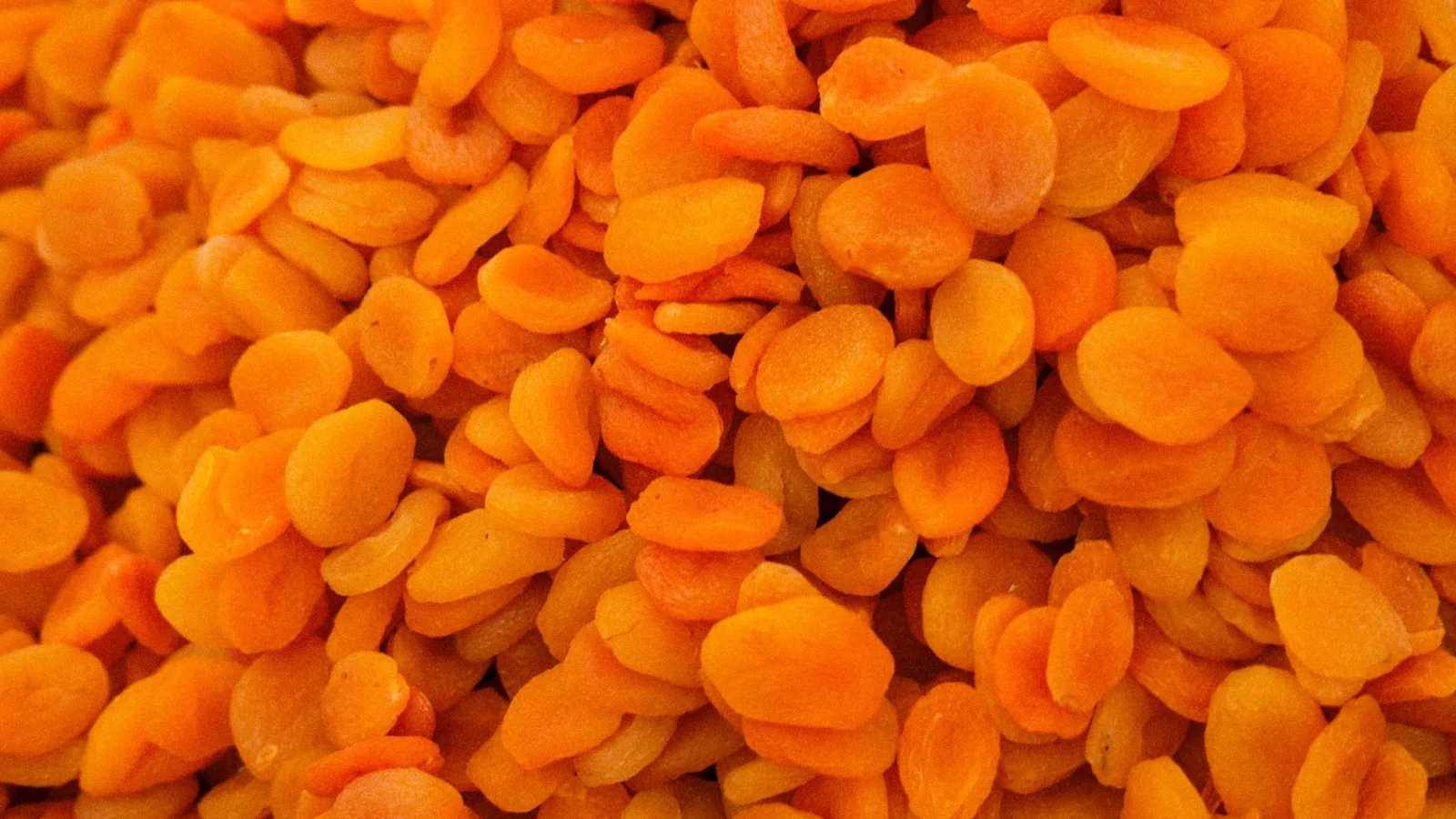
The apricot kernel is what you get by cracking the hard stone inside an apricot, known in traditional medicine as 杏仁. The Donguibogam records it as 杏核仁, warm in nature and sweet-bitter in taste, and then immediately calls it toxic. The text warns that a doubled kernel, two kernels in one stone, kills people and can poison a dog. The same passage also suggests the kernels are edible depending on how thoroughly they are cooked; do not follow that, because cooking does not make an apricot kernel safe. Like peach kernels, apricot kernels contain amygdalin, a cyanogenic glycoside, so the old warning and modern compositional analysis point the same way. In a city you meet it as the stone left from a June apricot, and the core of this entry is simply not to grind it up. If someone has swallowed the kernels, call emergency services rather than waiting for symptoms.
Year-Round Calendar
- 1
- 2
- 3
- 4
- 5
- 6
- 7
- 8
- 9
- 10
- 11
- 12
- 3
- 11
- 6
- 7
Where It Grows
-
Main producer
The Malatya basin in the east is the world's largest producing area. Its dry summers make the climate well suited to drying the crop. Harvest June, July
- 6
- 7
- Main producer Production centers on irrigated oases at the foot of the Tian Shan, such as the Fergana Valley.
- Major producer The crop is grown on irrigated land in the dry highlands of the plateau.
- Major producer The main growing areas are along its northern Mediterranean coast and in the foothills of the Atlas Mountains.
- Major producer Campania and Emilia-Romagna are Europe's major producing areas.
- Major producer There are long-established growing areas in the dry parts of North China, and some varieties there are grown specifically for the kernel rather than the fruit.
Its native range is considered to stretch from the Tian Shan region of Central Asia to northern China, so no single country is named as its place of origin. Carried west along the Silk Road, it is now grown on a large scale in West Asia and around the Mediterranean. Because there are no international statistics that count apricot kernels separately from the fruit, the list above was selected on the basis of apricot production.
- Optimum
- 15~25℃
- Range
- 5~32℃
- Hardiness
- Hardy
This is a temperate deciduous tree whose flower buds need a period of winter cold before they will break dormancy. It blooms early, in March–April, which leaves the flowers fully exposed to spring cold snaps and late frosts, so the harvest can swing widely from year to year. The fruit ripens best where summers bring little rain and strong sun.
Harvested 3–5 years after planting. A sapling takes three to five years to bear fruit. The planting months (March and November) and the harvest months (June–July) are not in the same year.
In Korea Nationwide
The tree is planted in yards and along field banks throughout the country, with long-established growing areas in the inland parts of North Gyeongsang and North Chungcheong. The fruit is picked in June–July, and it is the kernel inside that is used.
How to grow
- Light
- Full sun all day.
- Soil and depth
- Free-draining sandy loam.
- Spacing
- Allow 4 to 5 m between trees in open ground.
- Watering
- Keep water steady through May and June while the fruit sizes.
- Feeding
- Compost as a base dressing in February, with one application in July after harvest.
- Harvest
- Pick in June or July as the ground color moves from yellow to orange and the scent lifts.
What makes the difference. Throw the leftover stone away without cracking it. This is the part the Donguibogam itself called toxic, and modern analysis confirms the amygdalin. Do not follow folk recipes that grind it up.
Why this one is harder. It reaches 5 to 7 m at maturity, and late spring frosts regularly kill the early bloom, leaving some years with almost no fruit.
Common problems
- Bacterial shot hole You will see Purple spots on leaves that drop out and leave holes What to do Open the canopy for airflow and cut back nitrogen. Prune out affected leaves and shoots
- Brown rot You will see Ripening fruit turns brown and soft under a gray coat of spores What to do Pick off and dispose of affected fruit rather than leaving it on the tree. Check airflow after rain
This page describes how a crop is grown and used. It does not claim health effects for any food, nor is it intended to prevent or treat disease. Component and study notes are references only and do not mean the same result occurs in people. Consult a medical professional about health concerns.
Health Benefits
What the old text says. Apricot kernel appears in the Donguibogam's fruit section as haenghaegin. It is recorded as warm in nature, sweet and bitter in taste, and toxic, with the condition that wild mountain apricots could not be used and only garden-planted trees would do. This is a record from a seventeenth-century medical text, not a modern medical judgement.
How it is handled today. Compositional analysis confirms amygdalin in apricot kernels, at notably higher levels in bitter kernels, and on that basis various food safety authorities have set daily intake limits or issued cautions. This is information about hazard, not about benefit.
Nutrition
- Amygdalin (A cyanogenic glycoside, especially high in bitter apricot kernels) — Breaks down in the body to release cyanide
- Emulsin (beta-glucosidase) (An enzyme present in the kernel itself) — Splits amygdalin and releases hydrogen cyanide
Amygdalin Apricot kernels contain amygdalin, at higher levels in the bitter kernels. Chewing or grinding ruptures the cells and an enzyme inside the seed converts it to hydrogen cyanide. Bitter apricot kernels are treated internationally as a food with a daily intake limit.
The part you actually eat is the flesh What you eat from an apricot is the flesh, not the seed. The flesh carries beta-carotene, potassium, and fiber, and drying concentrates all three. That is where the fruit earns its place in summer.
Pairings
○ Apricot flesh with yogurt or cheese — The edible side of this is the flesh. Halved ripe apricots with yogurt or a soft cheese put the acidity to good use.
○ Apricot jam — Apricots carry enough acid and pectin to set well as jam. It is a practical way to stretch a very short season.
△ Grinding or chewing the kernel — Do not grind apricot kernels into water or chew them. Crushing the seed brings amygdalin and its enzyme together to produce hydrogen cyanide, and cases of acute poisoning are documented, beginning with headache, dizziness, and vomiting and progressing in severe cases to difficulty breathing. Bitter kernels in particular can endanger a child at just a few seeds.
△ Powdered kernel products — Ground apricot kernel and its oil sometimes circulate in a health-food format. Amygdalin-containing foods are treated as requiring intake limits, and taking such a product without checking its source and labeling is not reasonable.
Varieties
- Harcot (Sapling) — A large-fruited variety, around 100 g at 13.5 Brix, ripening late June to early July.
- Pyeonghwa (Sapling) — Classified as a northeastern Chinese processing line.
Source: Donguibogam, Fruit Section (杏核仁) · Rural Development Administration (nongsaro.go.kr) · Ministry of Food and Drug Safety guidance on amygdalin