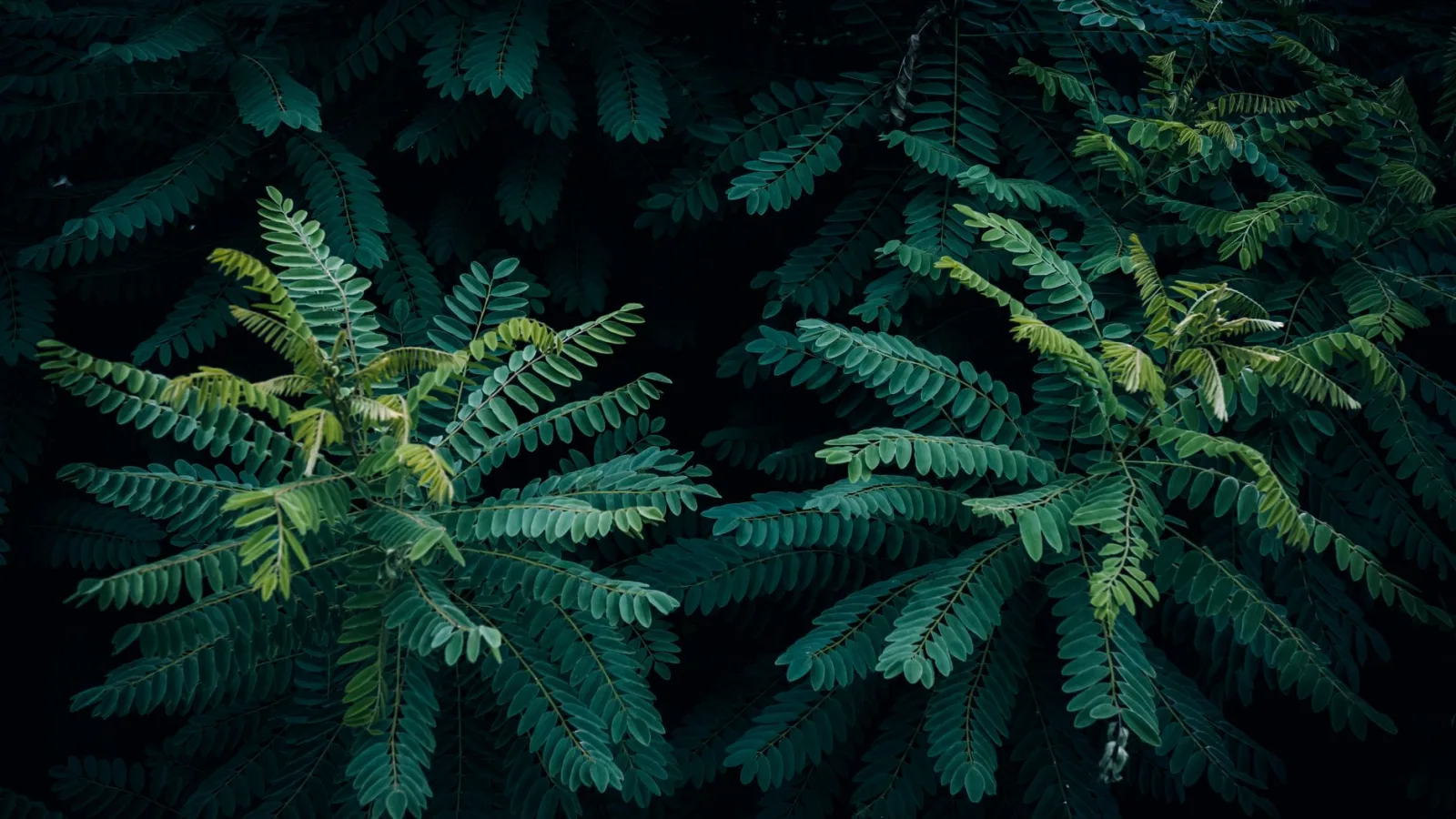
The indigo plants we cut twice over the summer have sent up fresh shoots from their stubs, and the tips now carry pale pink flower spikes. It is late October, the time when each spent flower sets a small black seed. Lay one beside a seed of the water pepper, a wild smartweed growing in the next row, and the two look alike, except that the indigo seed is plumper and darker. A medical text made that same comparison four hundred years ago.
Namsil, the Indigo Seed, in the Herb Section of the Donguibogam
In the herb section of the Donguibogam, the 17th-century Korean medical encyclopedia, indigo is entered as namsil (藍實), literally "indigo fruit," meaning the seed, with the vernacular name written in Korean script as jok ssi, "indigo seed." The entry gives its nature as cold, adding that some call it cool, and its taste as bitter, adding that some call it sweet, setting both opinions side by side. It records the seed as nontoxic. It identifies it as the seed of the "great indigo" (daeram) then under cultivation, says the seeds are gathered in the fifth and sixth lunar months, and notes that they resemble water pepper seeds but are larger and black. The original passage and a translation are posted on our Donguibogam namsil entry.
The headword is the seed. The old text records only the seed's nature and taste; the leaf, the part used for dye, does not come up in this entry at all. Listing two opinions each for nature and taste suggests the compilers, rather than choosing between differing herbal sources, simply included both. These are claims from older Chinese herbals, carried over into a Joseon-era medical text. Modern nutrition and medicine do not treat indigo seed as food.
Why a Freshly Cut Leaf Isn't Blue
Rub an indigo leaf between your fingers and no blue appears. What the leaf holds is a colorless glycoside called indican. When the leaf wilts or is bruised, enzymes inside it split the indican apart, and the freed fragments then pair up in the open air to form blue indigo, also known as indigotin. Adolf von Baeyer worked out the pigment's molecular structure in 1883, and in 1897 the German firm BASF began selling synthetic indigo, after which indigo farming fell off sharply. The fact that the color is made not in the field but after the leaf is cut dictates every step of the dyeing that follows.
Where this overlaps with the Donguibogam is the name. Both call the plant nam (藍), the plant that yields blue. Where they part ways is in what they look at. The old record noted the properties of the seed; modern chemistry deals with the pigment in the leaf. The Homiclub crop guide likewise treats indigo as a dye crop and lists no vitamin or mineral figures. The leaves are not eaten. They are used for dyeing.
Getting a Color That Won't Dissolve into Cloth, Step by Step
Indigo does not dissolve in water. Stir the powder into water and dip cloth in it, and nothing penetrates the fiber. If instead you soak the cut leaves in water and let them ferment, the indigo converts along the way into a water-soluble form; at this stage you add lye, made by steeping the ash of burned rice straw or soybean stalks, to keep the vat alkaline. Fermented indigo dissolves into the form that will bond with cloth only under alkaline conditions. The moment the cloth comes out of the vat and meets the air, the dye reverts to insoluble particles, and those particles stay lodged between the fibers. This is why the color deepens with every round of dipping and lifting. Allow roughly 10 minutes in the vat and another 10 minutes airing out between dips, and plan on four or five rounds before you reach the familiar indigo blue.
Choose your cloth with care. Plant fibers such as cotton, hemp, and ramie take indigo best; silk and wool come out a different shade even from the same vat, and synthetics barely take the dye at all. Before dyeing, scour out any sizing and wash and dry the fabric two or three times so the color goes on evenly.
An Annual Sown in April and May, Cut in July and August
Indigo is an annual. In the Northern Hemisphere, sow in April or May and cut the leaves in July and August. Planting and harvest months are laid out as a calendar in our indigo crop guide.
- Cover the seed with 1 cm of soil; germination is even once the soil reaches about 20℃. Try starting them in a seed tray and transplanting at 25 to 30 cm spacing when the seedlings are about 10 cm tall.
- In July, once the plants stand 50 to 60 cm tall and before flower stalks form, cut them back, leaving 10 cm of stem. The stubs regrow and can be cut a second time at the end of August.
- Cut leaves go into water to ferment the same day, or get spread to dry in the shade.
- Leave two or three plants uncut so they flower. Gather the seeds in October or November, once they have ripened black and before frost, and dry them in a paper envelope for sowing next spring.
That seed-gathering month does not match the fifth and sixth lunar months given in the Donguibogam. Since the original passage was copied from Chinese herbals, the climate and the variety may well have differed from the indigo in today's gardens.
Cloth lifted from the vat is yellowish at first. Over a few minutes in the air it turns green, then blue. This is a plant whose color appears only after the cutting, and so waiting out those few minutes is part of growing indigo too.