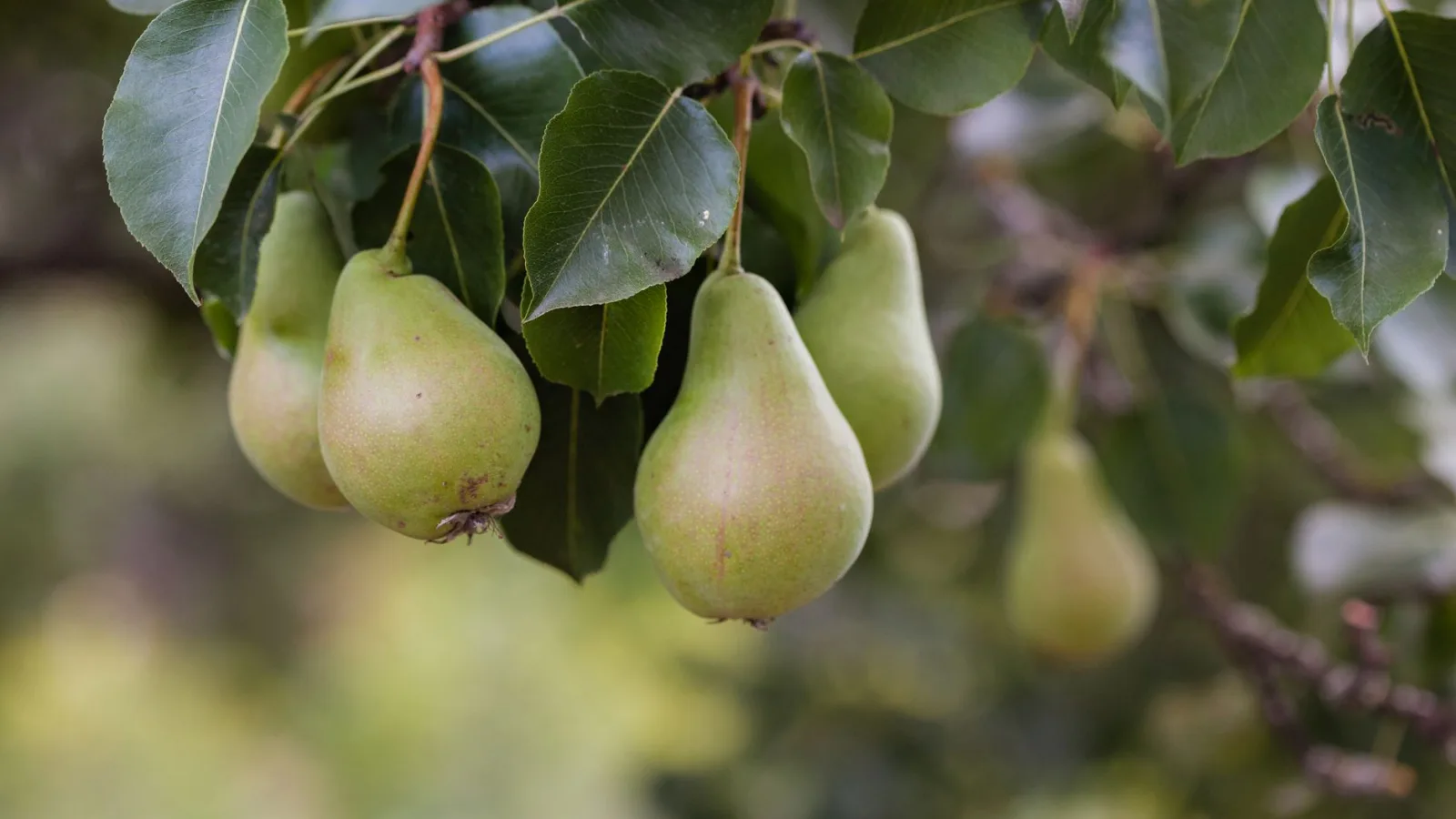
By mid-September, the fruit at the tips of pear branches is ripening to a golden tan and growing heavier by the day. Pick one and peel it, and juice runs down the blade and wets your fingertips. In the Northern Hemisphere, pears are harvested in September and October. China grows more than any other country, and Korea, Japan, and Taiwan are also big producers.
The pear is the fruit of the pear tree, a member of the rose family. The tiny grains that crunch between your teeth are clusters of hard cells called stone cells. They're the reason this crisp Asian pear feels so different from a European pear, which melts softly in your mouth.
How a Pear Tree Comes to Bear Fruit
Pear trees aren't grown from seed. They're started from nursery saplings. In the Northern Hemisphere, they're planted in March or November, and they can be tricky to grow. They grow at temperatures between 10 and 32°C (50–90°F) and do best at 20–25°C (68–77°F). While dormant in winter, they can handle cold down to about -20°C (-4°F).
The tree needs a certain amount of cold each winter for its flowers to bloom evenly the next spring. Its flower buds respond to temperature, not day length. Once they've had enough winter chill, they open as spring warms up. That's why bloom can be patchy in places with mild winters. A late frost during the April bloom can shrink that year's harvest, and too little water in July and August leaves the fruit small.
Water and Sorbitol in Every Bite
Pears are more than 85% water. Take a bite and the juice hits your tongue first. A few slices on a thirsty afternoon bring moisture and sweetness at the same time.
Pears also contain sorbitol, a type of sugar alcohol. It tastes sweet, but the small intestine doesn't absorb much of it.
What Happens in Your Body, and What the Old Texts Say
Sorbitol that isn't absorbed in the small intestine moves on to the large intestine. That's why eating a lot of pear at once is known to cause bloating, a rumbling stomach, or loose stools. If you have a sensitive gut, it's better to eat a little at a time.
Studies that actually give people pears and track what happens are rare, though. There are plenty of health claims about pears, but for now, the evidence only covers their water and sorbitol content.
Donguibogam, a Korean medical text published in 1613, lists the pear in its fruit section under the name 梨子 (ija). It describes the pear as cold in nature, sweet and slightly sour in taste, and not toxic. That's the view of a centuries-old medical book, not a finding of modern medicine.
Eating Pears in a Way That Suits Your Body
Start simple: peel a fresh, in-season pear and eat a few slices at a time. On days when you struggle to drink enough water, eating pear slowly between meals is an easy way to get some extra fluids.
- If you're making juice, remove the seeds and core and blend only the flesh.
- Try grating pear into bulgogi (grilled beef marinated in a soy-based sauce). It makes the meat more tender and adds sweetness, and the finish is cleaner than with sugar alone.
- When the weather turns cold, try making baesuk (a steamed pear drink made with ginger and honey). Cut off the top of a pear, scoop out the center, fill it with ginger and honey, and steam it. Cooks came up with it long ago to balance the pear's cold nature with warming ginger, and people have sipped it through the winter for generations.
If you bring home a pear today, core half of it and eat it fresh a few slices at a time. Grate the other half and save it for this week's bulgogi marinade.
Sources: Donguibogam, fruit section (果部), entry on 梨子 (pear) · Cultivation materials from the National Institute of Horticultural and Herbal Science (Korea's horticultural research agency)